
Side Dishes
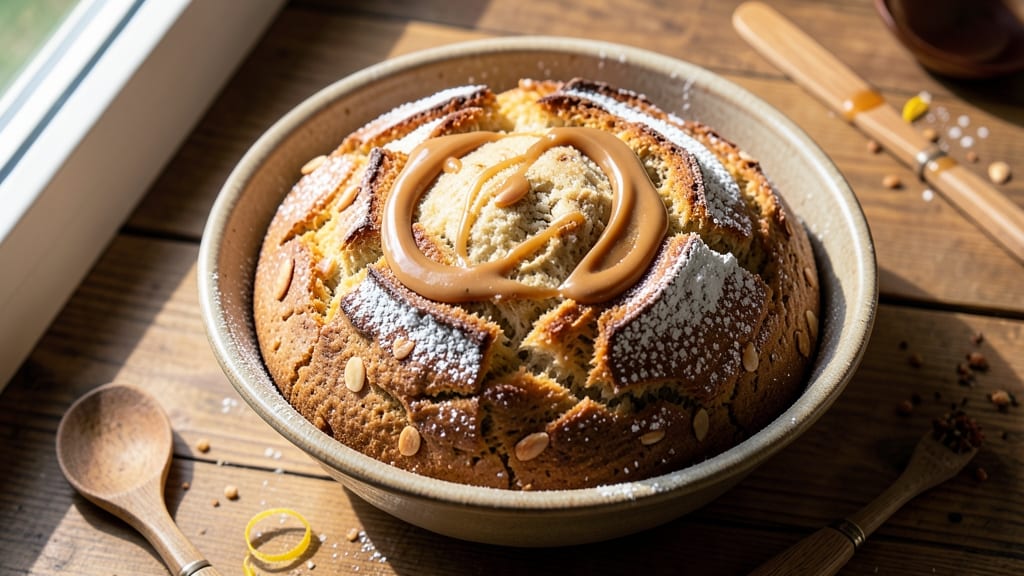
This almond bread machine recipe transforms simple ingredients into a loaf with nutty swirls and a pillowy rise—no yeast headaches or kneading required. The secret lies in balancing almond flour's density with all-purpose flour for structure, while the bread machine handles the rest.
My first attempt came out dense, but adjusting the kneading cycle and using a light hand with the almond butter changed everything.
What sets this recipe apart is the swirled almond butter that creates pockets of rich, nutty flavor throughout each slice. The bread machine does all the heavy lifting—mixing, kneading, and baking—while you prep the filling in minutes.
Perfect for breakfast toast, sandwiches, or gifting, this loaf stays moist for days when stored properly. The texture is what makes it special: tender yet sturdy, with just enough chew from the almonds.
Most bread machine recipes fail when they overwork the dough or underestimate the almond flour's moisture needs. Here, we counteract that by adding an extra tablespoon of milk and reducing the kneading time slightly.
The result? A loaf with golden crust, even crumb, and those signature swirls that disappear as you slice. Even beginners can achieve this—just follow the machine's instructions and trust the process.
This recipe also solves the common issue of almond bread drying out quickly. The bread machine's steam cycle keeps the interior moist, while the almond butter adds natural fat that preserves freshness.
For best results, let the loaf cool completely before slicing—patience here prevents a gummy texture. Ready to bake? Let's get started with the foolproof steps that always deliver.
Ingredients for almond bread machine
Nine essential ingredients transform your bread machine into almond bread perfection.
| Ingredient | Amount | Notes |
|---|---|---|
| All-Purpose Flour 🌾 | 2 ½ cups | Sifted for even texture |
| Almond Flour 🌰 | 1 ½ cups | Finely ground, unsweetened |
| Granulated Sugar 🍚 | ½ cup | White or light brown |
| Unsalted Butter 🧈 | ½ cup | Softened to room temperature |
| Large Eggs 🥚 | 2 whole | Room temperature for even mixing |
| Whole Milk 🥛 | ¾ cup | Room temperature preferred |
| Active Dry Yeast 🍞 | 2 ¼ tsp | Instant yeast works too |
| Salt 🧂 | ½ tsp | Diamond Crystal preferred |
| Pure Vanilla Extract 🌿 | 1 tsp | High-quality for flavor |
| Almond Butter 🥜 | ½ cup | Natural, unsweetened preferred |
| Powdered Sugar 🍚 | 2 tbsp | For dusting swirls |
| Ground Cinnamon 🌶️ | ½ tsp | Optional for warmth |
The almond flour is the star here—Bob's Red Mill or King Arthur brands yield the finest texture. Look for finely ground almond flour with minimal moisture content to prevent a dense crumb. The almond butter should be natural and unsweetened; Justin's or Marathon brands work best without altering the recipe's balance. For yeast, Saf-Instant is ideal as it activates without proofing time, but standard active dry yeast works if dissolved in warm milk first. Pre-sift the all-purpose flour to eliminate lumps and ensure an even crumb throughout the loaf.
No almond flour? Substitute with 1 cup of oat flour plus 0.5 cup all-purpose flour, though texture will differ slightly. Short on almond butter? Peanut butter at half the amount works in a pinch, but flavor will change. The powdered sugar isn't just for swirls—it helps create those signature pockets of tenderness. For an extra boost, add 1 tsp cinnamon to the dough for warmth. If your butter is cold, microwave it for 40 seconds to soften—this ensures proper emulsification with the wet ingredients. The milk can be any variety, but whole milk adds richness to the final texture.
Store the almond butter in the fridge to preserve freshness, and keep the yeast in a cool, dark place for up to 6 months. The dough can be prepared ahead and refrigerated for 12 hours before baking—this enhances flavor development. Once baked, let the loaf cool completely on a wire rack for at least 1 hour to prevent a gummy interior. For longer storage, wrap tightly in plastic and keep at room temperature for 3 days, or freeze for 3 months for maximum freshness.
Why You'll Love This Recipe
- No-Knead Magic: The bread machine handles all the mixing and rising—just dump in the flour blend (that almond flour gives it a gorgeous crumb), add butter and eggs, and hit start. I’m talking zero elbow grease, just 30 minutes of hands-off time.
- Rich But Not Heavy: The butter and sugar create this tender crumb, while the almond flour keeps it from feeling dense—more like a cross between a brioche and a classic loaf. Honestly, the first slice makes me forget it’s "healthy" (if you even call it that).
- Breakfast to Brunch: Toast it for breakfast, slice it for charcuterie, or pack it for lunch—this bread adapts. I’ll be real: my kids grab it straight from the fridge for snacks, and I’ve even used it to make French toast that’s ridiculously good.
- Budget-Friendly Luxury: Almond flour can be pricey, but a little goes a long way here—you’re not drowning in it. The butter and eggs make it feel special, but the cost per serving is way lower than store-bought artisanal loaves. Plus, it keeps for days.
Step-by-step instructions for almond bread machine recipe
Follow this precise method to create a tender crumb with rich almond flavor and beautiful swirls.
Prepare the Almond Butter Swirl Filling
In a small bowl, combine the 0.5 cup almond butter with 2 tbsp powdered sugar and 0.5 tsp ground cinnamon (if using). Mix until smooth and fully incorporated. This mixture should be thick but spreadable—if it's too stiff, add 1 tsp whole milk to loosen it. Transfer to a resealable plastic bag and seal tightly.
Roll the almond butter mixture into a 12-inch log by pressing it gently through the bag onto a piece of parchment paper. Twist the ends of the bag to create a tapered shape. Chill in the refrigerator for 15 minutes to firm up slightly—this makes it easier to handle during the swirl step. Real talk: don't skip this chilling step or the filling will spread too much during baking.
Mix the Dough in the Bread Machine Pan
In the bread machine pan, combine the 2.5 cups all-purpose flour (sifted), 1.5 cups almond flour, 0.5 cup granulated sugar, 2.25 tsp active dry yeast, and 0.5 tsp salt. Stir gently with a rubber spatula to distribute the dry ingredients evenly along the bottom and sides of the pan.
Create a well in the center and add the 0.5 cup softened unsalted butter, 2 whole large eggs, 0.75 cup whole milk, and 1 tsp pure vanilla extract. Using the spatula, gradually incorporate the wet ingredients into the dry, mixing just until a shaggy dough forms. Avoid overmixing—this can develop gluten and make the bread dense. The dough should be sticky but manageable, with some flour still visible.
Shape and Swirl the Dough
Remove the dough from the pan and place it on a lightly floured surface. Gently press and fold it into a 12-inch square about ½-inch thick. Unroll the chilled almond butter log and place it diagonally across the center of the square. Using a sharp knife, carefully cut through the dough at ½-inch intervals along both sides of the almond butter log, stopping ½-inch before the edges.
Lift every other section and fold it over the almond butter, creating a lattice pattern. Press gently to seal the seams. This technique creates those beautiful swirls while keeping the filling contained. If the dough resists, wet your fingers slightly to help it adhere. Place the shaped loaf back into the bread machine pan, seam-side down, and let it rise at room temperature for 10 minutes before starting the machine.
Bake Using the Basic White Bread Setting
Select the Basic White Bread setting on your bread machine and insert the pan. The machine will automatically mix, knead, and bake the bread. The entire process should take about 3 hours and 30 minutes, with the bread rising twice during this time. You'll hear the machine beep when it's done—this indicates the internal temperature has reached 190°F and the bread is fully baked.
Remove the bread from the pan immediately and place it on a wire rack to cool for at least 30 minutes. Here's the thing—almond bread continues to set as it cools, and rushing this step can make the swirls fall apart. For best results, let it cool completely before slicing. The crust should be golden brown with a subtle sheen, and the internal temperature should read 180°F when checked with an instant-read thermometer.
Serve and Store for Maximum Freshness
Once fully cooled, slice the bread with a serrated knife for clean cuts that showcase the almond swirls. Serve warm with butter or jam for the best texture contrast. For storage, wrap tightly in plastic wrap and keep at room temperature for 2 days or freeze for up to 3 months. To reheat, wrap a slice in foil and warm in a 350°F oven for 5-7 minutes—this restores the pillowy texture without drying it out.
The final loaf should yield 4 generous servings, with each slice offering a perfect balance of tender crumb, nutty almond flavor, and sweet swirls. The exterior should have a subtle crackly texture while remaining soft to the touch. If the top browns too quickly during baking, tent loosely with foil after the first hour to prevent over-browning.
Pro Tips For Making Almond Bread Machine
- MEASURE ALMOND FLOUR RIGHT: Spoon it straight from the bag—don’t scoop. Almond flour packs differently than all-purpose flour, and overfilling the machine’s cup can make your bread dense. Tap the cup gently to settle it after measuring, or you’ll end up with a brick instead of a light loaf.
- SOFTEN BUTTER FIRST: Take the butter out of the fridge at least 30 minutes before starting. Cold butter won’t mix evenly with the wet ingredients, and your bread machine will struggle to emulsify it properly—leading to a dry, crumbly texture. Room temp is key, but don’t let it get greasy.
- DON’T OVERMIX THE DOUGH: Once you add the wet ingredients to the dry, mix just until combined—about 10 seconds. Overmixing develops gluten, and since almond flour lacks the structure of wheat, your bread will turn out tough. Stop when it looks shaggy, not smooth.
- LET IT REST IN THE PAN: After baking, transfer the bread to a wire rack—but first, let it sit in the pan for 5 minutes. This keeps the crumb from collapsing while it cools. Skipping this step makes the texture gummy, and no one wants that with almond bread. (Yes, even if you’re impatient like me.)
Pro cooking tips for almond bread machine
Dough Consistency
The key to a perfect almond bread machine loaf starts with dough that's sticky but not wet. I recommend using a light hand when mixing—just until the ingredients come together. Overmixing develops gluten, which can make the bread dense.
If your dough feels too dry, add 1 tbsp extra milk to help with the almond flour's moisture absorption. The dough should cling to the sides of the pan but still be workable. 🌰
Swirl Technique
Creating those signature swirls requires precision. After shaping your dough into a square, place the almond butter log diagonally across the center. Cut ½-inch intervals on both sides, stopping ½-inch from the edges, then fold every other section over the filling.
This creates a lattice pattern that keeps the almond butter contained during baking. If the dough resists, dampen your fingers slightly to help it adhere. The chilled almond butter log is crucial—it prevents messy spreading during the rise.
Machine Settings
Always use the Basic White Bread setting for this recipe, even though it's almond-infused. The bread machine's automatic kneading cycle handles the delicate almond flour better than manual methods. If your machine has a light crust option, select it to prevent over-browning.
The total bake time should be about 3 hours and 30 minutes, but check your machine's manual—some models require slight adjustments for dense doughs. Never skip the cooling step; almond bread needs 30 minutes to set properly before slicing.
Almond Flour Tips
Not all almond flours are created equal. For best results, use Bob's Red Mill or King Arthur brands—they're finely ground and yield a lighter texture. If your almond flour is coarse, pulse it in a food processor for 10 seconds before measuring.
The almond flour absorbs moisture differently than all-purpose flour, so don't substitute it 1:1 in other recipes. For this bread, the 1.5 cups almond flour adds richness but requires the extra 2.5 cups all-purpose flour for structure. 🥜
Yeast Activation
Cold milk can kill yeast, so use room-temperature milk and eggs. If your kitchen is chilly, warm the milk to 100°F (just until steaming) before mixing with yeast.
For extra insurance, dissolve the yeast in ¼ cup warm milk with 1 tsp sugar for 5 minutes until foamy before adding to the dry ingredients. The yeast should activate within 5-10 minutes of mixing—if it doesn't, your bread may not rise properly.
I've had this happen twice with old yeast, so always check the expiration date (use within 6 months for best results).
Nutrition facts
Frequently asked questions
Can I make this almond bread without a bread machine?
The recipe is designed for bread machines, but you can adapt it with some adjustments. Use a stand mixer with a dough hook to knead for 5-7 minutes until the dough pulls away from the bowl. Let it rise twice (first rise: 1 hour, second rise: 45 minutes) before shaping and baking at 350°F for 30-35 minutes. The texture won't be identical, but it'll still be delicious!
Why did my almond bread come out dense?
Dense almond bread usually means overmixing or too much almond flour. The recipe balances 1.5 cups almond flour with 2.5 cups all-purpose flour for structure. If your dough was too dry, add 1 tbsp extra milk—almond flour absorbs moisture differently. Also, avoid over-kneading in the bread machine; the "Basic White Bread" setting handles it perfectly.
Can I substitute almond butter with peanut butter?
Yes, but expect a different flavor profile. Use ½ cup peanut butter (natural, unsweetened) and reduce the powdered sugar to 1 tbsp since peanut butter is sweeter. The texture remains similar, but the nutty taste shifts from almond to peanut. For a hybrid flavor, try a ¼ cup almond butter + ¼ cup peanut butter mix.
How do I store leftover almond bread?
Wrap tightly in plastic wrap or place in an airtight container to keep it fresh for 2 days at room temperature. For longer storage, freeze slices wrapped in foil for up to 3 months. To reheat, warm in a 350°F oven for 5-7 minutes—this restores the soft texture without drying it out.
What’s the best way to slice almond bread?
Use a serrated knife and dip it in hot water between slices to prevent crumbling. Cool the loaf completely first—this ensures clean cuts that showcase the almond swirls. For even slices, mark your desired thickness with toothpicks before cutting.