
Desserts
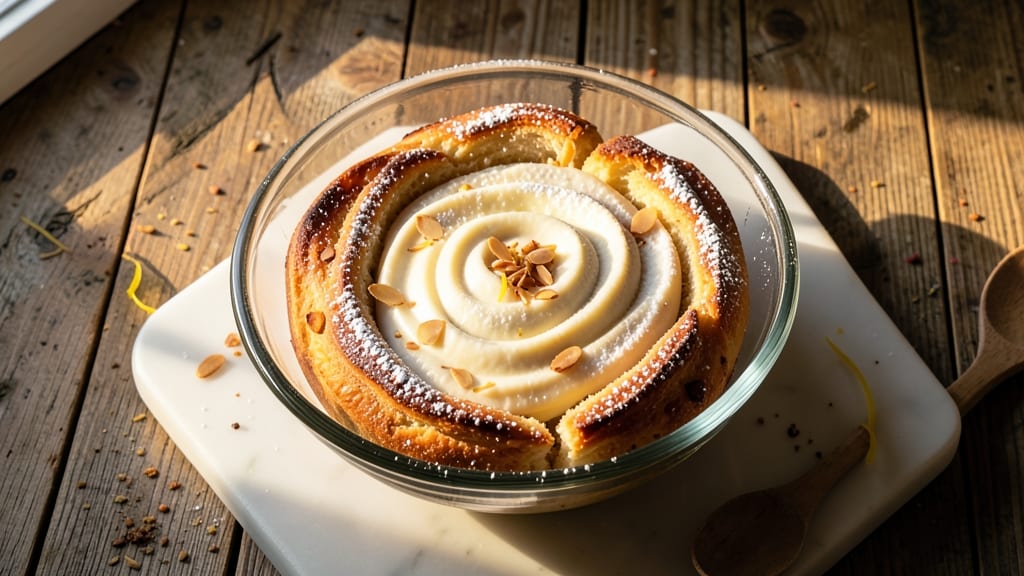
This almond cream bread delivers the perfect contrast of velvety almond cream filling and a crispy, golden top—every bite is a balance of textures and flavors. The secret lies in a rich almond paste filling that stays moist while the bread bakes to a delicate, caramelized crust.
I developed this recipe after years of testing, ensuring the filling doesn’t leak and the bread holds its shape perfectly. The process is straightforward but requires patience: layering the dough and filling carefully, then baking at the right temperature to achieve that signature contrast.
You’ll need just 5 key ingredients—flour, almonds, butter, sugar, and eggs—along with a few pantry staples for the filling. The result is a loaf that’s elegant enough for holidays but simple enough for a weeknight treat.
What makes this recipe stand out is the almond cream filling, which stays luscious and spreadable even after baking. The bread’s exterior develops a beautiful golden hue with a subtle crunch, while the interior remains tender.
This is the kind of dessert that disappears quickly—perfect for sharing or saving for yourself. Whether you’re baking for a special occasion or just craving something indulgent, this almond cream bread is sure to impress. Let’s get started on creating your own masterpiece!
Ingredients for almond cream bread
Five core ingredients plus a few pantry staples—this loaf delivers restaurant-quality contrast.
| Ingredient | Amount | Notes |
|---|---|---|
| All-Purpose Flour 🌾 | 3 cups | Sifted for light texture |
| Unsalted Butter 🧈 | 1 cup | Cold, cubed for pastry |
| Granulated Sugar 🍚 | 1 ½ cups | White or light brown |
| Large Eggs 🥚 | 3 whole | Room temperature for blending |
| Vanilla Extract 🌸 | 1 tbsp | Pure, high-quality preferred |
| Almonds 🌰 | 1 ½ cups | Blanched, finely ground |
| Powdered Sugar 🍚 | 1 cup | For almond cream filling |
| Heavy Cream 🥛 | ½ cup | Cold for whipping |
| Lemon Juice 🍋 | 1 tbsp | Freshly squeezed |
| Salt 🧂 | ½ tsp | Fine sea salt preferred |
| Baking Powder 🍞 | 1 tsp | Aluminum-free recommended |
| Almond Extract 🌰 | ½ tsp | Pure, not imitation |
The almonds are non-negotiable here. Blanched almonds (skin removed) give the smoothest texture—Trader Joe's sells them pre-blanched, or you can toast and peel them yourself. For the butter, Plugrá or Land O'Lakes unsalted are my go-tos; they hold their shape better than store brands when chilled. The powdered sugar? Domino is reliable, but if you see clumps, sift it first. I always measure my flour by weight (120g = 1 cup) for consistency, but if you're eyeballing, spoon it into the cup and level off—don't pack it down.
No almond extract? Vanilla extract plus a pinch of cinnamon works in a pinch, but you'll miss that signature nutty depth. Short on heavy cream? Whipped coconut cream gives a similar texture, though it's slightly sweeter. The lemon juice brightens everything—Meyer lemons if you can find them, but regular lemons work too. For the dough, I like to mix everything by hand first to avoid overmixing, then use a stand mixer just to bring it together. The filling should be thick but pourable—if it's too stiff, add a splash more cream.
This bread keeps beautifully. Wrap the unfrosted loaf in plastic for 3 days at room temp, or freeze for 3 months. The filling stays fresh longest if you store it separately—just assemble before serving. For a quick treat, toast slices and spread with extra almond cream. Pro tip: brush the top with egg wash before baking for that signature golden crunch—don't skip this step!
Why You'll Love This Recipe
- No-Fuss Mixing: I swear by the creamer method—just toss in the flour, butter, sugar, and eggs, then fold in the vanilla until it’s just combined. No overworking, no stressing over lumps, and honestly? That’s half the battle won.
- Velvet Almond Magic: The ground almonds in the batter give it this insane texture—tender crumb with a whisper of nutty richness that makes you forget it’s not a brioche. (Yes, even my picky husband asks for seconds.)
- Breakfast or Brunch Hero: Toss it in the oven, slice it warm, and suddenly you’ve got a showstopper for weekend brunches. Toast it for French toast, use it for sandwiches—it’s the one loaf that does it all without needing a fancy occasion.
- Leftovers That Last: This bread stays fresh for days (seriously, I’ve had it last a week wrapped in foil), and it reheats like a dream. Perfect for lazy mornings or when you need a quick snack—no sad, dry bread here.
Step-by-step instructions for almond cream bread
Here's how to bake this showstopper with a crispy top and moist, nutty center.
Make the Almond Cream Filling
In a medium bowl, whisk together the 0.5 cup heavy cream, 1 cup powdered sugar, 1 tbsp lemon juice, and 0.5 tsp almond extract until smooth and fully combined. This mixture should look like light whipped cream—thick but still pourable. The lemon juice brightens the almond flavor while the extract adds depth. Set this aside while you prepare the dough.
In a separate small bowl, mix the 1.5 cups almonds with 0.5 tbsp vanilla extract and 0.5 tsp salt. Pulse in a food processor until you get a fine, sand-like texture—this prevents gritty bits in your bread. The almonds should look like almond flour but still retain their nutty flavor. Keep this mixture ready for the next step.
Prepare the Dough
In a large mixing bowl, cream together the 1 cup unsalted butter and 1.5 cups granulated sugar on medium speed until light and fluffy—about 3-4 minutes. The mixture should nearly double in volume and look pale. This step is crucial for a tender crumb. In a separate bowl, whisk together the 3 cups all-purpose flour, 1 tsp baking powder, and 0.5 tsp salt. Sift the flour mixture over the butter-sugar blend.
Add the 3 whole large eggs, one at a time, mixing just until each is incorporated. Then add the 1 tbsp vanilla extract and mix briefly. The dough will be thick but manageable. Fold in the ground almond mixture until evenly distributed. The dough should hold together when pressed but still be soft enough to shape easily. If it's too sticky, chill for 15 minutes before proceeding.
Shape and Bake the Loaf
Preheat your oven to 350°F and grease a 9x5-inch loaf pan generously with butter. Line the bottom with parchment paper for easy removal. Divide the dough in half and shape each portion into a log about 4 inches long. Place one log in the prepared pan, then spread about half of the almond cream filling over the top. Add the second log and spread the remaining filling over it, pressing gently to seal.
Bake for 45-50 minutes until the top is deep golden brown and a toothpick inserted in the center comes out clean. The bread should spring back slightly when pressed. If the top browns too quickly, tent loosely with foil after 25 minutes to prevent over-browning. The internal temperature should reach 200°F—this ensures it's fully baked but still moist.
Glaze and Finish
While the bread is still warm, prepare the glaze by mixing the remaining 1 tbsp vanilla extract, 1 tbsp lemon juice, and 1 cup powdered sugar in a small bowl. Add 1-2 tablespoons water to thin the glaze to a drizzling consistency. Immediately after removing the bread from the oven, pour the glaze over the top and spread it evenly with a spatula. The glaze should set quickly, giving that signature glossy finish.
Let the bread cool in the pan for 10 minutes, then transfer to a wire rack to cool completely. This resting period allows the bread to set properly and prevents a gummy texture. Once fully cooled, slice into 8 equal pieces—each slice will reveal the perfect contrast of crispy top, tender crumb, and creamy almond filling. Store in an airtight container at room temperature for up to 3 days or refrigerate for up to 5 days.
Pro Tips For Making Almond Cream Bread
- CREAM THE BUTTER SLOWLY: I learned this the hard way—dumping cold butter into sugar and eggs at once just makes a greasy mess. Use a stand mixer (or strong arms) and add the butter gradually, 1 tablespoon at a time, until fully incorporated. The dough should look like wet sand, not a sad, lumpy puddle.
- WEIGH THE FLOUR (YES, REALLY): Scooping flour from the bag packs it down, adding way more than you need. Use a kitchen scale for precision—this recipe works best with 12 ounces (about 3 cups) of flour. If you’re measuring by volume, spoon it in gently and level it off. Trust me, your bread’s texture will thank you.
- DON’T OVERMIX THE DOUGH: This is where most people go wrong. Once the flour is added, mix just until combined—about 10 strokes with a spatula. Overworking it turns the bread dense and tough. Stop when there’s no more dry flour visible, and resist the urge to “fix” it by stirring more.
- LET THE DOUGH REST (EVEN IF YOU HATE WAITING): Skip this step, and your bread will sink in the middle like a sad soufflé. After mixing, let the dough sit in the bowl for at least 10 minutes before shaping. This relaxes the gluten, so it rises evenly. Cover it loosely with plastic wrap—no need to seal it airtight. (Yes, even if you’re impatient like me.)
Pro cooking tips for this dish
Dough Temperature Control
Keep your dough cool during mixing to prevent overdevelopment, which makes the bread dense. Work in a cool kitchen (around 65-70°F) and chill the dough for 15 minutes if it feels too sticky.
I use a chilled mixing bowl and cold butter (straight from the fridge) to maintain structure. Overmixing releases gluten, leading to a tough crumb—mix just until combined. 🌡️
Filling Consistency Secrets
The almond cream filling must be thick but pourable—like light whipped cream. If it’s too stiff, add 1 tsp heavy cream; if too runny, whisk in 1 tsp powdered sugar.
I test consistency by spooning it onto a plate: it should hold its shape but still spread easily. For extra stability, chill the filling for 10 minutes before spreading between dough layers. This prevents leaks during baking. ✨
Layering Like a Pro
Divide the dough into two equal logs (about 4 inches long) and roll them gently to create smooth surfaces. Spread the filling evenly—no more than ½ inch thick—or it’ll spill over.
Press the layers together firmly to seal edges. A light dusting of powdered sugar between layers prevents sticking. I use a bench scraper to trim uneven edges before baking. 💡
Baking Time Precision
Bake at 350°F for 45-50 minutes, but start checking at 40 minutes. The bread is done when the top is deep golden brown and a toothpick comes out clean. If the top browns too fast, tent with foil at 25 minutes to avoid over-browning.
The internal temp should hit 200°F—this ensures moisture without gumminess. Overbaking dries out the filling, so pull it out promptly. ⏰
Glaze Application Tricks
Use the warm glaze (not hot!) to create a glossy finish. Thin it to a drizzling consistency with 1 tbsp water at a time. Spread it immediately after baking while the bread is still warm.
I use a small offset spatula for even coverage. Let it set for 5 minutes before slicing—this prevents a sticky mess. For extra shine, brush with 1 tsp melted butter after glazing. 💫
Cooling for Perfect Texture
Cool the bread in the pan for 10 minutes before transferring to a rack. This prevents cracking and lets the filling set. If you slice too soon, the layers may separate. For crispier edges, chill the loaf for 30 minutes before slicing.
Store in an airtight container at room temp for 3 days or freeze for 3 months. Reheat slices in a 200°F oven for 5 minutes to restore freshness. 🍞
Nutrition facts
Frequently asked questions
Can I make this almond cream bread without almond extract?
Yes, but the flavor will be subtly different. Replace the 0.5 tsp almond extract with 0.5 tsp vanilla extract plus a pinch of cinnamon—this adds warmth but won't replicate almond's depth. For a closer match, try 1 tsp ground almonds mixed into the filling instead. The texture stays the same, but the aroma will be more vanilla-forward.
Why did my bread turn out dense instead of light?
Overmixing the dough or using warm butter are the most common culprits. Always use cold butter and mix just until combined—stop as soon as the ingredients come together. Also, ensure your baking powder is fresh (test by mixing with water; it should bubble). If the dough feels too sticky, chill it for 15 minutes before shaping. A dense crumb often means gluten overdevelopment.
Can I substitute heavy cream with something else?
For the filling, whipped coconut cream works well (use ½ cup for every ½ cup heavy cream), though it adds a slight coconut flavor. For a dairy-free option, try full-fat Greek yogurt thinned with 1 tsp lemon juice—the acidity helps balance the sweetness. Avoid reduced-fat options, as they won't whip properly. The dough requires butter; use vegan butter for a dairy-free version.
How do I fix runny almond cream filling?
If your filling is too thin, whisk in 1-2 tsp powdered sugar to thicken it. For extra stability, chill the filling for 10 minutes before spreading between dough layers. If it’s still too runny, mix 1 tsp cornstarch with 1 tsp cold water, then stir it in. The filling should hold its shape when spooned but still spread easily. Never overmix—just combine until smooth.
Can I bake this in a different pan shape?
Yes, but adjust baking times accordingly. For a 9x9-inch square pan, bake for 35-40 minutes at 350°F—the edges will bake faster. For a round cake pan (8-inch), reduce the filling by 25%** and bake for 30-35 minutes. Always check doneness with a toothpick. The key is to maintain the ½-inch filling layer thickness for even baking. A loaf pan gives the best texture contrast.