
Desserts
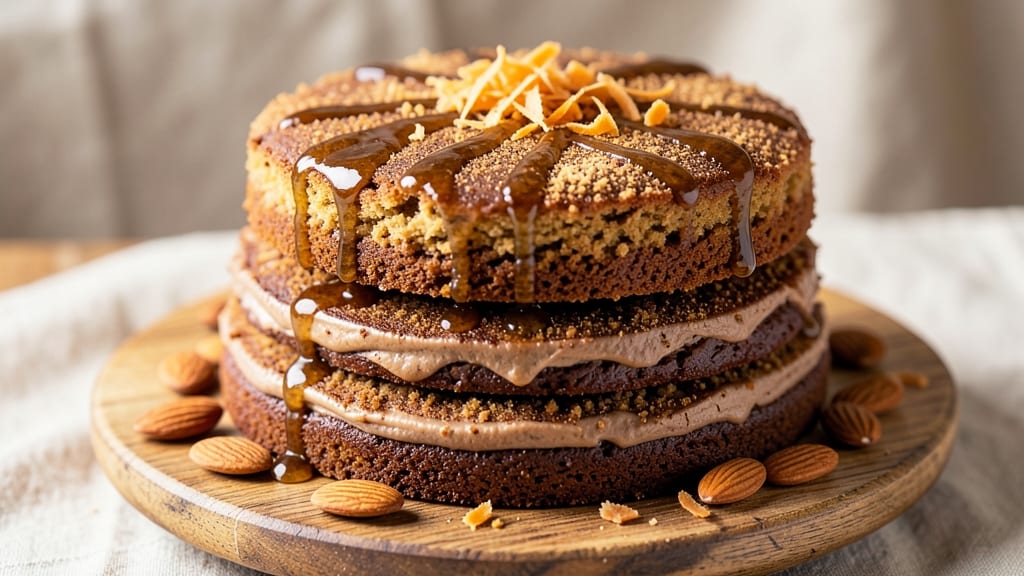
This almond flour gingerbread cake recipe delivers the perfect balance of spiced warmth and tender crumb—without a single grain of traditional flour. ✨ The secret lies in the almond flour, which creates a naturally moist, dense texture while amplifying the classic gingerbread flavors of cinnamon, nutmeg, and molasses.
I developed this recipe after years of experimenting with gluten-free holiday desserts, and it’s become a holiday staple that even gluten-sensitive guests can enjoy without compromise.
The beauty of this recipe is its simplicity: just one bowl to mix, a single baking dish, and no complicated techniques.
The almond flour absorbs moisture differently than wheat flour, so we’ll use a combination of warm spices, melted butter, and a touch of sour cream to ensure a moist crumb that stays tender even after slicing.
The cake’s rich, caramel-like flavor comes from molasses and brown sugar, while the nutty depth of almond flour adds a sophisticated twist to the classic holiday treat.
What makes this cake truly special is how it bakes—golden on top with a slightly cracked surface, revealing a soft, spiced interior that’s perfect for slicing into thick, hearty pieces.
The warm spices infuse every bite, making it ideal for serving with vanilla ice cream, whipped cream, or a dusting of powdered sugar. It’s the kind of dessert that feels indulgent yet light, and it’s sure to impress at holiday gatherings or as a cozy weekend treat.
Whether you’re avoiding gluten, watching your carb intake, or simply craving a richer gingerbread experience, this recipe delivers restaurant-quality results with minimal effort. Let’s get baking—your taste buds (and holiday table) will thank you.
Ingredients for almond flour gingerbread cake
Just 13 ingredients for a cake that tastes like holiday magic—no flour, no guilt.
| Ingredient | Amount | Notes |
|---|---|---|
| Almond Flour 🌰 | 2 ½ cups | Finely ground, unsweetened preferred |
| Unsalted Butter 🧈 | 1 cup | Melted, full-fat for richness |
| Dark Brown Sugar 🍚 | 1 ½ cups | Packed, not lightly scooped |
| Molasses 🍯 | ½ cup | Unsulphured for best flavor |
| Large Eggs 🥚 | 2 whole | Room temperature for even mixing |
| Sour Cream 🥛 | ½ cup | Full-fat for moisture retention |
| Ground Cinnamon 🌿 | 2 tsp | Freshly ground preferred |
| Ground Ginger 🌶️ | 1 ½ tsp | Freshly ground for zing |
| Ground Nutmeg 🌶️ | ½ tsp | Freshly grated from nutmeg |
| Ground Cloves 🌶️ | ¼ tsp | Lightly toasted for warmth |
| Baking Soda 🧂 | 1 tsp | Pure, no aluminum |
| Salt 🧂 | ½ tsp | Fine sea salt preferred |
| Vanilla Extract 🌸 | 1 tbsp | Pure vanilla, not imitation |
The almond flour is the MVP here—Bob's Red Mill or Anthony's Goods are my go-tos for the finest grind. If you've got pre-ground, pulse it in your food processor for a second to break up any clumps. The molasses? Unsulphured is key—it's sweeter and less bitter, so you'll taste more of the warm spices. I always grab mine at Whole Foods or the baking aisle of King Arthur Flour. Skip the pre-packaged stuff; it's usually sulphured and tastes like it's been sitting forever. For the spices, Penzeys bulk bins are worth the splurge—they're toasted and ground fresh, which makes all the difference in this cake.
No almond flour? Cashew flour works in a pinch, but the texture will be denser. Short on molasses? Maple syrup at half the amount adds sweetness, but you'll lose that deep, caramel-like flavor. The sour cream can be swapped for Greek yogurt, but it'll be slightly tangier. If you're avoiding dairy, unsweetened coconut yogurt works too—just reduce it by a tablespoon. The spices are non-negotiable though; dried ones from the spice rack are fine, but if you've got whole spices, toast and grind them fresh. That extra step transforms this from good to restaurant-quality. And if you're out of vanilla extract, vanilla bean paste gives you those little specks of happiness.
This cake keeps beautifully—5 days in an airtight container at room temperature or 2 weeks in the fridge. For leftovers, I slice it thin and toast the pieces in the oven for 5 minutes—crispy edges, gooey center. Freezes like a dream too: wrap tightly in plastic and it'll stay fresh for 3 months. Pro tip: bake it a day ahead. The flavors meld overnight, and it's perfect for slicing and serving at room temperature. Store it in a dark, cool place away from the oven to preserve that fresh-baked aroma.
Why You'll Love This Recipe
- No Mixer Needed: I swear by this recipe on lazy days—just cream the butter and sugar by hand, fold in the almond flour, and let the eggs bind it all. The molasses does the heavy lifting of flavor, so you’re not stuck measuring out extra spices or waiting for dough to rest.
- Molasses Magic: That deep, caramelized kick from the molasses? It’s what makes this cake feel like a hug. The dark brown sugar adds chew, the butter keeps it tender, and the almond flour gives it a subtle nuttiness that balances everything—no weird aftertaste, just pure spiced satisfaction.
- Holiday or Snack: Between us, this cake is my go-to for Christmas gifts (it travels well, wrapped in parchment) but also sneaks onto my breakfast plate when I’m craving something sweet. The texture holds up for days, and the flavor only gets better as it sits—perfect for making ahead.
- Budget-Friendly Luxury: Almond flour might sound fancy, but a little goes a long way here. You’re not drowning in expensive ingredients—just a handful of pantry staples that deliver restaurant-quality flavor without the markup. Plus, the leftovers? I’ll take them over store-bought any day.
Step-by-step instructions for almond flour gingerbread cake
Here's how to create a tender, spice-packed cake that stays moist for days.
👨🍳 Step 1: Melt Butter and Mix Wet Ingredients
Preheat your oven to 350°F and grease an 8-inch round cake pan or line it with parchment paper. In a medium saucepan over low heat, melt the 1 cup unsalted butter with the 1.5 cups dark brown sugar and 0.5 cup molasses. Stir constantly for 3-4 minutes until the mixture is smooth and bubbling gently—this ensures the molasses dissolves completely and the flavors meld.
Here's the thing—molasses can be stubborn. If you see any undissolved bits, keep stirring for another 1-2 minutes until fully incorporated. Remove from heat and let cool slightly for 5 minutes. This cooling step prevents scrambling when you add the eggs later. I like to place the pan in an ice bath for 2 minutes to speed this up if I'm impatient (which I often am).
👨🍳 Step 2: Combine Wet and Dry Ingredients
In a large mixing bowl, whisk together the 2.5 cups almond flour, 2 tsp ground cinnamon, 1.5 tsp ground ginger, 0.5 tsp ground nutmeg, 0.25 tsp ground cloves, 1 tsp baking soda, and 0.5 tsp salt. I use a wire whisk for this—it helps distribute the spices evenly through the almond flour. If using freshly ground spices, you'll notice their vibrant aroma filling your kitchen—that's your first taste of the magic to come.
To the cooled butter mixture, add the 2 whole large eggs, 0.5 cup sour cream, and 1 tbsp vanilla extract. Whisk until fully combined, then gradually pour in the dry ingredients while mixing on low speed with a hand mixer. Mix just until combined—you should still see some flour streaks. Overmixing develops gluten in the almond flour, which can make the cake dense. The batter will be thick but pourable, almost like a cookie dough consistency.
🍳 Step 3: Bake to Perfect Doneness
Pour the batter into your prepared cake pan and smooth the top with a spatula. Bake in the preheated oven for 40-45 minutes, or until a toothpick inserted in the center comes out with just a few moist crumbs (not wet batter). The edges should be deep golden brown while the center remains slightly springy to the touch—this ensures maximum moisture.
I know it's tempting to check early, but resist! The almond flour can burn faster than wheat flour. If the top starts browning too quickly, loosely tent the pan with aluminum foil after 25 minutes to prevent over-browning while still allowing the cake to rise properly. The cake is done when it pulls away slightly from the edges of the pan and has a beautiful domed shape.
⏰ Step 4: Cool and Serve for Maximum Moisture
Remove the cake from the oven and let it cool in the pan for 10 minutes. Then transfer it to a wire rack to cool completely. This gradual cooling prevents cracking and helps set the texture. While cooling, here's my pro tip: brush the warm cake with a simple glaze made by mixing 2 tbsp melted butter with 1 tbsp molasses—this adds extra moisture and richness.
The cake will be at its most moist when served at room temperature, so if you're in a hurry, just let it cool for 30 minutes before slicing. Each slice should have a tender crumb with visible flecks of almond and a warm, spiced aroma that fills the air. For serving, dust with powdered sugar or a light sprinkle of the spice blend used in the batter—it's that good.
Pro Tips For Making Almond Flour Gingerbread Cake
- Weigh the almond flour: Almond flour packs differently than regular flour—don’t scoop it straight from the bag. Use a kitchen scale for accuracy (about 120g for a standard recipe) or spoon it lightly into cups, then level off. I learned this the hard way when my first gingerbread cake turned out dense and crumbly.
- Cream butter and sugar slowly: Let the butter sit at room temperature for 30 minutes before mixing—cold butter won’t emulsify properly. Beat the butter and brown sugar on medium speed for 3-4 minutes until the mixture is light and airy. Rushing this step means less moisture in the cake, and that’s when it cracks or dries out.
- Warm the molasses first: Cold molasses is thick and gloopy—thin it with 1-2 teaspoons of warm water before measuring. This ensures even distribution in the batter and prevents streaks of bitter, clumpy molasses in your cake. (Yes, even if you’re impatient like me.)
- Bake in two rounds: Almond flour cakes can dry out fast. Bake the first 20 minutes at 350°F (175°C), then reduce heat to 325°F (160°C) for the remaining 25-30 minutes. The lower temp keeps the center moist without burning the edges. I skip this and end up with a cake that’s dry on the outside and underdone inside—every time.
Wine and beer pairings for this almond flour gingerbread cake
Sweet Wine Pairings
Gingerbread’s warm spices pair beautifully with dry Riesling or Moscato d’Asti—both wines have enough sweetness to balance the cake’s molasses depth while their acidity cuts through the richness.
I love a chilled German Riesling (like Dr. Loosen Blue Slate) with its honeyed notes that mirror the gingerbread’s caramel undertones. For a lighter option, sparkling Moscato (such as Bartolo Mascarello’s) adds a festive fizz that complements the cake’s spiced warmth without overpowering it. 🍷
Spiced Red Wine
If you prefer red, opt for Pinot Noir with a touch of sweetness—look for Pinot Noir from Alsace (like Domaine Weinbach) or a lightly sweet Zinfandel (such as Bogle Vineyards’ Sweet Red).
These wines have enough fruitiness to stand up to the gingerbread’s molasses while their subtle tannins enhance the almond flour’s nuttiness. Serve slightly chilled to highlight their bright acidity. 🍇
Beer Pairings
A spiced brown ale or gingerbread beer is the perfect match—try New Belgium’s Fat Tire Amber Ale or Allagash White, which both have caramel and spice notes that echo the cake’s flavors.
For a non-alcoholic option, gingerbread-flavored sparkling water (like LaCroix Gingerbread) or a chilled ginger beer (such as Feather’s Ginger Beer) adds a refreshing contrast to the rich dessert. 🍺
Creamy Liqueur Finishing
For an after-dinner touch, serve slices with a drizzle of coffee liqueur (like Kahlúa) or spiced rum (such as Bacardi Limón) mixed with a splash of cream. This adds a velvety finish that enhances the cake’s warmth.
I often sprinkle toasted almonds on top for texture and serve with a vanilla bean ice cream to round out the flavors. 🥛
Coffee or Tea Pairings
If you’re avoiding alcohol, a strong chai latte or spiced chai tea (like Tazo Chai) complements the gingerbread’s warmth beautifully. For a more robust pairing, dark roast coffee (such as Starbucks Sumatra) with a dash of cinnamon enhances the cake’s molasses and spice profile.
Serve warm for the ultimate cozy dessert experience. ☕
Nutrition facts
Frequently asked questions
Why does this almond flour gingerbread cake need sour cream?
The sour cream adds moisture retention that almond flour craves—it's naturally drier than wheat flour. It also creates that signature tender crumb while balancing the richness of the molasses and butter. Think of it as the secret ingredient that keeps this cake from turning out dry, even without traditional flour.
Can I make this cake without eggs?
Yes! Replace the 2 eggs with 2 tbsp ground flaxseed mixed with 6 tbsp water (let sit for 5 minutes to gel). For extra moisture, add 2 tbsp applesauce to the wet ingredients. The texture will be slightly denser but still delicious. Always let the flax mixture thicken before using.
How do I prevent cracking on top?
Cracking happens when the cake cools too quickly. After baking, let it cool in the pan for 10 minutes before transferring to a wire rack. For extra insurance, tent loosely with foil during the last 15 minutes of baking to slow the top's browning. A molasses-butter glaze after cooling also helps seal the surface.
Is this cake nut-free?
No, this recipe contains almond flour which is a tree nut. For a nut-free version, substitute with 1:1 cashew flour (though texture will be denser) or oat flour (ensure certified gluten-free if needed). Always check labels on other ingredients like vanilla extract for hidden nut traces.
Can I use this batter for cupcakes?
Divide the batter evenly among 12 lined cupcake tins and bake at 350°F for 18-20 minutes. The smaller size means they'll bake faster and stay extra moist. Top with cream cheese frosting or a dusting of powdered sugar for a festive touch.