Side Dishes
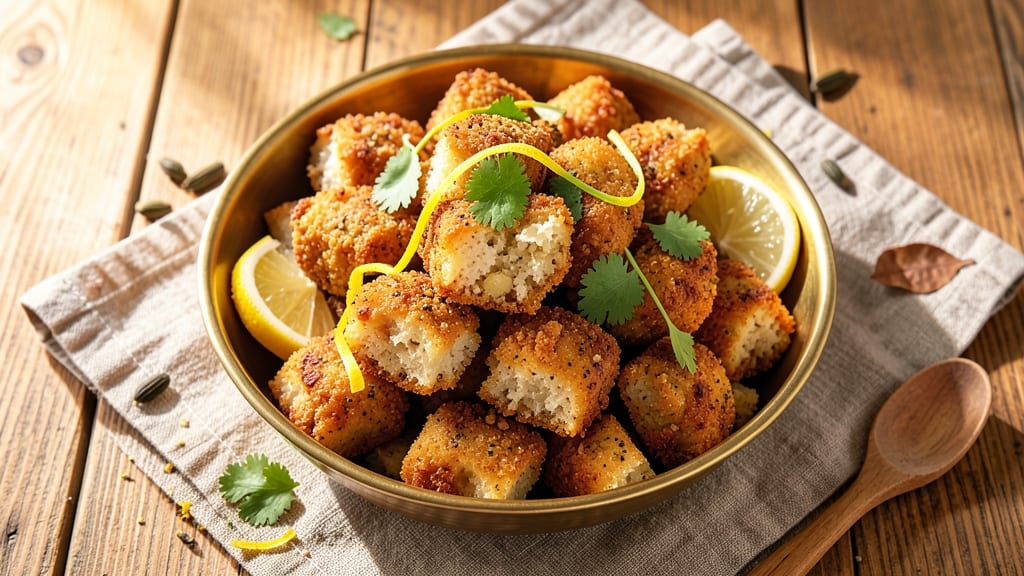
This aloo bread pakora recipe delivers crispy, golden bites that combine the best of Indian street food—fluffy potato pockets wrapped in crispy bread shells.
The secret lies in the perfect batter blend of chickpea flour and spices, paired with tender potatoes and soft bread pieces that transform into addictive fries. I developed this version after years of perfecting the texture, ensuring every bite has that satisfying crunch outside and soft, flavorful filling inside.
The magic happens in the frying process, where maintaining the right oil temperature (around 350°F) creates that signature golden crust without making the inside soggy.
Traditional techniques like shallow frying in batches guarantee even cooking, while the right spice balance—cumin, coriander, and a touch of garam masala—elevates every crispy bite. This recipe serves as both a snack and a side dish, perfect for parties or weeknight cravings.
What makes these pakoras truly special is how they hold their shape while staying crispy, even after cooling slightly. The combination of bread and potato creates a satisfying texture contrast, while the spices infuse every bite with warm, aromatic flavors.
Serve with mint chutney or tamarind sauce for the full experience—each bite becomes a little taste of Indian street food magic.
Ready in about 30 minutes, this recipe requires minimal prep but delivers maximum flavor. The batter comes together quickly, and the frying process is straightforward once you master the oil temperature.
Whether you're hosting a gathering or simply craving something crispy and delicious, these aloo bread pakoras will become your new favorite snack.
Ingredients for aloo bread pakora
Crispy, golden bites start with these vibrant ingredients—potatoes, chickpea flour, and spice magic.
| Ingredient | Amount | Notes |
|---|---|---|
| Russet Potatoes 🥔 | 1 ½ lb | Medium size, peeled and cubed |
| Chickpea Flour 🌾 | 1 cup | Also called besan |
| Bread Slices 🍞 | 4 whole | White or whole wheat, cut into small pieces |
| Garam Masala 🌶️ | 1 tsp | Ground spice blend |
| Ground Cumin 🌿 | ½ tsp | Toasted for deeper flavor |
| Ground Coriander 🌿 | ½ tsp | Freshly ground preferred |
| Red Chili Powder 🌶️ | ½ tsp | Adjust for spice preference |
| Turmeric Powder 🧂 | ¼ tsp | Bright yellow color |
| Asafoetida Powder 🌿 | ⅛ tsp | Pinch for authentic flavor |
| Vegetable Oil 🫒 | 2 cups | For deep frying |
| Salt 🧂 | 1 tsp | Kosher or sea salt |
| Lemon Juice 🍋 | 1 tbsp | Freshly squeezed |
| Fresh Cilantro 🌿 | ¼ cup | Chopped, for garnish |
The potatoes are key—Russet holds up best when cubed small and even. Peel and cut them uniformly so they cook at the same rate. For the bread, stale or lightly toasted slices work best—they absorb less oil and get extra crispy. I grab whole wheat bread from the bakery section at Whole Foods or Trader Joe's for that perfect texture. The garam masala? MDH or Everest are my go-tos—they've got that authentic warmth without overpowering. Toast your spices for 30 seconds in a dry pan to wake up their flavors.
No garam masala? Mix 1/4 tsp each of cinnamon, cardamom, and black pepper for a quick substitute. Short on chickpea flour? All-purpose flour works at half the amount, but the texture won't be quite as crispy. The asafoetida is non-negotiable for that signature umami punch—skip it only if you're avoiding strong flavors. For the oil, vegetable or sunflower oil works best (high smoke point), but avoid olive oil—it'll burn. The bread pieces should be about the size of a dime—too big and they won't cook through.
Keep your potatoes in cold water until ready to use—they'll stay crisp. Make the batter fresh—it loses crispiness if mixed ahead. These pakoras stay crispy for about 20 minutes at room temperature, so serve them immediately. Store leftovers in an airtight container for up to 3 days, but reheat gently in a skillet to restore crispiness. Freeze extras for up to 1 month—reheat directly from frozen in oil for 2-3 minutes.
Why You'll Love This Recipe
- No Chopping Nightmare: I’ll be real—this recipe only needs one potato to dice, not a whole bag. The bread gets torn, not sliced, and the batter’s forgiving. My lazy nights thank me every time.
- Crispy-Creamy Magic: That chickpea flour batter soaks up the bread like a sponge, then fries into a golden crust while keeping the potato inside fluffy and warm. Honestly, the garam masala and cumin turn this into something that tastes way fancier than it is.
- Snack or Meal: Between us, these are my go-to for movie nights (dip in mint chutney) or packed lunches (they hold up for days). Even my picky-eater nephew asks for seconds—no joke.
- Pantry Goldmine: I make a double batch, freeze half, and pull them out when I’m too tired to cook. Chickpea flour’s cheap, potatoes last forever, and stale bread gets a second life. Budget win, zero waste.
Step-by-step instructions for aloo bread pakora
Here's how to make crispy, golden aloo bread pakora that shatters with every bite.
Prepare the Spiced Potato and Bread Mixture
In a large mixing bowl, combine the 1.5 lb peeled and cubed Russet potatoes with the 4 whole bread slices cut into small pieces. The bread will help absorb moisture and create a lighter texture. Add the 1 cup chickpea flour, 1 tsp garam masala, 0.5 tsp ground cumin, 0.5 tsp ground coriander, 0.5 tsp red chili powder, 0.25 tsp turmeric powder, and 0.125 tsp asafoetida powder.
Mix everything thoroughly using your hands until the potatoes are well-coated in the spices and flour. The mixture should look like a thick, spiced potato mash with bread crumbs evenly distributed. I press down gently to ensure the spices penetrate the potatoes—this is where the authentic flavor develops. Add the 1 tsp salt and mix again, tasting for seasoning. If needed, adjust the chili powder or salt to your preference.
Form the Pakora Balls
Take small portions of the mixture—about 1 tablespoon each—and shape them into round balls. I roll them gently between my palms to create smooth, compact shapes that will fry evenly. If the mixture feels too wet, add a little more chickpea flour; if it's too dry, sprinkle a few drops of water. The texture should hold together when pressed but still be pliable.
Place the formed pakora balls on a plate and let them rest for 10 minutes. This resting time allows the flavors to meld and makes the pakoras easier to handle when frying. Don't skip this step—it prevents the pakoras from falling apart in the oil.
Heat the Oil for Deep Frying
Fill a deep, heavy-bottomed pan with the 2 cups vegetable oil and heat it over medium heat until it reaches 350°F. To test the oil's readiness, drop a small piece of pakora into it—if it sizzles and rises to the surface immediately, the oil is ready. If it floats without sizzling, the oil isn't hot enough; if it sinks slowly, it's too hot.
Maintain the oil temperature between 350°F and 375°F throughout the frying process. I use a kitchen thermometer to monitor this, but you can also use the pakora as a guide: if they brown too quickly, lower the heat slightly. Too cool, and they'll absorb oil instead of staying crispy.
Fry Until Golden and Crispy
Carefully slide the pakora balls into the hot oil using a slotted spoon, working in batches to avoid overcrowding. Fry for 3-4 minutes per side until they turn a deep golden brown color. You'll know they're done when they float to the surface and develop a crispy, shatterable exterior. Don't press them down with the spoon—this will make them greasy instead of crispy.
Once golden, remove the pakoras with the slotted spoon and drain them on a paper towel-lined plate. The pakoras should be light and airy inside with a crispy, crunchy outside. If any seem undercooked, return them to the oil for another 30 seconds. Serve immediately while still hot and crispy.
Finish with Lemon and Garnish
Transfer the fried pakoras to a serving plate and drizzle with the 1 tbsp lemon juice. The acidity cuts through the richness of the oil and brightens the flavors. Sprinkle with the 0.25 cup chopped fresh cilantro for a pop of freshness and color. Serve hot with mint chutney or tamarind sauce for dipping.
These pakoras are best enjoyed fresh, straight from the fryer. The contrast between the crispy exterior and the soft, spiced potato inside is what makes this dish so irresistible. If you're making extra, store them in an airtight container and reheat in a dry skillet over low heat to restore crispiness.
Pro Tips For Making Aloo Bread Pakora
- SOAK BREAD SLICES: Toss your bread slices in warm water for 2-3 minutes before coating—this softens them just enough to hold the potato filling without turning to mush. I learned this the hard way after watching my first batch crumble into sad, greasy clumps.
- DRY THE POTATOES WELL: After boiling, spread the potatoes on a rack (or a towel) for 10 minutes—don’t skip this. Wet potatoes release steam in the pan, turning your pakoras into soggy dumplings instead of crispy bites. Yes, even if you’re impatient like me.
- FRIED IN BATCHES: Drop 2-3 pakoras at a time into hot oil, spaced apart—crowding steams them instead of frying. I used to fry 5-6 at once, and they’d come out greasy and pale. Now I wait 2 minutes between batches, and the difference is night and day.
- SALT THE CHICKPEA BATTER: Mix ½ teaspoon salt into the chickpea flour batter before dipping—it balances the sweetness of the potatoes and makes the coating crispier. I was skeptical until I tried it; now it’s non-negotiable for me.
Troubleshooting perfect results
Batter Too Wet?
If your mixture feels sticky and refuses to hold shape, add 1-2 tablespoons more chickpea flour at a time. I’ve found that 1 extra tablespoon usually does the trick for 1.5 lbs of potatoes.
Mix gently with your hands until the texture becomes workable—it should cling together when pressed but still be moldable. Overmixing can make the pakoras dense, so just combine until the flour is evenly distributed. 💫
Oil Too Hot?
If your pakoras turn brown too quickly but stay pale inside, your oil is too hot. Lower the heat to medium-low and let the temperature stabilize between 325°F and 350°F. I’ve learned the hard way—once, I burned the outside while the center remained raw.
Use a thermometer for accuracy, or test with a small piece of bread: if it browns in under 30 seconds, the oil’s too hot. 🔥
Pakoras Falling Apart?
This usually means the mixture wasn’t rested long enough or the bread pieces were too large. Let the shaped pakoras rest for the full 10 minutes before frying—this helps the spices bind.
Also, ensure your bread pieces are dime-sized or smaller. If they’re still crumbling, lightly coat your hands with oil before shaping to reduce sticking. 💪
Not Crispy Enough?
For extra crunch, double-fry your pakoras. Fry them once at 350°F for 2 minutes, then drain and fry again at the same temperature for another 1-2 minutes. This technique works wonders for restaurant-style crispiness.
Another trick? Use sunflower oil instead of vegetable oil—it has a higher smoke point and imparts less flavor, keeping the pakoras lighter. ✨
Bread Too Soggy?
If your bread pieces turn mushy, they absorbed too much moisture. Next time, toast the bread slices lightly before cutting them into pieces—this creates a barrier that prevents excess oil absorption.
Also, reduce the amount of chickpea flour by 1 tablespoon and add 1 extra tablespoon of water to the batter. This balances the texture without sacrificing crispiness. 🌾
Uneven Cooking?
Uneven color or texture often means the pakoras weren’t shaped evenly. Roll them into uniform balls with no thick or thin spots—this ensures even cooking. Fry in small batches (no more than 4 pakoras at a time) to avoid crowding, which can lower the oil temperature.
A slotted spoon helps turn them gently without breaking them apart. 💡
Nutrition facts
Frequently asked questions
Can I use any type of bread for aloo bread pakora?
Stick with soft white or whole wheat bread for best results—they absorb spices well and create the perfect crispy texture. Avoid dense breads like sourdough, which can make the pakoras heavy. For extra crispiness, lightly toast the bread slices before cutting them into pieces.
How do I keep the pakoras from getting soggy?
Fry in small batches at 350°F and avoid overcrowding the pan. Double-frying (once at 350°F for 2 minutes, then again for 1-2 minutes) creates that signature restaurant-style crunch. Serve immediately while hot to maintain crispiness.
What's the secret to the perfect spice blend?
Toast your whole spices (cumin, coriander) for 30 seconds before grinding to deepen their flavor. The key ratio is 1 tsp garam masala to 0.5 tsp each of cumin and coriander, with just a pinch of asafoetida for that authentic umami kick. Taste and adjust the chili powder to your spice preference.
Can I make these pakoras ahead of time?
Fresh is best, but you can store them in an airtight container for up to 3 days. For reheating, place in a dry skillet over low heat for 2-3 minutes until crispy again. Freeze extras for up to 1 month—reheat directly from frozen in oil for 2-3 minutes.
What's the best way to test if the oil is hot enough?
Drop a small piece of pakora into the oil—it should sizzle and rise immediately. If it floats without sizzling, the oil isn't hot enough (325°F minimum). If it browns instantly, lower the heat to 350°F to prevent burning. A kitchen thermometer is your best friend for precision!