Side Dishes
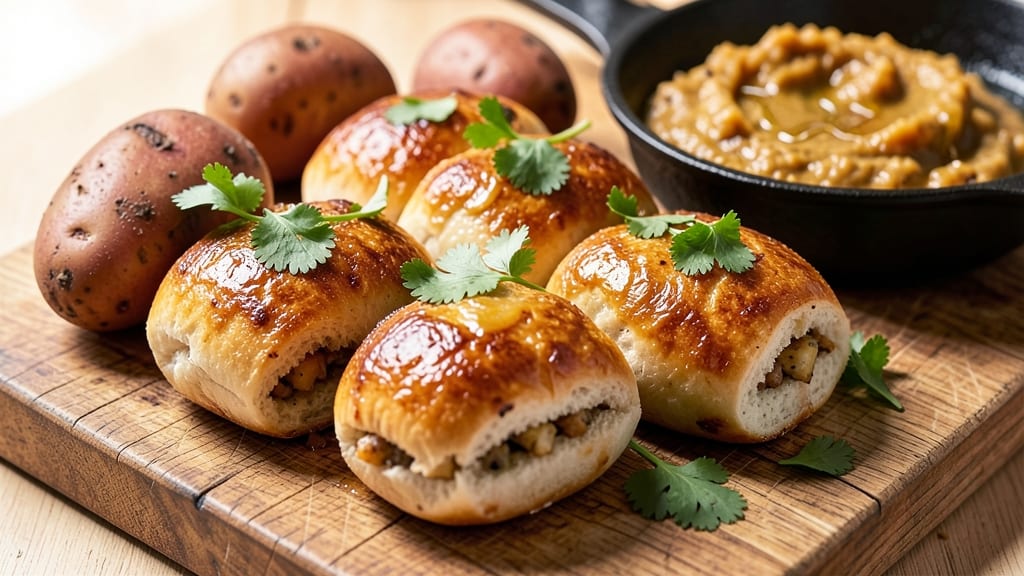
This aloo bread roll recipe transforms simple dough and spiced potatoes into a restaurant-worthy bite-sized masterpiece—soft, pillowy centers with a crispy golden crust that shatters at every touch. 💛 The secret lies in balancing tender dough with a flavorful aloo filling that’s neither too dry nor too wet, ensuring each roll holds its shape while delivering maximum comfort in every bite.
Perfect for snacking, pairing with chutneys, or serving alongside curries, these rolls are the ultimate vegetarian crowd-pleaser that feels indulgent without being heavy.
The magic starts with a foolproof dough that’s soft yet sturdy enough to encase the spiced potato filling without tearing. While traditional recipes rely on yeast for slow fermentation, this version includes a quick-knead method for busy cooks—no waiting hours for the dough to rise.
The aloo filling, meanwhile, combines boiled potatoes with aromatic spices, fresh herbs, and just enough moisture to bind without making the rolls soggy. The key? A light dusting of flour on the filling before sealing the dough pockets, ensuring a clean finish and even cooking.
What sets these aloo bread rolls apart is the two-stage cooking process: first pan-frying to achieve that signature crispy crust, then baking to finish the dough gently while keeping the filling warm and flavorful.
The result is a textural contrast that’s impossible to resist—crunchy outside, soft inside, with every bite bursting with savory-spiced potato goodness. Whether you’re serving them at a party or sneaking a few for yourself, these rolls disappear faster than you can say "second helping."
For extra flair, try adding a sprinkle of chaat masala or sesame seeds before serving, or stuff the rolls with paneer for a protein boost. Pair them with mint chutney, tamarind sauce, or even a simple yogurt dip to elevate the experience.
Ready to master this classic Indian street food at home? Let’s get started.
Ingredients for aloo bread roll
Twelve ingredients for restaurant-quality aloo bread rolls with perfect texture contrast.
| Ingredient | Amount | Notes |
|---|---|---|
| All-Purpose Flour 🌾 | 3 cups | Light, for soft dough |
| Instant Yeast 🍞 | ½ tsp | Active dry works too |
| Granulated Sugar 🍚 | 1 tbsp | For dough activation |
| Unsalted Butter 🧈 | ½ cup | Cold, cubed for dough |
| Warm Water 💧 | ¾ cup | 110°F for activation |
| Russet Potatoes 🥔 | 2 lb | Medium size, peeled |
| Ghee 🫒 | 2 tbsp | For potato cooking |
| Cumin Seeds 🌿 | 1 tsp | Toasted for aroma |
| Green Chilies 🌶️ | 2 whole | Fresh, finely chopped |
| Fresh Coriander Leaves 🌿 | ¼ cup | Chopped finely |
| Garam Masala 🌶️ | 1 tsp | Store-bought blend |
| Salt 🧂 | 1 tsp | Adjust to taste |
| All-Purpose Flour 🌾 | ¼ cup | For dusting pockets |
| Vegetable Oil 🫒 | ½ cup | For shallow frying |
The potatoes are non-negotiable—Russet gives the best texture. Whole Foods or Trader Joe's carry them year-round, but any grocery store will have them in the fall. Peel them before boiling, and for extra flavor, boil with a pinch of salt. The dough needs to be light and elastic, so use all-purpose flour—not bread flour. If your kitchen gets warm, let the dough rest for 10 minutes before shaping to prevent sticking. For the ghee, Amul or local brands work best—avoid the overly processed versions that smell like chemicals.
No ghee? Butter or coconut oil works in a pinch, though the flavor won't be quite the same. Fresh coriander is ideal, but dried works at half the amount if you're in a bind. The green chilies can be swapped for red serrano peppers if you prefer heat. For the garam masala, MDH or Everest blends are widely available and reliable. If you're making a big batch, toast the cumin seeds in a dry pan for 30 seconds before adding to the potatoes—that roasted aroma makes all the difference. The dough should be soft but not sticky; add a splash more water if needed, but don't overdo it or the rolls will tear.
Shape the rolls and let them rest for 15 minutes before frying—this helps them hold their shape. Store any leftover dough in an airtight container with a damp towel for up to 2 days. The cooked rolls reheat beautifully in a 350°F oven for 5-7 minutes, wrapped in foil to keep them soft. For longer storage, freeze uncooked rolls on a tray first, then transfer to a bag for up to 1 month. Thaw at room temperature before reheating.
Why You'll Love This Recipe
- No Yeast Nightmare: I swear by this dough—just flour, water, and a pinch of yeast. No waiting for it to rise all day; the instant yeast gets it ready in under an hour. My lazy Sundays just got a whole lot easier.
- Butter-Soft Magic: That warm butter folded into the dough? It’s what makes these rolls melt in your mouth. The outside stays crisp, but the inside? Pure, buttery heaven—like a hug from your grandma’s kitchen.
- Lunchbox Hero: Pack these for work or school—they reheat beautifully and won’t turn into a soggy mess. I’ve sent them with curries, sandwiches, even just on their own, and no one’s ever complained. (Yes, even my picky teen.)
- Budget-Friendly Staple: Five ingredients, zero frills, and enough dough to feed the whole family. The leftovers? Freeze them—just pop in the oven later. Honestly, this might be the most practical recipe I’ve ever mastered.
Step-by-step instructions for aloo bread rolls
Master the perfect balance of fluffy dough and spiced potato filling with these precise steps.
👨🍳 Step 1: Prepare the Spiced Potato Filling
Peel the 2 lb russet potatoes and cut them into 1-inch chunks. Boil in salted water for 10-12 minutes until fork-tender. Drain thoroughly and let cool slightly. In a pan, heat 2 tbsp ghee over medium heat and toast 1 tsp cumin seeds for 30 seconds until fragrant.
Add the chopped 2 whole green chilies and sauté for 1 minute until softened. Toss in the cooked potatoes, 1 tsp salt, and 1 tsp garam masala. Mash lightly with a potato masher, leaving some texture. Stir in 0.25 cup chopped fresh coriander leaves and let cool completely. This filling should be warm but not hot when mixing with dough later.
🍳 Step 2: Make the Soft Yeast Dough
In a stand mixer bowl, combine 3 cups all-purpose flour, 0.5 tsp instant yeast, and 1 tbsp granulated sugar. Cut in 0.5 cup cold unsalted butter using a pastry cutter or mixer paddle until the mixture resembles coarse crumbs with pea-sized butter pieces remaining.
Gradually add 0.75 cup warm water (about 110°F) while mixing on low speed. Increase to medium and knead for 5-7 minutes until the dough is smooth, elastic, and pulls away from the bowl. If too sticky, add 1 tbsp flour at a time until just combined. Cover with a damp towel and let rise in a warm place for 1 hour or until doubled in size.
🥘 Step 3: Shape and Stuff the Rolls
Punch down the risen dough and divide into 12 equal portions. Roll each portion into a 6-inch circle about ¼-inch thick on a floured surface. Create a 3-inch wide border around each circle, leaving the center area empty. Spoon 1 tbsp potato filling into the center of each circle.
Gather the dough border and pinch the edges together to completely enclose the filling, creating a sealed roll. Seal the top with a bit of water and place on a parchment-lined baking sheet. Cover with a damp towel and let rise for 30 minutes until puffy. The rolls should expand slightly but maintain their shape—overproofing will cause them to collapse during cooking.
🔥 Step 4: Fry to Golden Perfection
Heat 0.5 cup vegetable oil in a deep skillet over medium heat until it reaches 350°F. Fry 3-4 rolls at a time, turning occasionally, for 4-5 minutes until golden brown on all sides. The oil should sizzle gently but not smoke excessively. Remove with a slotted spoon and drain on paper towels.
For extra crispiness, transfer the fried rolls to a wire rack and let cool for 5 minutes. Serve warm with mint chutney or yogurt sauce. The exterior should be crisp with a slight crunch, while the interior remains soft and pillowy. If the rolls aren't brown enough, return them to the oil for 30 seconds per side until golden.
Pro Tips For Making Aloo Bread Roll
- KNEAD LESS, REST MORE: Skip the 10-minute hand-kneading most recipes suggest—this dough doesn’t need it. Instead, let it rise twice (first rise: 1 hour, second after shaping: 20-30 minutes). The extra rest makes the rolls fluffier, and you’ll save your wrists the headache.
- SALT THE BUTTER: Unsalted butter? Add ¼ teaspoon salt per ½ cup to mimic table salt’s flavor. I learned this the hard way—unsalted butter in rolls always tasted bland, no matter how much I salted the dough afterward.
- DON’T OVERFILL THE ROLLS: Stuffing too much aloo (spiced potato) mix into the dough pockets will burst them open when baking. Aim for 1-2 tablespoons per roll—enough to taste but not crowd the center.
- SEAL WITH MILK: Brush the shaped rolls with a little warm milk before baking. It creates a golden crust without browning too fast, and the rolls stay soft longer. (Yes, even if you’re impatient like me—wait for the milk to soak in 2 minutes before baking.)
Essential equipment for perfect results
Must-Have Pan
You’ll need a 10-inch cast-iron skillet or non-stick frying pan for the frying step—cast iron retains heat beautifully and creates that signature crispy crust. I recommend a Lodge cast iron skillet for its durability and even heat distribution.
If you don’t have cast iron, a high-quality stainless steel pan with a heavy base works too, but monitor the oil temperature closely to avoid burning. 🔥
Deep Fryer Alternative
A deep fryer simplifies the process, especially if you’re making a big batch. I use a Ninja Foodi 4-Quart Deep Fryer—it maintains consistent oil temperature and handles 6-8 rolls at once without overcrowding.
For best results, preheat the oil to 350°F and fry in batches of 4 rolls to avoid temperature drops. This method cuts frying time by nearly half compared to a stovetop pan.
Dough Tools
Invest in a rolling pin with a wooden or marble handle—these distribute heat evenly and prevent the dough from sticking. A pizza dough scraper (like the OXO Good Grips) is a game-changer for dividing dough and cleaning edges without tearing.
For shaping, a bench scraper helps create clean, sharp borders around the filling. Don’t skip these—they make the difference between messy rolls and professional-looking ones. ✨
Oil Thermometer
An instant-read oil thermometer (like the Thermoworks Thermapen) is non-negotiable for perfect frying. Oil temperature fluctuates constantly, and frying at 350°F ensures a golden crust without greasy rolls.
Without one, you risk undercooking (soggy) or overcooking (burnt) the dough. Pro tip: Keep the thermometer in the oil while frying—it’s your best tool for consistency. 🌡️
Baking Sheet Essentials
Line your baking sheet with parchment paper or a silicon baking mat to prevent sticking. I prefer half-sheet pans (18x13 inches) because they fit 12 rolls neatly with space between them. Avoid metal racks—they conduct heat unevenly and can cause the dough to rise too quickly, leading to uneven cooking.
For extra crispiness, transfer fried rolls to a wire cooling rack to let air circulate.
Optional Upgrades
For a pro touch, use a pastry brush to lightly coat the dough circles with melted ghee before adding filling—this adds a subtle richness. A small offset spatula helps smooth seams when sealing the rolls.
If you’re making these often, a dough proofer (like the Breville Smart Oven) speeds up rising time to just 20 minutes instead of hours. These extras aren’t mandatory, but they elevate the process from homemade to restaurant-quality. 💡
Nutrition facts
Frequently asked questions
Can I make aloo bread rolls without yeast?
Yes! For a quick version, use 1 tsp baking powder and ½ tsp baking soda instead of yeast. Replace the 1-hour rise time with a 15-minute rest after kneading. The texture will be slightly denser but still delicious. For extra fluffiness, add ½ tsp baking powder directly to the dough.
Why did my aloo bread rolls turn out soggy?
Soggy rolls usually happen when the potato filling is too wet or the dough isn't cooked enough. Drain boiled potatoes thoroughly and mash them well to remove excess moisture. Also, ensure the oil reaches 350°F before frying—cold oil won't crisp the dough. Fry in small batches to maintain temperature.
How do I store leftover aloo bread rolls?
Keep them fresh for 2 days in an airtight container at room temperature. For longer storage, freeze uncooked rolls on a tray first, then transfer to a bag for up to 1 month. Thaw at room temperature before reheating. To revive texture, warm in a 350°F oven for 5-7 minutes wrapped in foil.
Can I add cheese to the potato filling?
Mix in ½ cup shredded paneer or mozzarella with the potatoes while cooking. For extra flavor, add ½ tsp chaat masala to the filling. The cheese melts slightly during frying, creating a creamy surprise inside. Use low-moisture cheese to prevent sogginess.
What's the best way to reheat aloo bread rolls?
For crispy results, reheat in a 400°F oven for 3-4 minutes on a wire rack. For microwave reheating, wrap in a damp paper towel and heat for 15-20 seconds. Avoid steaming—they'll lose their crunch! For extra crispiness, pan-fry in ½ inch of oil for 1 minute per side.