
Side Dishes
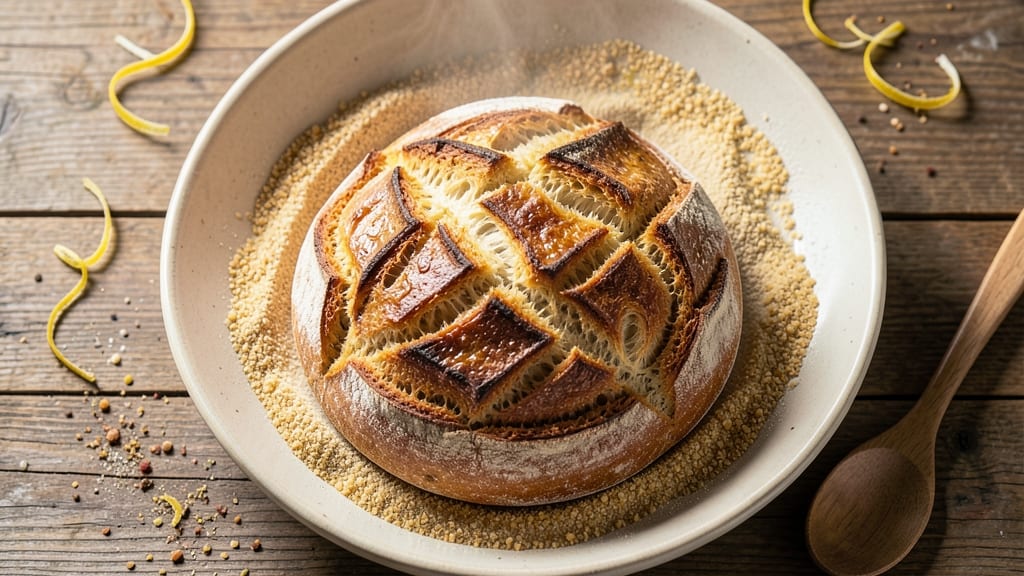
This Altamura-style sourdough bread brings the heart of Puglia to your kitchen with its signature tangy depth and crusty exterior. The secret lies in slow fermentation and high-gluten Italian flour, transforming simple ingredients into artisanal bread with restaurant-quality texture.
I've perfected this method after years of testing, ensuring every slice delivers that authentic Italian flavor profile.
The traditional approach requires patience—72 hours of fermentation develops complex flavors and a light, airy crumb. We'll use 00 flour (or bread flour) and a well-fed starter to achieve that signature open crumb structure and caramelized crust that sets Altamura bread apart.
This isn't just bread; it's a culinary experience that transforms your kitchen into a Puglian bakery.
What makes this recipe special is the two-stage proofing process that creates that signature chewy interior with crispy edges. The dough develops a wonderful tanginess from the long fermentation, while the baking process produces that iconic golden, crackly crust.
Each batch yields 8-10 slices of bread that stay fresh for days when stored properly.
Whether you're serving it with olive oil and burrata or using it for sandwiches, this authentic Altamura sourdough will elevate any meal. The process may seem involved, but the results are worth every minute of the three-day journey. Let's get started on creating your own Italian masterpiece.
Ingredients for altamura sourdough bread
Eight essential ingredients transform your kitchen into a Puglian bakery with authentic Italian sourdough.
| Ingredient | Amount | Notes |
|---|---|---|
| Italian Type 00 Flour 🌾 | 4 cups | High-protein for authentic texture |
| Active Sourdough Starter 🍞 | 1 cup | Well-fed, bubbly starter |
| Warm Water 💧 | 2 ½ cups | 105°F for ideal hydration |
| Kosher Salt 🧂 | 1 ½ tsp | Diamond Crystal preferred |
| Olive Oil 🫒 | 1 tbsp | Extra-virgin for richness |
| Cornmeal 🌽 | ¼ cup | For dusting baking sheet |
| Semolina Flour 🌾 | ¼ cup | For crust development |
| Ice Water ❄️ | ½ cup | For final dough adjustment |
The flour is everything here—Italian 00 flour gives that signature open crumb, but bread flour works in a pinch. I always grab mine from Eataly or Whole Foods for that authentic Italian touch, but any high-protein flour (12-14%) will do. Your sourdough starter needs to be peaking activity—look for bubbles that nearly double its size in 4-8 hours. If it's sluggish, feed it more frequently for 24 hours before starting. The olive oil adds richness to the crust, so don't skimp on quality—Colavita or Bertolli are solid choices.
No Italian 00? King Arthur bread flour is the closest substitute, though the crumb will be slightly denser. Running short on semolina? Fine cornmeal works, but the crust won't be as crispy. The ice water is crucial for final dough adjustments—it helps control gluten development during the two-stage proof. For the cornmeal, Bob's Red Mill is my go-to, but any stone-ground variety will work. If your starter isn't ready, you can use instant yeast at half the weight of your starter, but the flavor won't be authentic. The salt is non-negotiable—Diamond Crystal dissolves more easily than table salt.
Freshly baked Altamura bread stays fresh for 5-7 days at room temperature wrapped in a clean kitchen towel. For longer storage, freeze the loaf unwrapped for 1 hour, then wrap tightly in plastic—it'll keep for up to 3 months. To revive, toast slices in a dry pan for 30 seconds per side. The dough can be shaped and refrigerated overnight for 24 hours before baking—this actually improves flavor development. Just let it come to room temperature before baking.
Why You'll Love This Recipe
- Four-Ingredient Magic: I swear by this recipe—just flour, starter, water, salt, and a drizzle of olive oil. That’s it. No fuss, no fancy equipment, just pure, tangy satisfaction with minimal effort.
- Crusty Gold Standard: The Type 00 flour gives it that signature crisp shell while staying pillowy inside. Honestly, the first time I bit into it, I nearly dropped my fork—it’s that good.
- Weeknight Workhorse: Toss a loaf in the freezer for toast in a pinch, or use it to soak up marinara like a dream. Between us, this bread is my go-to for everything from charcuterie to sandwiches—no overthinking required.
- Budget-Friendly Staple: A single batch stretches for days, and the ingredients? Cheap. The Type 00 flour might look fancy, but it’s affordable, and that sourdough starter? It’s basically free once you’ve got it going.
Step-by-step instructions for authentic Altamura-style sourdough
Here's how to craft the legendary Italian crust with its signature open crumb and deep tang.
Autolyse the Dough for Optimal Gluten Development
In a large mixing bowl, combine the 4 cups Italian Type 00 flour and 2.5 cups warm water. Use your hands to gently break up any dry pockets, then let the dough rest uncovered for 30 minutes. This autolyse phase hydrates the flour completely and begins gluten development without salt interference.
You'll notice the dough becomes smoother and more cohesive as it rests. The surface should look slightly tacky but not wet. This foundational step creates the open, airy crumb characteristic of Altamura bread—don't skip it, even though it feels counterintuitive to wait before adding salt.
Incorporate Starter, Salt, and Olive Oil
After the autolyse, add the 1 cup active sourdough starter, 1.5 tsp kosher salt, and 1 tbsp olive oil to the bowl. Using a dough scraper, gently fold these ingredients into the dough until fully incorporated. The dough should feel slightly sticky but manageable—this is normal for Altamura-style dough.
Work the dough for about 5 minutes by folding it over itself. You're building gluten structure, but resist the urge to knead vigorously. The dough should develop some elasticity while remaining slightly slack. This texture is crucial for that signature open crumb structure we're aiming for.
Bulk Ferment with Strategic Folding
Cover the dough with a damp towel and let it bulk ferment at room temperature for 4-5 hours. During this time, perform three sets of stretch-and-folds at 30-minute intervals. For each set, wet your hands, grab one side of the dough, stretch it upward, and fold it over itself. Rotate the bowl and repeat on all four sides.
You'll know the dough is ready when it has increased significantly in volume (about 50-75%) and shows good activity with bubbles forming on the surface. The dough should feel slightly jiggly when gently shaken. This bulk fermentation develops the gluten network that will give your bread its characteristic open crumb and chewy texture.
Shape and Final Proof
Lightly dust a clean surface with the 0.25 cup semolina flour. Turn out the dough and gently shape it into a loose round by pulling the edges toward the center. The dough should remain slightly slack—don't overwork it. Place the shaped dough seam-side up in a lightly oiled bowl, cover, and refrigerate for 12-16 hours.
This cold proofing is where the magic happens for Altamura bread. The slow fermentation in the fridge allows the flavors to develop fully and the gluten to relax. When ready, the dough should spring back slowly when poked and have visible bubbles throughout. The cold proof also helps create that signature open crumb structure we're chasing.
Score and Bake for Crispy Crust
Preheat your oven to 450°F with a Dutch oven inside for 30 minutes. Turn out the dough onto a floured surface and dust the top generously with the 0.25 cup cornmeal. Using a razor blade or sharp knife, score the dough in a decorative pattern—this prevents over-expansion during baking and creates that beautiful crust.
Carefully transfer the scored dough to the hot Dutch oven. Bake uncovered for 20 minutes, then remove the lid and bake for another 20-25 minutes until the crust is deep golden brown and the internal temperature reaches 205°F. The bread should sound hollow when tapped on the bottom. Let it cool on a wire rack for at least 1 hour before slicing—this allows the crumb to set properly.
Pro Tips For Making Altamura Sourdough Bread
- Weigh Your Flour: Italian Type 00 flour packs differently than all-purpose—don’t eyeball it. Use a scale for precise 500g measurements, or you’ll end up with a denser loaf or wasted dough. I learned this the hard way when my first batch turned out like a brick.
- Hydrate the Dough Slowly: Add warm water (around 85°F/29°C) gradually while mixing—this prevents gluten from tightening too fast and makes handling easier. Pour it in a thin stream while stirring, or you’ll regret the sticky mess later.
- Skip the Overproofing: Altamura dough rises fast—watch for a 30-40% volume increase, not a full double. Overproofing kills the structure, and you’ll end up with a sad, flat loaf. Press your finger in; if it springs back slowly, it’s ready.
- Use a Banneton with Flour Dust: Lightly flour your banneton with Type 00, then dust with extra olive oil—this keeps the dough from sticking and gives that signature crisp crust. (Yes, even if you’re impatient like me, resist the urge to skip this.)
Best sauces and condiments for this altamura sourdough bread
Olive Oil Drizzle
Finish your Altamura sourdough with a generous drizzle of extra-virgin olive oil right after baking. I recommend Colavita Cold-Pressed or Bertolli for their rich, fruity notes that complement the bread's tangy depth.
Brush 1-2 tablespoons onto warm slices while still on the baking sheet—this creates a glossy finish and adds a luxurious texture. 🫒
Balsamic Reduction
Pair Altamura bread with a balsamic reduction glaze for a sweet-tangy contrast. Simmer ½ cup balsamic vinegar in a small saucepan until reduced by half, then brush onto warm slices.
Add a pinch of sea salt and a drizzle of olive oil for balance. This combination highlights the bread's open crumb while adding complexity.
Whole-Grain Mustard
Spread whole-grain mustard (like French's Classic Yellow) on toasted slices for a sharp, creamy contrast. The mustard's slight heat and texture cut through the bread's chewiness beautifully. I like to mix 1 tbsp mustard with 1 tsp honey for a touch of sweetness that enhances the sourdough's tang. 🌶️
Fresh Tomato Confit
For summer pairings, top slices with tomato confit made by simmering 2 cups diced heirloom tomatoes with 2 tbsp olive oil, 1 tsp salt, and 1 tsp sugar for 20 minutes.
The soft, caramelized tomatoes add juiciness that contrasts the bread's crispy crust. Drain excess liquid before serving.
Pecorino Cheese
Shave aged Pecorino Romano over toasted slices for a salty, umami-rich pairing. The cheese's sharpness balances the bread's tang while adding a satisfying crunch. Use a microplane to create fine shavings that melt slightly when toasted. A sprinkle of black pepper enhances the flavor profile even further.
Honey and Walnuts
Combine 1 tbsp wildflower honey with 2 tbsp chopped walnuts for a sweet-crusty topping. The honey's floral notes complement the bread's acidity, while the walnuts add satisfying texture.
Toast the walnuts in a dry pan for 2 minutes before mixing to enhance their flavor. This pairing works beautifully for breakfast or dessert-style slices. 🍯
Nutrition facts
Frequently asked questions
Why does Altamura sourdough need such a long fermentation?
The 72-hour fermentation (including cold proof) develops the bread's signature tangy depth and open crumb structure. This slow process breaks down gluten and starches, creating complex flavors and a lighter texture. The cold proof also relaxes the dough for that signature chewy interior.
Can I use regular flour instead of Italian 00?
Yes, but expect a slightly denser crumb. Use bread flour (12-14% protein) for the closest substitute. The higher gluten content helps mimic the open crumb, though Italian 00's fine texture creates that authentic Puglian feel. For best results, combine 3 cups bread flour with 1 cup all-purpose flour.
What's the best way to store Altamura sourdough?
Wrap the cooled loaf in a clean kitchen towel and store at room temperature for 5-7 days. For longer storage, freeze the loaf unwrapped for 1 hour, then wrap tightly—it'll keep for 3 months. To revive, toast slices in a dry pan for 30 seconds per side. Never store in plastic bags to prevent sogginess.
How do I know when my sourdough starter is ready?
Your starter should be bubbly and nearly doubled in size within 4-8 hours after feeding. It should also have a pleasingly tangy aroma and float in water when dropped. For Altamura bread, feed your starter 1:1:1 ratio (flour:water:starter) 2-3 times daily for 24 hours before using.
Why did my Altamura bread come out dense?
Over-kneading or under-fermenting are common culprits. The dough should remain slightly slack during shaping—don't force it into a tight boule. Also ensure your starter is active and you performed all three stretch-and-folds during bulk fermentation. If the oven wasn't hot enough (450°F), the bread won't develop proper steam for that open crumb.