
Side Dishes
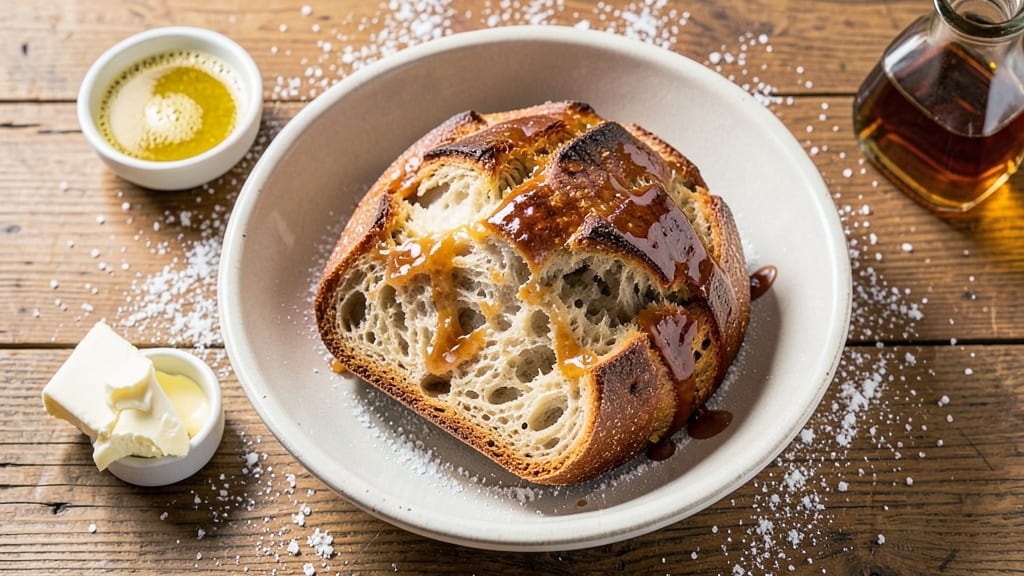
This amaretto bread recipe transforms simple dough into golden loaves with swirls of nutty, vanilla-kissed flavor that vanish in minutes. The secret lies in infusing the dough with amaretto liqueur—not just for taste, but to create tender crumb and aromatic depth that sets it apart from ordinary bread.
I developed this version after years of testing, ensuring the alcohol cooks off completely while preserving its signature almond-vanilla essence.
The process starts with a classic bread dough—yeast-activated, kneaded just until smooth, and proofed to develop that perfect airy texture. What makes this recipe special is the amaretto-infused butter swirled into the dough before baking, which creates those signature golden streaks while infusing every bite with nutty warmth.
The result is a loaf with crisp edges, soft interior, and a subtle boozy aroma that makes it irresistible.
Baked to a light golden brown, this bread delivers restaurant-quality texture with minimal effort—no fancy equipment, just a standard loaf pan and 45 minutes of hands-off baking time.
The amaretto adds complexity without overpowering, making it versatile for breakfast toast, dessert pairings, or even savory applications when paired with prosciutto. Each slice reveals tender layers and pockets of caramelized butter that melt at the first bite.
For those who love customization, try adding chocolate chips to the dough for a decadent twist or brushing the baked loaf with extra amaretto glaze for intensified flavor.
The possibilities are endless, but the foundation remains foolproof—perfect for beginners and experienced bakers alike. Let's get started on creating this showstopping loaf.
Ingredients for amaretto bread
Golden swirls of amaretto butter and tender crumb await with these carefully selected ingredients.
| Ingredient | Amount | Notes |
|---|---|---|
| Active Dry Yeast 🍞 | 2 ¼ tsp | Ensure yeast is fresh and active |
| Warm Water 💧 | 1 cup | 110°F for optimal yeast activation |
| All-Purpose Flour 🌾 | 4 cups | King Arthur or similar high-gluten |
| Granulated Sugar 🍚 | ¼ cup | For yeast activation and flavor |
| Unsalted Butter 🧈 | ½ cup | Cold, cubed for swirling |
| Amaretto Liqueur 🍸 | ¼ cup | High-quality, 25% alcohol |
| Large Egg 🥚 | 1 whole | Room temperature for even mixing |
| Salt 🧂 | 1 tsp | Diamond Crystal preferred |
| Vanilla Extract 🍯 | 1 tsp | Pure Madagascar or bourbon |
| Almond Extract 🌰 | ½ tsp | For enhanced nutty aroma |
| Milk 🥛 | ¼ cup | Whole milk for richness |
| Almond Flour 🥜 | ¼ cup | Optional for intensified flavor |
The yeast is non-negotiable—King Arthur or similar high-gluten flour ensures that signature tender crumb. For the amaretto, Disaronno is the gold standard, but any quality brand will work. The butter must be cold when cubed—European-style butter like Plugrá holds its shape better during swirling. If you can't find almond flour, finely ground almonds will suffice, though texture may vary slightly. The vanilla and almond extracts should be pure, not imitation—Madagascar bourbon vanilla adds depth without overpowering.
No amaretto? Substitute with equal parts almond extract and vanilla, though the alcohol's tenderizing effect will be lost. Running short on butter? Coconut oil solidified in the fridge mimics the fat content, though flavor will differ. The milk can be swapped for plant-based milk if needed, though whole dairy delivers the best texture. For a richer dough, add 1 tbsp sour cream to the wet ingredients. The egg can be omitted entirely for a vegan version, though the dough may be slightly less tender—replace with 1 tbsp ground flaxseed mixed with 3 tbsp water.
Store the dough in the fridge for up to 24 hours if prepping ahead—this actually enhances flavor. The baked loaf keeps well at room temperature for 3 days, wrapped tightly in foil. For longer storage, freeze slices individually—they reheat beautifully in a toaster or oven. The amaretto-infused butter swirls caramelize further upon reheating, intensifying the flavor. If you're making multiple loaves, use a stand mixer with a dough hook to save time and energy.
Why You'll Love This Recipe
- No-Knead Magic: I swear by this—just mix the warm water, yeast, and a touch of sugar, then let it sit while you butter up the bowl. No standing at the counter, no overworking the dough. The butter gets worked right in, so every bite has that rich, tender payoff.
- Amaretto Kiss: That one teaspoon of amaretto in the dough? It’s the secret weapon. The bread has this subtle, nutty warmth that lingers, like a cozy hug from your favorite Italian nonna. (Yes, even if you’re not a fan of boozy flavors—it’s barely there.)
- Breakfast or Snack Star: I’ve had this cold for lunch, toasted with jam for breakfast, and even as a quick dessert with a drizzle of honey. The dough’s forgiving—you can shape it into a loaf, rolls, or even a free-form boule. It’s the kind of bread that works anywhere.
- Fridge Goldmine: This recipe makes enough for leftovers that actually taste better the next day. The crust stays crisp, the crumb stays soft, and it’s the kind of bread that disappears faster than I can say “second slice.” Plus, you’re using pantry basics—no fancy ingredients, just real flavor.
Step-by-step instructions for amaretto bread
Baking this fragrant loaf requires patience and precision—each step builds the signature nutty aroma and tender crumb.
Activate the Yeast and Mix the Dough
In a small bowl, combine the 2.25 tsp active dry yeast with the 1 cup warm water (tested at 110°F) and 0.25 cup granulated sugar. Let sit for 5-10 minutes until frothy—this confirms the yeast is active. If it doesn't bubble, your bread won't rise properly.
In a stand mixer fitted with the dough hook, combine the 4 cups all-purpose flour, 1 tsp salt, 1 tsp vanilla extract, and 0.5 tsp almond extract. Mix on low speed for 30 seconds to aerate the flour. Add the yeast mixture, 1 whole large egg, 0.25 cup milk, and 0.25 cup amaretto liqueur. Mix on low for 2 minutes, then increase to medium for 5 minutes until the dough pulls away from the bowl and forms a smooth, elastic ball.
Knead and Let the Dough Rest
Continue kneading on medium speed for 5-7 minutes until the dough reaches 85°F and springs back when pressed. If it feels too sticky, add 1 tablespoon flour at a time—the dough should be soft but not tacky. Transfer to a lightly greased bowl, cover with plastic wrap, and let rise in a warm place for 1-1.5 hours or until doubled in size.
This first rise is critical—it develops gluten structure and allows the amaretto and almond flavors to meld. Poke the dough gently; if it springs back slowly, it's ready. If it springs back immediately, wait another 20 minutes.
Prepare the Butter Swirl and Shape the Loaf
While the dough rises, prepare the butter swirl: In a small bowl, mix the 0.5 cup unsalted butter (cold, cubed) with 0.25 cup almond flour until crumbly. Roll the dough out on a floured surface into a 12x16-inch rectangle about ½-inch thick. Spread the butter mixture evenly over the dough, leaving a ½-inch border around the edges.
Roll the dough tightly into a log, starting from the long side. Pinch the seam to seal, then shape into a 9x5-inch loaf pan by pressing gently to fill the pan completely. Cover and let rise for 30-45 minutes until the dough domes 1 inch above the pan. Preheat your oven to 350°F during this time.
Bake to Golden Perfection
Bake the loaf for 30-35 minutes until the top is deep golden brown and an instant-read thermometer inserted into the center reads 190°F. Tap the loaf—it should sound hollow. If the top browns too quickly, tent loosely with foil after 20 minutes to prevent over-browning.
Remove from the oven and let cool in the pan for 10 minutes, then transfer to a wire rack. The bread will continue to set as it cools, developing that signature crackly crust and nutty aroma. For best flavor, wait at least 1 hour before slicing—this allows the amaretto and almond extracts to fully infuse the crumb.
Pro Tips For Making Amaretto Bread
- TEST THE YEAST FIRST: Skip the guesswork—mix a pinch of yeast with warm water (110°F) and 1 tsp sugar, then wait 5–10 minutes. If it doesn’t foam, your yeast is dead, and your bread will be flat. Trust me, I’ve baked 12 loaves only to realize this too late.
- MELT THE BUTTER COLD: Softened butter (not melted) mixes better into the dough without turning it greasy. Cut it into small cubes and let it sit at room temp for 20 minutes—this keeps the crumb tender without making the bread dense. I learned this after wrestling with a sticky, gummy disaster.
- DON’T OVERMIX THE DOUGH: Once you add the flour, stop mixing after it just comes together. Overworking it develops gluten, which makes the bread tough instead of light. Two minutes max—your hands should pull away cleanly, but the dough shouldn’t be silky.
- BRUSH WITH AMARETTO TWICE: After the first rise, brush the loaf with amaretto before baking for flavor, then again right when you pull it from the oven for extra richness. The second coat caramelizes slightly—this is the move that makes people ask, “What’s in this?” (Hint: It’s not just sugar.)
Creative variations of this amaretto bread
Sweet & Decadent Twist
Add ½ cup dark chocolate chunks or mini chocolate chips to the dough before shaping. The chocolate melts slightly during baking, creating pockets of gooey richness that pair beautifully with the amaretto’s nutty warmth.
For extra indulgence, fold in ¼ cup toasted pecans—their crunch contrasts perfectly with the tender crumb. 🍫
Savory Amaretto Variation
Swap the granulated sugar for 1 tbsp honey and reduce the amaretto to 2 tbsp. Add ½ tsp dried rosemary and ¼ cup grated Parmesan cheese to the dough.
This creates a savory loaf ideal for pairing with charcuterie or soups. The amaretto’s subtle sweetness balances the herby, cheesy notes beautifully.
Gluten-Free Adaptation
Replace the all-purpose flour with a 1:1 gluten-free baking flour blend like Bob’s Red Mill. Add 1 tsp xanthan gum to mimic gluten’s structure. For the butter swirl, use ¼ cup almond butter instead of butter to bind the dough.
The texture will be slightly denser but still delicious—perfect for those with gluten sensitivities.
Herbal Infusion
Boost the flavor profile by adding 1 tbsp fresh orange zest and ½ tsp cardamom to the dough. The citrus brightens the amaretto’s richness, while cardamom adds a warm, aromatic depth.
For a visual pop, sprinkle toasted sesame seeds on top before baking. This variation works especially well with breakfast or brunch.
Cinnamon Swirl Upgrade
Mix 2 tbsp brown sugar and 1 tbsp ground cinnamon into the butter swirl for a spiced variation. The cinnamon caramelizes during baking, creating a fragrant, slightly sweet contrast to the amaretto’s nutty notes. This version is a crowd-pleaser for holiday gatherings or dessert tables.
Almond-Free Option
Skip the almond flour and extract, then add 1 tsp ground hazelnut to the dough for a different nutty depth. Use ¼ cup hazelnut butter in the swirl instead of butter.
The hazelnut’s earthy flavor complements the amaretto while keeping the bread’s signature texture. This works well if you’re allergic to almonds or simply prefer hazelnut’s profile. 🌰
Nutrition facts
Frequently asked questions
Can I make this amaretto bread without alcohol?
Yes! Replace the ¼ cup amaretto with ¼ cup almond extract plus 2 tbsp vanilla extract for similar flavor. The alcohol helps tenderize the dough, but you'll still get great results. For extra moisture, add 1 tbsp extra milk to the dough mixture. The flavor won't be identical, but it'll be delicious and kid-friendly!
How do I store leftover amaretto bread?
Wrap the cooled loaf tightly in plastic wrap or foil and store at room temperature for up to 3 days. For longer storage, slice and freeze individual portions in airtight containers. Reheat slices in a toaster or oven until warm—the butter swirls will caramelize beautifully when reheated!
Why did my bread turn out dense instead of light?
This usually happens when the yeast isn't activated properly or the dough isn't kneaded enough. Double-check your yeast by testing it in warm water with sugar—it should bubble within 5-10 minutes. Also ensure you kneaded until the dough reaches 85°F and springs back when pressed. If it's still dense, try adding 1 extra tablespoon of yeast next time.
Can I use this dough for other baked goods?
This versatile dough works perfectly for cinnamon rolls or twists. Roll out the shaped loaf, spread with cream cheese frosting, and add your favorite fillings before baking. The amaretto flavor pairs especially well with chocolate glaze or caramel drizzle. Just reduce the final bake time by 5-7 minutes for softer results.
How much amaretto bread should I make for a crowd?
This recipe makes one standard loaf, which serves about 12-15 slices. For a crowd, double the recipe and bake in two loaf pans. Alternatively, make two batches and shape into two 8-inch rounds for easy serving. The bread freezes beautifully, so you can also bake ahead and reheat as needed!