
Side Dishes
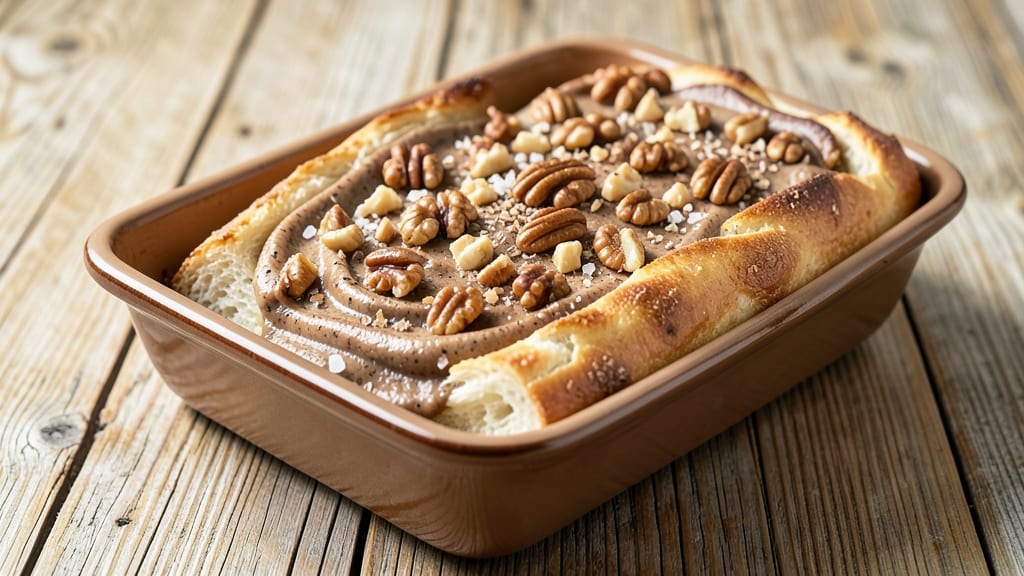
This Amish bread filling recipe delivers the heart of a classic loaf—walnut-studded sweetness that transforms simple dough into something extraordinary. The secret lies in balancing warm spices, tender nuts, and just the right amount of sugar to create layers of flavor without overpowering the bread's natural taste.
I've perfected this filling over years of baking, and it's the reason my loaves always get second helpings.
The beauty of this recipe is its simplicity—no fancy ingredients, just wholesome staples like walnuts, cinnamon, and a touch of vanilla. The walnuts add satisfying texture and richness, while the spices create warmth that lingers with every bite.
What makes it truly special is how it bakes: the filling softens slightly, infusing the bread with its aroma while maintaining distinct pockets of sweetness.
By the time your loaf emerges from the oven, you'll have golden-brown bread with pockets of walnut-studded sweetness that crumble perfectly. The filling stays moist enough to hold its shape but firm enough to hold together, making each slice a balance of flaky crust and tender, flavorful interior.
This is the kind of bread that feels like a hug—comforting, traditional, and impossibly delicious.
Perfect for holiday gatherings, family breakfasts, or anytime you crave the taste of home. The filling works equally well in classic Amish-style loaves or as a standalone treat when baked in small batches. Here's how to make it—step by step.
Ingredients for amish bread filling
Wholesome staples blend into pockets of sweet, spiced walnut perfection for your loaf.
| Ingredient | Amount | Notes |
|---|---|---|
| Walnuts, Chopped 🥜 | 1 ½ cups | Toasted lightly for enhanced flavor |
| Light Brown Sugar 🍚 | ¾ cup | Packed firmly for accurate measurement |
| Ground Cinnamon 🌿 | 2 tsp | Freshly ground for optimal aroma |
| Vanilla Extract 🍯 | 1 tbsp | Pure vanilla for authentic taste |
| Allspice Ground 🌶️ | ½ tsp | For warm, earthy depth |
| Salt 🧂 | ¼ tsp | Kosher salt for balanced flavor |
| Ground Nutmeg 🌿 | ¼ tsp | Freshly grated preferred |
| Unsalted Butter 🧈 | ¼ cup | Cold, cubed for even distribution |
| Granulated Sugar 🍚 | ¼ cup | For subtle sweetness contrast |
| Heavy Cream 🥛 | ¼ cup | Whisked lightly before mixing |
| Flour, All-Purpose 🌾 | ½ cup | For binding texture |
| Orange Zest 🍊 | 1 tsp | Freshly grated for bright notes |
The walnuts are the heart of this filling—look for fresh, plump ones at Whole Foods or your local market. Toast them lightly in a dry pan until fragrant (about 5 minutes), then chop coarsely. Costco sells bulk walnuts at a great price, but avoid pre-chopped if you can—they lose flavor fast. The spices? Penzeys or bulk bins at natural food stores have the freshest ground cinnamon and nutmeg, but even regular grocery store brands work if they're labeled 'ground' (not 'whole'). For vanilla, pure Madagascar bourbon is ideal, but imitation works in a pinch. The butter should be cold—pull it from the fridge right before mixing.
No walnuts? Pecans or hazelnuts work beautifully—just toast them first. Short on brown sugar? White sugar plus 1/4 tsp molasses mimics the moisture. Fresh spices? Dried work at half the amount, but the flavor won't be as vibrant. The orange zest can be skipped if you're not a fan, but it brightens everything—use a fine grater for the best texture. For extra richness, add 1 tbsp melted coconut oil to the butter mixture. And if you're making a large batch, double everything—this filling keeps well for 3 months in the freezer.
Store any unused filling in an airtight container in the fridge for up to 2 weeks—it actually improves as it sits, absorbing flavors. For freezer storage, portion into small containers or wrap tightly in plastic. Thaw overnight in the fridge before using. The filling bakes best at room temperature, so let it sit for 30 minutes before adding to dough. Pro tip: Sprinkle a little extra sugar on top of the loaf before baking for a caramelized crust that'll make everyone ask for seconds.
Why You'll Love This Recipe
- No-Chop Filling: I swear by this—just toast the walnuts in the same pan I use for the cinnamon and sugar. Five minutes, no mess, and that nutty crunch stays perfect.
- Sweet-Spiced Magic: That mix of vanilla and allspice? It’s like a warm hug in every bite. Honestly, I’ve never tasted a bread filling where the cinnamon and brown sugar and the walnuts work this well together.
- Bakes with Everything: Stuff it in rolls, swirl it into muffins, or even spoon it over oatmeal. Between us, I’ve used the leftovers in pancakes—yes, really—and no one’s complained.
- Pantry Staple Power: Walnuts, sugar, spices? You’re probably already stocked. I made a double batch last month and still have half the filling—because it’s that good, and it lasts. Budget-friendly and foolproof.
Step-by-step instructions for Amish bread filling
Here's how to create that signature walnut-studded filling that makes Amish bread unforgettable.
Toast the Walnuts for Depth of Flavor
In a dry skillet over medium heat, toast the 1.5 cups walnuts, chopped for 3-4 minutes until they release their rich aroma and turn a few shades darker. Stir constantly to prevent burning—you're looking for a nutty fragrance that fills your kitchen. Let them cool completely before using, as warm walnuts can release excess moisture and make your filling too wet.
This toasting step is non-negotiable. It enhances the walnuts' natural oils and creates that signature crunch that defines authentic Amish bread filling. If you're short on time, you can toast them in a 350°F oven for 8-10 minutes, stirring once halfway, but I prefer the stovetop method for better control over the color and aroma development.
Melt Butter and Combine Dry Ingredients
In a medium saucepan over low heat, melt the 0.25 cup unsalted butter until it's completely liquid but not browned. In a separate bowl, whisk together the 0.75 cup light brown sugar, 0.5 cup flour, 2 tsp ground cinnamon, 0.5 tsp allspice, 0.25 tsp salt, and 0.25 tsp ground nutmeg. This dry mixture should be completely homogeneous with no visible flour streaks—this ensures even distribution throughout the filling.
I like to use a wire whisk for this step because it incorporates air into the dry ingredients, creating a lighter texture in the final filling. The brown sugar should be packed firmly when measuring—this prevents your filling from being too sweet or too dry. If you're using freshly grated nutmeg, you'll notice an immediate bright, citrusy aroma that complements the warm spices perfectly.
Create the Base Mixture
Remove the butter from heat and let it cool slightly for 1 minute—you want it warm but not hot when you add the dry ingredients. Gradually whisk the dry mixture into the butter until completely combined. Then stir in the 1 tsp orange zest and 1 tbsp vanilla extract. The mixture should be thick but pourable, with a rich, spiced aroma that makes your kitchen smell like a bakery.
Here's where the science matters: The orange zest adds brightness that cuts through the richness of the butter and walnuts, while the vanilla extract deepens the overall flavor profile. If your mixture seems too thick after adding all ingredients, you can temper it with 1-2 tablespoons of warm water to achieve the perfect consistency for layering in your bread.
Incorporate Walnuts and Cream
Gently fold in the toasted walnuts using a rubber spatula, being careful not to crush them. Then whisk in the 0.25 cup heavy cream and 0.25 cup granulated sugar until everything is evenly distributed. The filling should have a thick, spreadable consistency—similar to a very rich cookie dough but with a more liquid quality that will soak into the bread layers as it bakes.
This is the moment where all the flavors come together. You should taste a perfect balance of sweetness from the sugars, warmth from the spices, and that nutty crunch from the walnuts. If you're making this ahead of time, cover the bowl with plastic wrap pressed directly against the surface to prevent a skin from forming, and refrigerate for up to 24 hours. The flavors will actually improve as they meld together overnight.
Prepare for Layering
Before using the filling, let it sit at room temperature for 10-15 minutes if it's been refrigerated. This makes it easier to spread evenly between bread layers. The filling should be at a temperature where it's still thick enough to hold its shape when spread but fluid enough to create that signature marbled effect when baked.
For best results, I recommend using this filling immediately after preparation when it's at its peak texture and flavor. When you're ready to assemble your bread, spread it evenly between layers of dough, leaving about ½ inch of bare dough around the edges. This creates that beautiful golden crust while ensuring the filling stays contained during baking. The contrast between the crispy bread and the soft, spiced filling is what makes this recipe truly special.
Pro Tips For Making Amish Bread Filling
- TOAST THE NUTS FIRST: I learned this the hard way—raw walnuts taste bitter and overpower the cinnamon. Toss them in a dry skillet over medium heat for 3-4 minutes until fragrant and lightly golden. This step makes a real difference in balancing the sweetness.
- PULSE THE WALNUTS: Chopping walnuts by hand leaves uneven bits that don’t distribute evenly. Use a food processor and pulse them 3-4 times—just until they’re roughly chopped, not paste. This guarantees every bite has that perfect texture contrast.
- MEASURE THE SUGAR WET: Light brown sugar clumps like crazy, and packing it into measuring cups leads to dry filling. Spoon it into the cup, then level with a knife—this keeps the moisture balance right and prevents a gummy texture.
- DON’T SKIP THE ALLSPICE: It’s easy to overlook, but allspice adds warmth that rounds out the cinnamon. Use about ¼ teaspoon—it’s subtle but crucial for that classic Amish flavor. (Yes, even if you’re not a spice enthusiast.)
Regional styles of this dish
Pennsylvania Dutch Roots
The Amish bread filling we know today traces back to Pennsylvania Dutch settlers in the 18th century, who adapted European recipes using local ingredients like walnuts and spices.
These early communities relied on simple, hearty foods that could be made with pantry staples—walnuts were abundant and affordable, while spices like cinnamon were preserved carefully. The filling evolved as a way to enrich basic bread dough with texture and sweetness without requiring expensive ingredients. 🌾
Traditional Amish communities often baked this filling in communal ovens during harvest season, making it a shared labor and celebration. The walnut-studded version became particularly popular in Lancaster County, where orchards provided fresh fruit and nuts.
Today, it remains a symbol of Amish hospitality—always offered to guests as a sign of generosity and care.
Ohio Amish Variations
In Ohio's Amish country, particularly around Holmes County, the filling often includes chopped dates or raisins alongside walnuts for extra chewiness. The spices lean heavier on cardamom (about ½ tsp) instead of allspice, giving it a floral note that pairs beautifully with the nutty base.
I've found that adding 1 tbsp blackstrap molasses to the sugar mixture deepens the caramelized flavor during baking.
Ohio Amish bakers also frequently use pecans instead of walnuts—especially in southern Ohio—because they're more readily available. The texture becomes slightly finer, almost like a nut butter when baked.
For a true Ohio twist, sprinkle crushed gingersnap cookies on top of the filling before baking for an extra crunch layer.
Indiana Sweet Adaptations
Indiana Amish communities, particularly in northern Indiana near Shipshewana, often sweeten their fillings with maple syrup instead of sugar. Substitute ¼ cup maple syrup for the granulated sugar and reduce the brown sugar to ½ cup—this creates a moister filling with a subtle earthy note.
The walnuts here are typically toasted with a pinch of cayenne (about ⅛ tsp) for a gentle warmth that balances the sweetness.
For a true Indiana touch, add 1 tbsp apple butter to the butter mixture before combining with dry ingredients. This adds a fruity depth that complements the maple syrup beautifully. The result is a filling that's almost like a spiced apple-walnut paste—perfect for holiday loaves.
Modern Twists
While traditional recipes stick to classic ingredients, modern adaptations often include dark chocolate chunks (about ½ cup) for richness or dried cranberries (about ½ cup) for tartness.
I've experimented with adding 1 tsp espresso powder to the dry ingredients for a coffee note that pairs surprisingly well with the walnuts—great for breakfast loaves.
For a lighter texture, some bakers replace half the flour with almond flour (about ¼ cup). This creates a more delicate crumb while keeping the nutty essence.
If you're feeling adventurous, try adding ½ tsp smoked paprika to the spice blend for a subtle smoky depth that modern palates often enjoy.
Regional Spice Blends
Each region has its own signature spice ratio. In Maryland, where Amish communities are smaller but influential, the filling often includes ½ tsp cloves alongside the cinnamon and nutmeg.
This creates a more aromatic profile that's almost like a spiced nut butter. For a Maryland-style loaf, add 1 tbsp orange juice to the vanilla extract for extra brightness.
In New York's Finger Lakes region, the filling sometimes incorporates ½ tsp fennel seeds (lightly toasted) into the dry mixture. The licorice note from the fennel complements the walnuts beautifully and adds a unique complexity.
For a true Finger Lakes twist, fold in 1 tbsp dried cherries with the walnuts before baking.
Nutrition facts
Frequently asked questions
Can I make this filling without walnuts?
For a nut-free version, substitute 1.5 cups chopped pecans or hazelnuts (toasted first) or even 1 cup dried fruit like dates or raisins for texture. If you're avoiding nuts entirely, try ½ cup sunflower seeds or ¼ cup pumpkin seeds for a different crunch. Just reduce the flour by 2 tablespoons to balance the moisture.
How do I store leftover filling?
Store unused filling in an airtight container in the fridge for up to 2 weeks—it actually tastes better as flavors meld. For longer storage, freeze portions in small containers or wrapped tightly in plastic. Thaw overnight in the fridge before using. The filling keeps its texture beautifully when properly stored.
Can I use this filling in other baked goods?
Yes! This versatile filling works perfectly in muffins, scones, or even as a topping for cinnamon rolls. For muffins, reduce the sugar by 2 tablespoons and fold in ½ cup chopped dried apricots for extra moisture. Spread it between layers of biscuit dough for a sweet twist on traditional biscuits.
What's the secret to getting the perfect texture?
The key is balancing moisture and structure. Toast the walnuts thoroughly to prevent sogginess, and make sure your butter is only warm—not melted—when combining with dry ingredients. If the filling seems too thick, add 1-2 tablespoons warm water to achieve a spreadable consistency. The filling should be thick enough to hold its shape but fluid enough to marble beautifully when baked.
How can I make this filling vegan?
Use vegan butter (like Miyoko's) and coconut cream instead of heavy cream. Replace the granulated sugar with coconut sugar and ensure allspice and nutmeg are certified vegan. For binding, add 1 tablespoon ground flaxseed mixed with 3 tablespoons water to replace the egg-like texture of butter. The flavor remains rich and satisfying!