Side Dishes
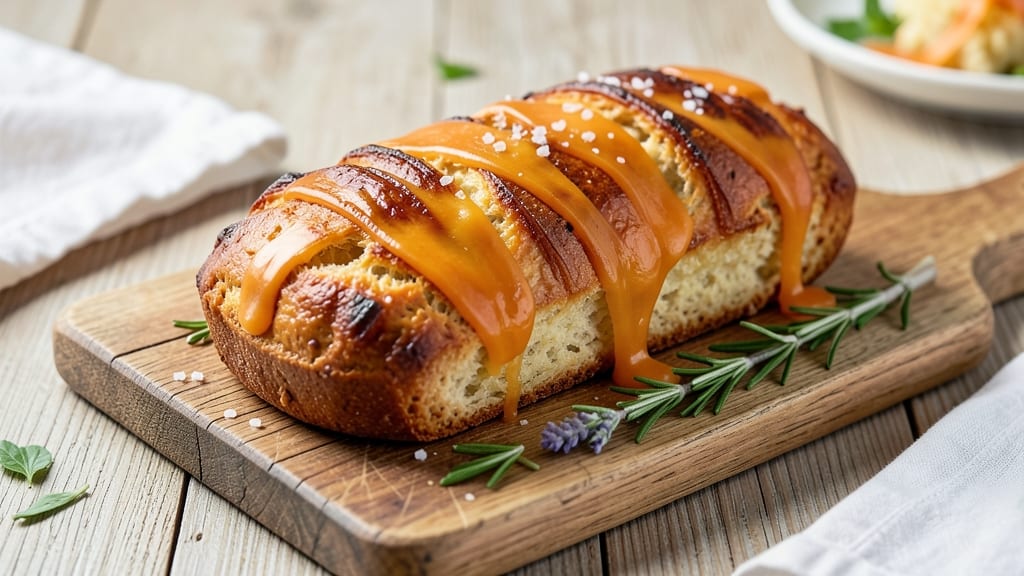
This Amish cheese bread recipe brings the comforting warmth of a Pennsylvania farmhouse straight to your kitchen table. 💛 The secret lies in a simple, yeast-based dough that transforms into tender, flaky layers when baked with sharp cheddar and a touch of Swiss cheese—just like the recipes passed down through generations.
What makes it special is the rustic simplicity: no fancy ingredients, just hearty flour, a pinch of salt, and the kind of slow-baked perfection that makes every bite worth the wait.
The dough starts with basic pantry staples—flour, sugar, yeast, and milk—kneaded just enough to develop gluten without overworking it. The real magic happens when you fold in melted butter and shredded cheese, creating pockets of gooey goodness that melt into golden perfection in the oven.
Traditional Amish cooking values simplicity, and this recipe delivers with minimal effort and maximum flavor, proving that the best dishes often come from the most straightforward techniques.
By the time it emerges from the oven, you'll have a loaf with a crispy, slightly browned crust and tender, pull-apart layers that reveal pockets of melted cheese.
The aroma alone will have everyone gathering around the table, and the first bite delivers that perfect balance of chewy bread and creamy cheese. It's the kind of dish that feels like a hug—comforting, hearty, and impossible to resist.
Whether you serve it warm with soup or as a standalone side, this Amish cheese bread is a celebration of rustic baking. For an extra touch, brush the top with melted butter before baking or sprinkle with a pinch of garlic powder for added depth.
The recipe scales easily, so you can make a single loaf for two or double it for a crowd—just like the meals that bring families together.
Ingredients for amish cheese bread
These pantry staples and a few cheesy surprises create Amish-style bread with layers of gooey magic.
| Ingredient | Amount | Notes |
|---|---|---|
| All-Purpose Flour 🌾 | 4 cups | Sifted for light texture |
| Active Dry Yeast 🍞 | ¼ tsp | Or 1 packet (2.25 tsp) |
| Granulated Sugar 🍚 | ¼ cup | Helps yeast activate |
| Warm Whole Milk 🥛 | 1 cup | 110°F for yeast activation |
| Unsalted Butter 🧈 | ½ cup | Melted, cooled slightly |
| Sharp Cheddar Cheese 🧀 | 1 ½ cups | Shredded, aged variety |
| Swiss Cheese 🧀 | ½ cup | Shredded, mild flavor |
| Large Egg 🥚 | 1 whole | Room temperature |
| Salt 🧂 | 1 tsp | Kosher or sea salt |
| Garlic Powder 🧄 | ½ tsp | Optional for depth |
| Ground Black Pepper 🌶️ | ¼ tsp | Freshly ground preferred |
| Olive Oil 🫒 | 1 tbsp | For greasing pan |
The flour is your foundation—King Arthur or Gold Medal work best for that perfect chew. Grab sharp cheddar from the deli counter (pre-shredded gets clumpy), and if you're feeling fancy, add a splash of apple cider vinegar to the milk for extra tang. The butter? Land O'Lakes or a local creamery brand melts beautifully. Yeast can be tricky—if it's old, just toss it and open a new packet. For the Swiss, Emmental works too if you can't find the classic kind.
No sharp cheddar? Pepper Jack or Gouda work in a pinch. Skip the garlic powder? Fresh minced garlic at half the amount adds serious flavor. The milk too warm? Cool it 5 minutes before adding yeast—you want it lively, not dead. Butter too soft? Chill it 10 minutes before mixing. And if you're doubling the recipe, use two loaf pans—they bake faster and give that perfect crust.
Shape the dough once it's doubled—don't knead it again. Brush the top with melted butter before baking for that golden crust. Leftovers? Wrap tightly in foil and reheat in a 350°F oven for 5-10 minutes. Freezes beautifully too—up to 3 months if you portion it in slices. I always make two loaves—one for now, one for later.
Why You'll Love This Recipe
- No Yeast Fuss: I swear by this recipe because it only needs a quick rise—no waiting hours. Just toss in the warm milk and yeast, let it sit for 10 minutes, and you’re ready to shape. That sugar in the dough? It wakes up the yeast faster than anything, so you’re not stuck staring at a clock.
- Buttery Cheese Magic: The moment that warm butter melts into the dough, wrapping around sharp cheddar—chef’s kiss. It’s rich but not greasy, with that perfect pull-apart texture. Honestly, I’ve tried store-bought versions, and this one wins every time.
- Weeknight & Holiday Hero: This bread is my go-to for breakfast or a side dish—no one questions it. Make a double batch on Sunday, freeze half, and you’ve got a ready-to-bake solution for lazy mornings or unexpected guests. (Yes, even on a Tuesday night.)
- Pantry Staple Power: Five ingredients, all things you already own. No specialty cheeses or weird yeast substitutes—just flour, milk, butter, and a pinch of salt. It’s the kind of recipe that makes you feel like you’re cooking fancy, even when you’re not.
Step-by-step instructions for Amish cheese bread
Here's how to make this comforting bread with perfect swirls and melty cheese every time.
👨🍳 Step 1: Activate the Yeast and Mix the Dough
In a large bowl, combine the 1 cup warm whole milk (about 110°F) with the 0.25 cup granulated sugar and 0.25 tsp active dry yeast. Let it sit for 5-10 minutes until it becomes foamy—this means your yeast is alive and ready to work. If it doesn't foam, your yeast might be dead, and you'll need to start over.
Once foamy, add the 4 cups all-purpose flour, 1 tsp salt, 0.5 tsp garlic powder, and 0.25 tsp ground black pepper. Mix with a wooden spoon until a shaggy dough forms. Then add the 1 whole large egg and the 0.5 cup melted unsalted butter (cooled slightly). Knead the dough by hand for 8-10 minutes until smooth and elastic—it should spring back when poked.
🍳 Step 2: Let the Dough Rise and Shape the Loaves
Lightly grease a large bowl with 1 tbsp olive oil, place the dough inside, and cover with a clean kitchen towel. Let it rise in a warm spot for 1-1.5 hours or until doubled in size. I like to put it near the oven with the light on for consistent warmth—this helps the dough puff up nicely.
While it rises, preheat your oven to 375°F. Once the dough has risen, punch it down to release air, then divide it into two equal pieces. Roll each piece into a rectangle about 12x8 inches. Sprinkle 1 cup sharp cheddar cheese and 0.5 cup Swiss cheese evenly over one half of each rectangle. Fold the plain half over the cheese, then roll tightly into a log, sealing the edges.
🔥 Step 3: Bake Until Golden and Cheesy
Place the cheese logs in a greased 9x13-inch baking dish, seam-side down. Cover loosely with a towel and let them rise for another 20-30 minutes until puffy. While they rise, preheat your oven to 375°F. Bake for 25-30 minutes until the bread is golden brown on top and the internal temperature reaches 190°F.
For that classic Amish swirl, use a sharp knife to cut a ½-inch deep slit down the center of each loaf before baking. This lets the cheese melt out beautifully as it bakes. If the top browns too quickly, tent with foil to prevent burning while keeping the cheese gooey inside.
⏰ Step 4: Rest and Serve Warm
Remove the bread from the oven and let it cool in the pan for 5 minutes before transferring to a wire rack. The cheese should be fully melted and bubbly, with golden crusts that crack slightly as they cool. For the best texture, serve warm—this is when the bread is at its most tender and the cheese is most gooey.
Slice into thick pieces and enjoy straight from the oven with a warm bowl of soup or as a side to your favorite meal. The aroma alone will have everyone gathering around the table—this bread is worth the wait!
Pro Tips For Making Amish Cheese Bread
- Test Yeast First: Skip the guesswork—mix a pinch of yeast with warm milk and 1 teaspoon sugar in a small cup. If it doesn’t bubble within 5–10 minutes, your yeast is dead or your milk’s too hot (should feel like bathwater, ~110°F). No bubbles? Start fresh—this isn’t the time to wing it.
- Chill the Dough Overnight: I used to rush the rise, and my bread always tasted flat. Instead, shape the dough, cover it loosely, and let it rise in the fridge for 12–16 hours. The slow ferment deepens the flavor and makes the texture tender—no extra effort, just patience.
- Salt the Milk: Yes, even the warm milk needs salt. Dissolve ½ teaspoon in it before mixing with flour—this ensures even distribution. I learned this the hard way when my first batch tasted bland despite the cheese. Trust me, the salt in the milk matters more than you’d think.
- Butter Last, Not First: Fold the softened butter into the dough after the first rise, not before. This keeps the yeast active longer (butter can slow fermentation) and guarantees those rich, flaky layers when baked. I was skeptical until I tried it—now I never skip this step.
Flavor customization for these flavors
Classic Cheese Swirl
The traditional Amish cheese bread features a simple sharp cheddar and Swiss cheese combo, but you can enhance it with garlic powder (½ tsp) and black pepper (¼ tsp) for depth.
For extra richness, fold in ½ cup melted butter into the dough before shaping—this creates tender layers that hold the cheese beautifully. 🧀
Herb-Infused Twist
Add 1 tbsp fresh rosemary or 1 tsp dried thyme to the dough for an aromatic touch. I like using chives too—their mild onion flavor pairs perfectly with the cheddar.
For a stronger herb profile, mix 1 tbsp chopped parsley into the cheese filling before rolling. Fresh herbs brighten up the rustic flavors.
Spicy Kick
For heat lovers, sprinkle ½ tsp cayenne pepper or 1 tsp jalapeño flakes over the cheese before folding. If you prefer milder heat, try ½ tsp smoked paprika for a subtle smokiness.
I’ve also added diced jalapeños (¼ cup) to the cheese filling—just make sure they’re seeded if you want less spice. 🌶️
Sweet Glaze Option
Brush the baked loaves with a honey-mustard glaze (mix 2 tbsp honey + 1 tbsp Dijon mustard) for a sweet-savory contrast. Another favorite is a cinnamon-sugar drizzle (1 tbsp melted butter + 1 tsp cinnamon + 1 tbsp sugar)—this works especially well with a Swiss cheese-heavy version.
The glaze adds a touch of indulgence without overpowering the cheesy goodness.
Savory Add-Ins
Mix in ½ cup cooked bacon bits or ¼ cup chopped green onions for extra texture. For a meaty twist, fold ½ cup shredded ham into the cheese filling. I’ve also tried sun-dried tomatoes (¼ cup, chopped) for a tangy, umami boost—just
Dairy-Free Adaptation
Swap the cheddar and Swiss for nutritional yeast (½ cup) and dairy-free shreds (like Violife cheddar). Use coconut oil instead of butter and ensure your flour is gluten-free if needed. The texture will be slightly denser, but the cheesy flavor still shines—especially with a garlic-herb twist. 🌱
Nutrition facts
Frequently asked questions
Can I make this Amish cheese bread without yeast?
Yes! For a quick version, replace the yeast with 1 tsp baking powder and 1 tsp baking soda. Mix these directly with the flour, then proceed with the recipe but reduce the rising time to 15-20 minutes (no first rise needed). The texture will be denser but still delicious—great for when you're short on time!
Why did my cheese bread turn out dry?
Overbaking or underproofing are the most common culprits. Check your oven temperature—it should be 375°F—and bake until the internal temperature reaches 190°F. Also, ensure your dough rises until doubled (about 1-1.5 hours). For extra moisture, brush the baked loaf with melted butter while still warm.
What's the best way to reheat leftover cheese bread?
Wrap slices in foil and warm in a 350°F oven for 5-7 minutes or until gooey. For a crispy crust, broil for 1-2 minutes at the end. Microwaving works in a pinch, but it can make the cheese rubbery—always cover with a damp paper towel to retain moisture.
Can I use pre-shredded cheese in this recipe?
Pre-shredded cheese often contains anti-caking agents that can make your bread gummy. For best results, grate your own sharp cheddar and Swiss—it melts more smoothly and gives a cleaner texture. If you must use pre-shredded, look for brands labeled "cheese food" or "cheese blend" without additives.
How do I store homemade Amish cheese bread?
Keep it wrapped tightly in plastic wrap or foil at room temperature for 2-3 days. For longer storage, freeze slices in a sealed bag for up to 3 months. To reheat from frozen, thaw overnight in the fridge, then warm as directed. The texture holds up surprisingly well!