Side Dishes
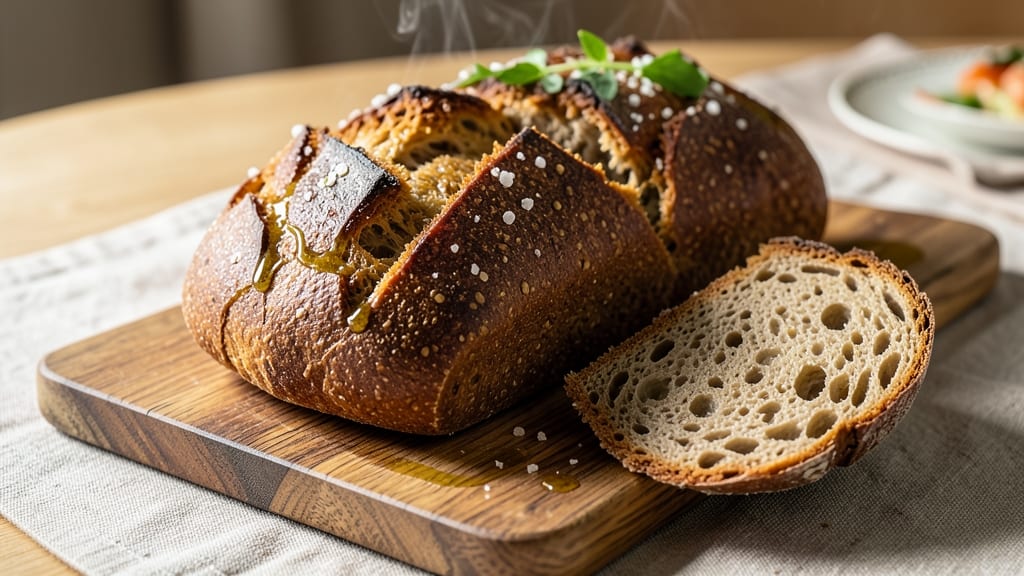
This ancient grains einkorn bread recipe brings history to your kitchen table with every crusty bite. 🌟 The nutty depth of einkorn flour creates a loaf that’s both rustic and refined—perfect for sandwiches, toast, or serving alongside soups.
Unlike modern wheat, einkorn delivers a satisfying chew and subtle sweetness that keeps you reaching for seconds.
What sets this recipe apart is the traditional approach: a slow fermentation that develops complex flavors and a crispy, golden crust without needing a Dutch oven. The dough is simple to handle but yields a loaf with an open crumb structure and a satisfying snap.
No sourdough starter required—just patience and a few key techniques.
By the time it emerges from the oven, you’ll have a crusty, aromatic loaf with a tender interior and that signature einkorn nuttiness. The aroma alone will transform your kitchen into a bakery, and the texture—crisp outside, soft inside—makes every slice worth the wait.
This recipe is designed for foolproof results, whether you’re a beginner or an experienced baker. Let’s get started on your journey to homemade ancient grain bread that tastes like a trip back in time.
Ingredients for ancient grains einkorn bread
The nutty einkorn flour and traditional fermentation create a loaf with satisfying chew and golden crust.
| Ingredient | Amount | Notes |
|---|---|---|
| Einkorn Flour 🌾 | 3 ½ cups | High-quality, stone-ground preferred |
| Bread Flour 🌾 | 1 cup | For structure and chew |
| Active Dry Yeast 🍞 | ¼ tsp | Freshly opened for best results |
| Warm Water 💧 | 1 ½ cups | 105-115°F for optimal yeast activation |
| Sea Salt 🧂 | 1 ½ tsp | Diamond Crystal preferred |
| Olive Oil 🫒 | 2 tbsp | Extra-virgin for richness |
| Honey 🍯 | 1 tbsp | Raw preferred for fermentation |
| Whole Milk 🥛 | ½ cup | Full-fat for tender crumb |
| Cornmeal 🌽 | ¼ cup | For dusting and crust texture |
| Ice Water ❄️ | ¼ cup | For final dough temperature control |
| Coarse Sea Salt 🧂 | 1 tbsp | For final crust sprinkle |
| Cornstarch 🌾 | 1 tsp | For steam and crust crispness |
| Sesame Seeds 🌱 | 1 tbsp | Optional for decorative finish |
Einkorn flour is the heart of this recipe—King Arthur or Bob's Red Mill brands are my go-tos for consistent results. The stone-ground versions have more flavor, but regular einkorn flour works too. If you can't find it locally, Amazon or specialty grain mills ship quickly. Bread flour adds structure, so don't skip it—this isn't a 100% einkorn loaf. The yeast needs to be fresh, so check the expiration date. If it's been sitting in your pantry for months, buy a new packet. Warm water is key: too hot kills the yeast, too cold slows fermentation. Aim for that lukewarm bathwater temperature.
No einkorn flour? Spelt flour works in a pinch—it's the closest relative, though the flavor will be slightly different. Running short on olive oil? Avocado oil or melted coconut oil both work well. The honey can be swapped for maple syrup or agave—just use the same amount. Whole milk adds tenderness, but plant-based milk works too—just add 1 tsp cornstarch to thicken it first. For the cornmeal, semolina is a great substitute—it gives that same rustic texture. The ice water is non-negotiable for temperature control—this dough needs to be around 75°F for proper fermentation. Too warm and it'll rise too fast; too cool and it'll take forever.
This dough needs time—at least 4 hours of bulk fermentation at room temperature, then another 12 hours in the fridge. The longer it ferments, the more flavor develops. Shape it gently to avoid deflating the gluten. For the oven, preheat to 450°F—a baking stone or steel helps create that crisp crust. Sprinkle the coarse salt and sesame seeds right before baking for that bakery-style finish. Cool completely on a wire rack—cutting it too soon makes it gummy. Store wrapped in a clean towel at room temperature for 3-4 days—it gets even better the next day. Freeze slices for up to 3 months—toast straight from frozen.
Why You'll Love This Recipe
- I swear by this combo: just five ingredients, no fancy techniques. Toss the einkorn flour with bread flour, sprinkle in yeast, and you’re basically done—no kneading, no stress. The dough comes together faster than my morning coffee brews.
- No-Fuss Mix-In: I swear by this combo: just five ingredients, no fancy techniques. Toss the einkorn flour with bread flour, sprinkle in yeast, and you’re basically done—no kneading, no stress. The dough comes together faster than my morning coffee brews.
- Nutty, Chewy Magic: That einkorn flour? It’s the secret weapon—earthy, slightly sweet, with a texture that’s just dense enough to hold butter like a dream. Honestly, the first slice makes me forget store-bought bread exists.
- Meal Prep MVP: Slice it fresh, toast it later. This bread keeps for days in the fridge (yes, even the crust stays crisp) and freezes like a champ. I make a loaf on Sundays and pair it with everything—soup, eggs, or straight-up with jam.
Step-by-step instructions for ancient grains einkorn bread
Here's how to transform those nutty ancient grains into a loaf with perfect crust and tender crumb.
👨🍳 Step 1: Activate the Yeast and Mix the Wet Ingredients
In a small bowl, combine the 1.5 cups warm water (between 105-115°F), 1 tbsp honey, and 0.25 tsp active dry yeast. Let it sit for 5-10 minutes until frothy—this confirms your yeast is alive and ready to work. If it doesn't bubble, start over with fresh yeast.
In a separate large bowl, whisk together the 0.5 cup whole milk, 2 tbsp olive oil, and 1.5 tsp sea salt. The milk adds richness while the olive oil helps create that tender crumb we're after. I like to use my hands here to really emulsify the fat and water mixture—it makes a noticeable difference in texture.
👨🍳 Step 2: Combine Dough Ingredients and Develop Gluten
Add the yeast mixture to your wet ingredients bowl, then gradually incorporate the 3.5 cups einkorn flour and 1 cup bread flour while mixing with a wooden spoon. The einkorn will give you that distinctive nutty flavor, while the bread flour provides structure. Once combined, turn the dough out onto a lightly floured surface.
Here's where the magic happens: knead the dough for 8-10 minutes until it becomes smooth and elastic. You'll know it's ready when it springs back slowly when poked. I press down gently on the dough during the first minute—this prevents it from curling and ensures even gluten development. If the dough feels too sticky, add 1 tablespoon of the einkorn flour at a time until it's just manageable.
⏰ Step 3: First Rise and Shaping
Lightly oil a large bowl, place the dough inside, and cover with a damp towel. Let it rise in a warm place for 1-2 hours or until it has doubled in size. The warm environment helps activate the yeast—if your kitchen is chilly, place the bowl near a slightly warm oven with the light on.
Once risen, punch down the dough to release air bubbles, then divide it into two equal portions. Shape each into a round boule by pulling the edges toward the center and sealing the seam. I like to use a bench scraper to create a tight seal—this prevents the dough from expanding too much during baking and gives us that beautiful crust.
🔥 Step 4: Final Proof and Baking Setup
Place the shaped boules on a baking sheet dusted with 0.25 cup cornmeal. Cover loosely with a towel and let them rise for another 30-45 minutes until puffy. The cornmeal creates a barrier that prevents sticking and adds texture to the crust.
Preheat your oven to 450°F with a Dutch oven inside for 30 minutes. This high heat creates steam that develops that crackly crust we're after. While the oven heats, brush the tops of the boules with water and sprinkle generously with 1 tbsp coarse sea salt. The salt will caramelize beautifully during baking, adding depth of flavor.
🔥 Step 5: Bake to Golden Perfection
Carefully transfer the boules to the hot Dutch oven using a peel or parchment paper. Cover with the lid and bake for 25 minutes. Then remove the lid and bake for another 15-20 minutes until the crust is deep golden brown and sounds hollow when tapped on the bottom.
For that extra crispy crust, I finish with a sprinkle of 1 tbsp sesame seeds and a light brush of water before returning to the oven for 2-3 minutes at 475°F. Let the bread cool on a wire rack for at least 1 hour before slicing—this ensures clean cuts and prevents a gummy crumb. The interior should be tender with just a hint of chew, while the exterior should shatter like glass when broken.
Pro Tips For Making Ancient Grains Einkorn Bread
- Mix Slowly First: Einkorn flour is sticky—don’t dump it all in at once. Start with half the bread flour, mix until smooth, then add the rest, or you’ll end up with a gummy mess that’s impossible to handle. I learned this the hard way when my first batch turned into a glutenous blob.
- Bloom Yeast in Warm Water: Skip the dry yeast shortcut—dissolve it in the warm water first (110°F/43°C) for 5 minutes until foamy. Einkorn’s lower gluten needs a head start, and this guarantees a lighter crumb instead of a dense, flat loaf. (Yes, even if you’re impatient like me.)
- Don’t Over-Knead: Einkorn dough is fragile—stop kneading when it springs back 50% after poking it. Overwork it, and the crumb turns gummy. My grandmother swore by this, and she was right: less is more.
- Steam the Oven: Spray the Dutch oven with water before baking—this creates steam that locks in moisture and prevents a dry crust. I was skeptical until I tried it: the crust stays crisp, the inside stays tender. (Your future self will thank you.)
Storing and reheating this ancient grains einkorn bread
Room Temperature Storage
Wrap your freshly baked einkorn bread in a clean, breathable linen or cotton towel—never plastic—to prevent sogginess. Place it in a paper bag or basket at room temperature for up to 3-4 days.
The crust stays crisp while the interior maintains its tender crumb. I store mine on the kitchen counter where it develops deeper flavors with each passing day. 🌾
Fridge Preservation
If you need to extend freshness beyond 3 days, slice the bread and store it in an airtight container with a paper towel to absorb moisture. Keep it in the fridge for up to 5 days.
To revive stale slices, wrap them in foil and heat at 350°F for 5-7 minutes—the steam restores that bakery-fresh texture. I use Glasslock containers for best results. ❄️
Freezer-Friendly Slices
For long-term storage, slice the bread and freeze individual portions in quart-sized freezer bags. Remove as much air as possible to prevent freezer burn. These slices keep for 3 months and can be toasted straight from frozen.
For best results, heat at 375°F for 8-10 minutes until golden and crisp. I label each bag with the date—this helps track freshness. ⏰
Reviving Stale Bread
Even if your einkorn bread loses its crispness, don't toss it! Wrap slices in aluminum foil and warm at 350°F for 5 minutes. The trapped steam re-crispens the crust beautifully. For extra flavor, brush with melted butter before warming. This trick works especially well for sandwiches or toast. 💡
Crust Refresh Tips
For that bakery-style crunch, place slices on a baking sheet and broil for 1-2 minutes at high heat. Keep a close eye to prevent burning—the einkorn crust browns quickly.
I also recommend toasting slices before serving to highlight the nutty einkorn flavor. A toaster oven gives the best even browning. 🔥
Nutrition facts
Frequently asked questions
Can I substitute einkorn flour with regular whole wheat?
While you can use whole wheat flour, the flavor and texture will differ significantly. Einkorn provides that distinctive nutty depth and lighter crumb that whole wheat can't replicate. For best results, stick with einkorn—but if you must substitute, use 50% einkorn and 50% bread flour for a closer approximation. The loaf will still be delicious, just with a slightly denser texture.
Why does my einkorn dough feel too sticky?
Einkorn flour has a higher protein content than modern wheat, which makes the dough stickier. Add 1 tablespoon of flour at a time until the dough is just manageable—don't overdo it or the texture will become dense. If it's still too sticky after adding flour, try chilling the dough for 15 minutes before shaping. The gluten will relax and become easier to handle.
How do I know when the bread is fully baked?
Look for three key signs: the crust should be deep golden brown, the internal temperature should reach 190-200°F (use an instant-read thermometer), and it should sound hollow when tapped on the bottom. If unsure, bake for an extra 5 minutes—einkorn bread continues cooking slightly after removal from the oven. The loaf should also pull away cleanly from the Dutch oven.
Can I make this recipe without a Dutch oven?
Yes! If you don't have a Dutch oven, bake the bread on a preheated baking sheet lined with parchment paper. For extra steam, place a metal bowl filled with water on the lower oven rack. The crust won't be quite as crispy, but you'll still get a delicious loaf. Another option is to use a pizza stone or steel—preheat it in the oven for 30 minutes before baking for better heat distribution.
What's the best way to use up stale einkorn bread?
Einkorn bread freezes beautifully for later use! Slice the bread and freeze individual portions in airtight bags for up to 3 months. For stale slices, try making einkorn croutons (toss with olive oil, salt, and herbs, then bake at 375°F for 10 minutes) or bread pudding—the nutty flavor pairs perfectly with custard. You can also crumble it into soup broths or use it as a base for homemade breadcrumbs.