Side Dishes
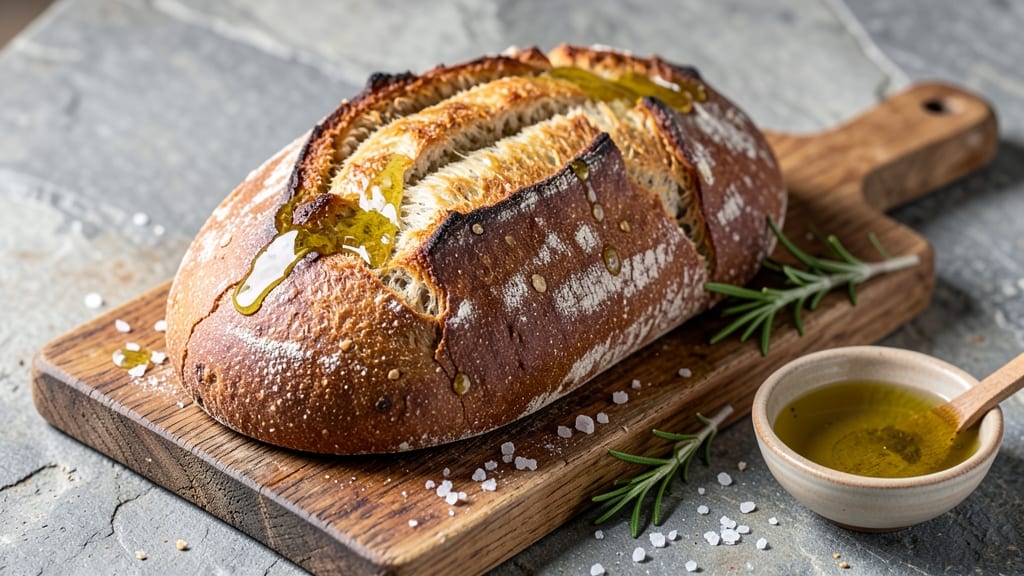
This ancient Greek barley bread recipe transports you straight to the heart of classical Greece, where rustic simplicity met bold flavors. 🌾 The secret lies in barley flour's earthy depth—no refined wheat here, just the wholesome grains that sustained ancient civilizations.
This isn't just bread; it's a connection to history, baked with techniques that have stood the test of millennia.
What makes this recipe special is its authenticity—no shortcuts, just the essentials: barley flour, water, and a touch of olive oil for richness. The dough develops naturally through slow fermentation, creating a crust with crispy edges and a tender, hearty interior.
Traditional herbs like oregano or thyme add that unmistakable Mediterranean touch, while a sprinkle of coarse salt enhances every bite.
By the time it emerges from the oven, you'll have bread that's as nutritious as it is delicious—perfect for dipping in olive oil or pairing with olives, feta, and fresh vegetables.
The aroma alone will transport you to an ancient Greek table, where this bread was a staple for both peasants and philosophers alike.
Whether you're recreating history or simply craving a healthier, more flavorful loaf, this recipe delivers. The process is straightforward, but the results are anything but ordinary. Let's bring ancient Greece to your kitchen—one crusty, hearty bite at a time.
Ingredients for ancient greek barley bread
Four servings of ancient history on your table—just these wholesome ingredients transform into rustic bread straight from classical Greece.
| Ingredient | Amount | Notes |
|---|---|---|
| Barley Flour 🌾 | 3 ½ cups | Stone-ground for optimal texture |
| Extra-Virgin Olive Oil 🫒 | ¼ cup | Cold-pressed, fruity variety |
| Warm Water 💧 | 1 ½ cups | Filtered or spring water preferred |
| Active Dry Yeast 🍞 | ½ tsp | Fresh yeast preferred if available |
| Granulated Sugar 🍚 | 1 tbsp | Helps activate yeast quickly |
| Coarse Sea Salt 🧂 | 1 ½ tsp | Diamond Crystal preferred |
| Fresh Oregano Leaves 🌿 | ¼ cup | Chopped finely for authentic flavor |
| Fresh Thyme Leaves 🌿 | 0.15 cup | Stems removed, chopped |
| Sesame Seeds 🌰 | 1 tbsp | Toasted for nutty crunch |
| Cornmeal 🌽 | ¼ cup | For dusting baking surface |
| Semolina Flour 🌾 | ¼ cup | For bread pan coating |
Barley flour is the soul of this recipe, so look for stone-ground varieties at specialty stores like Whole Foods or Bob's Red Mill online—they retain more nutrients and flavor. The yeast should be fresh (test by dropping a pinch in warm water with sugar—it should foam within 10 minutes). For the herbs, farmers markets often have the freshest oregano and thyme, but dried works in a pinch (use half the amount). The olive oil? Kalamata or Pomace varieties add that authentic Mediterranean depth—skip the light, tasteless stuff.
No yeast? Sourdough starter works beautifully—just replace the yeast with 1/2 cup of active starter. Short on thyme? Dried thyme at half the amount gives similar earthiness, but fresh is ideal. The sesame seeds can be swapped for poppy seeds or flaxseeds if you're avoiding gluten concerns (though barley contains gluten). For the flour, if you can't find barley flour, mix 2 cups whole wheat flour with 1.5 cups all-purpose flour as a substitute—it won't be identical, but it'll still be delicious. The sugar can be omitted entirely if you're strict about authenticity, though it does help the yeast activate faster.
This dough needs time—let it rise overnight in the fridge for maximum flavor development. Store any leftovers wrapped in a clean kitchen towel at room temperature for 2-3 days, or freeze for up to 3 months (wrap tightly in foil first). For reheating, pop slices in a 350°F oven for 5-10 minutes until crispy again. The bread freezes beautifully too—thaw at room temperature before serving. Pro tip: Brush warm bread with extra olive oil and sprinkle with flaky salt right out of the oven for that authentic Greek trattoria touch.
Why You'll Love This Recipe
- No-Fuss Dough: I swear by this—just mix, let it rise, and bake. No kneading, no fuss, just warm water and yeast doing the work while I sip my coffee.
- Earthy Olive Gold: That first bite? Rich, nutty barley flour meets golden olive oil crust—it’s like a Mediterranean hug. Honestly, the sugar isn’t even needed, but it gives it a subtle sweetness that makes it irresistible.
- Weeknight Wonder: Slice it fresh for breakfast or pack it for lunch—it stays sturdy for days. Between us, I’ve fed a houseful of teenagers with half a loaf and still had leftovers for toast the next morning.
- Pocketbook Hero: Barley flour and olive oil are cheap staples, and a single batch stretches across meals. I’ll be real: this bread costs less than half what I’d pay for store-bought, and it actually tastes like something my great-grandma would’ve made.
Step-by-step instructions for ancient Greek barley bread
Here's how to craft bread that channels ancient Greek traditions with a rustic, hearty texture.
👨🍳 Step 1: Activate the Yeast and Mix the Dough
In a small bowl, combine the 1.5 cups warm water, 1 tbsp granulated sugar, and 0.5 tsp active dry yeast. Let it sit for 5-10 minutes until it becomes frothy—this confirms your yeast is alive and ready to work. If it doesn't bubble, your yeast may be dead, and you'll need to start over.
In a large mixing bowl, whisk together the 3.5 cups barley flour, 1.5 tsp coarse sea salt, 0.25 cup chopped fresh oregano, and 0.15 cup chopped fresh thyme. I like to use a fork for this to avoid overmixing, which can develop too much gluten and make the bread dense. Create a well in the center and pour in the yeast mixture along with the 0.25 cup extra-virgin olive oil.
🍳 Step 2: Knead Until Smooth and Elastic
Using your hands, gradually incorporate the wet ingredients into the dry, mixing until a shaggy dough forms. Turn it out onto a lightly floured surface and knead for 8-10 minutes until the dough becomes smooth and elastic. You'll know it's ready when it springs back slowly when poked—this indicates proper gluten development for a good crumb structure.
Here's the thing—I often find barley flour can be a bit sticky and dense, so I don't stress if it doesn't look like traditional bread dough. The key is to knead just until it comes together, not until it's perfectly smooth. If it's too sticky, wet your hands slightly to prevent sticking.
🥘 Step 3: First Rise and Prepare the Loaf Pan
Lightly grease a 9x5-inch loaf pan with olive oil, then dust it thoroughly with 0.25 cup semolina flour. This creates a barrier that prevents sticking and gives that beautiful crisp crust you'd find in ancient Greek breads. Place the dough back in the bowl, cover it with a damp towel, and let it rise in a warm place for 1-2 hours or until it has roughly doubled in size.
I like to place my oven light on for 5 minutes before rising to create a warm environment, or I'll use a proofing box if I have one. The dough should be puffy and jiggly when gently pressed—this tells me it's ready for shaping. Don't rush this step; proper rising is what gives this bread its airy, satisfying texture.
🔥 Step 4: Shape and Second Rise
Gently punch down the risen dough to release air, then shape it into a loaf by folding the sides toward the center and pressing lightly. Transfer it to the prepared loaf pan, seam-side up. Cover again and let it rise for another 30-45 minutes until it's just about to overflow the pan edges. This second rise is crucial for that authentic Greek bread height.
Here's where it gets fun—sprinkle the 1 tbsp toasted sesame seeds evenly over the top of the dough. The sesame adds that nutty crunch and visual appeal that reminds me of breads from ancient Mediterranean kitchens. The seeds will toast beautifully during baking, giving you that perfect contrast of textures.
🔥 Step 5: Bake to Golden Perfection
Preheat your oven to 375°F with a baking sheet on the lower rack. This creates steam during baking, which helps develop that crisp crust we're after. Once preheated, place your prepared loaf pan on the baking sheet and bake for 40-45 minutes until the bread is deep golden brown and sounds hollow when tapped on the bottom.
I know it seems like a long time, but barley bread needs that extra time to fully cook through without drying out. The internal temperature should reach 190-200°F at the center. Let the bread cool in the pan for 10 minutes before transferring to a wire rack. This resting period prevents it from falling apart when you slice it—trust me, you'll want to slice it immediately, but patience here makes all the difference.
Pro Tips For Making Ancient Greek Barley Bread
- Bloom the Yeast First: Skip mixing yeast directly into flour—it’ll die before it wakes up. Instead, dissolve the yeast in warm water (about 105°F/40°C) with a pinch of sugar, then wait 5–10 minutes until it bubbles like a tiny champagne party. This guarantees your bread rises instead of flopping.
- Toast the Barley Flour: I learned this the hard way—raw barley flour tastes bitter and dense. Dry-toast it in a 350°F (175°C) oven for 8–10 minutes, stirring often, until it smells nutty and golden. This cuts the earthiness and makes the bread lighter.
- Don’t Overmix the Dough: Barley flour is sticky and aggressive. Mix just until the dough comes together—about 3–4 minutes by hand or 2 minutes on low speed. Overworking it gums up the gluten, and your bread will turn out gummy instead of chewy.
- Use a Dutch Oven for Crisp: Skip the baking sheet—this bread needs a Dutch oven. Place it in a cold oven, then pour in the dough and bake at 375°F (190°C) for 45 minutes. The steam creates a crackly crust like ancient tavern bread, not a sad, flat loaf.
Common mistakes when making this recipe
Over-Kneading the Dough
Barley flour develops gluten differently than wheat, so resist the urge to knead aggressively. Overworking the dough creates a tough, dense loaf instead of the tender crumb you want. Focus on just 8-10 minutes of kneading until it's smooth but still slightly sticky.
I've ruined many batches by trying to get that perfect elastic dough—this bread thrives on its rustic texture. 💫
Skipping the Warm Rise
Cold environments slow fermentation, but many home cooks forget to create warm conditions for rising. Place your dough near a warm oven light or use a proofing box set to 80°F.
Without this, your dough may take 3-4 hours to rise instead of 1-2 hours, and the flavor won't develop properly. I keep a small container of hot water in my oven when I'm in a hurry—it works surprisingly well.
Under-Measuring Ingredients
Barley flour absorbs moisture differently than wheat flour, so precise measurements matter. Use a scale for accuracy—3.5 cups of barley flour can actually weigh 14-16 ounces depending on how it's packed.
I've seen recipes fail when cooks use volume measurements without considering barley's density. For the water, use warm (not hot) to avoid killing the yeast while still activating it quickly.
Baking Without Steam
The crisp crust comes from steam during baking, but many home ovens lack proper moisture control. Place a baking sheet on the lower rack before preheating to create steam when you add the loaf.
Alternatively, spray the dough with water before baking. I've tried baking without this trick—my crust ends up dry and pale instead of that beautiful golden-brown you'd find in ancient Greek bakeries.
Ignoring the Resting Time
Slicing bread immediately after baking is tempting, but skipping the 10-minute rest causes it to crumble apart. This resting period allows the gluten to relax and the crumb to set properly. I've learned this the hard way—my first attempts always ended with a sad, collapsed loaf.
The bread will hold together beautifully when you finally slice it, and the texture will be far superior.
Using the Wrong Yeast
Active dry yeast and fresh yeast behave differently, especially with barley flour. If your recipe calls for 0.5 tsp dry yeast, don't substitute 1 packet (2.25 tsp)—it's too much. Fresh yeast should be 1.5 times the amount of dry yeast.
I've had batches fail when using expired yeast or the wrong type. Always check the expiration date and test your yeast in warm water with sugar before starting—if it doesn't foam within 10 minutes, start over with fresh yeast.
Nutrition facts
Frequently asked questions
Can I make this bread without yeast?
For a traditional flatbread version, skip the yeast and mix 3.5 cups barley flour with 1.5 tsp salt, 0.25 cup olive oil, and 1 cup warm water. Knead for 5-7 minutes, then roll out thin and bake at 400°F for 8-10 minutes on a hot skillet or baking sheet. This method mimics ancient Greek flatbreads served with meals.
How do I store leftover barley bread?
Wrap cooled slices in a clean kitchen towel and store at room temperature for 2-3 days to maintain freshness. For longer storage, freeze slices wrapped in foil for up to 3 months. To revive, reheat at 350°F for 5-10 minutes until crispy again. The towel prevents sogginess better than plastic bags.
What's the best way to serve this bread?
Drizzle warm slices with extra-virgin olive oil and sprinkle with flaky sea salt for an authentic Greek touch. Pair with olives, feta cheese, hummus, or fresh vegetables. The hearty texture also makes it perfect for sandwiches or as a side with grilled meats.
Can I substitute barley flour with other grains?
While barley flour is essential for authenticity, you can blend 2 cups whole wheat flour with 1.5 cups all-purpose flour for a similar texture. For a gluten-free option, use a 1:1 gluten-free flour blend (like Bob's Red Mill) but expect a denser result. The flavor won't be identical, but it's a good backup.
Why does my dough smell yeasty but not rise?
This usually means your yeast didn't activate properly or the environment was too cold. Test your yeast first by mixing with warm water and sugar—it should foam in 10 minutes. For rising, place dough near a warm oven light or in a proofing box at 80°F. If it still doesn't rise, your yeast may be expired or the flour absorbed too much moisture.