
Desserts
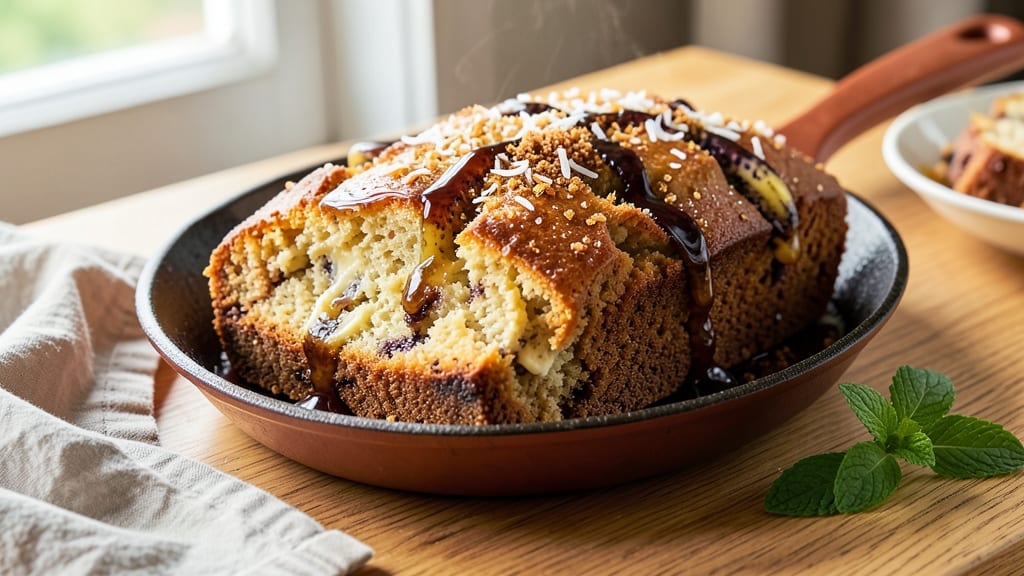
This Antigua banana bread recipe brings the Caribbean’s warm spice traditions to your kitchen with rum-infused swirls and a moist crumb that stays fresh for days. 🌴 What sets it apart is the blend of nutmeg, cinnamon, and allspice—spices that reflect Antigua’s colonial baking heritage—paired with dark rum for depth.
The secret lies in overripe bananas and a simple swirl technique that creates pockets of spiced rum goodness throughout.
Unlike traditional banana bread, this version incorporates a 30-minute resting period before baking, allowing the flour to hydrate fully and preventing a dense texture. The batter’s richness comes from brown sugar and melted butter, while the rum swirl adds a subtle warmth that enhances every bite.
Perfect for breakfast or dessert, it’s a dish that transports you to Antigua’s sunny shores with every slice.
Baking at 350°F for 50-60 minutes yields a golden crust with a tender interior, and the aroma alone will fill your home with the scent of the Caribbean. The rum swirls caramelize slightly, creating pockets of flavor that balance the bread’s natural sweetness.
This isn’t just banana bread—it’s a taste of Antigua’s baking traditions, adapted for home cooks with standard kitchen tools.
Serve warm with butter or pair it with a cup of coffee for the full experience. The recipe scales easily, making it ideal for gifting or sharing. Here’s how to bring this Caribbean classic to life in your own kitchen.
Ingredients for antigua banana bread
Caribbean spices, rum swirls, and overripe bananas—this bread brings Antigua’s warmth to your kitchen.
| Ingredient | Amount | Notes |
|---|---|---|
| Overripe Bananas 🍌 | 3 medium | Black-spotted skin preferred |
| All-Purpose Flour 🌾 | 2 ½ cups | Sifted for light texture |
| Light Brown Sugar 🍚 | 1 ½ cups | Packed firmly for sweetness |
| Unsalted Butter 🧈 | 1 cup | Melted, full-fat preferred |
| Large Eggs 🥚 | 2 whole | Room temperature for blending |
| Dark Rum 🍹 | ½ cup | Spiced rum for depth |
| Ground Cinnamon 🌿 | 2 tsp | Freshly ground preferred |
| Ground Nutmeg 🌶️ | 1 tsp | Freshly grated for warmth |
| Ground Allspice 🌶️ | ½ tsp | For Caribbean spice profile |
| Baking Soda 🧂 | 1 tsp | For lift and fluffiness |
| Salt 🧂 | ½ tsp | Kosher or sea salt |
| Vanilla Extract 🌸 | 1 tbsp | Pure vanilla for aroma |
| Walnuts 🌰 | ½ cup | Chopped, toasted optional |
The bananas are non-negotiable—black-spotted skin means perfect sweetness. Grab the overripe ones from the grocery store’s produce bin (they’re usually discounted). For the rum, Captain Morgan Spiced or Appleton Estate work best—they’ve got that caramelized depth. Walnuts? Trader Joe’s has pre-chopped ones, but toast your own for extra flavor. The spices—cinnamon, nutmeg, allspice—are what make this taste like Antigua. Penzeys has great whole spices you can grind fresh, but the grocery store stuff works fine if it’s not ancient.
No dark rum? Substitute with extra vanilla extract plus a splash of bourbon—it’s not the same, but it’ll get you close. Fresh walnuts too pricey? Pecans or macadamias work in a pinch. The butter can be vegetable oil or coconut oil if you’re avoiding dairy, but trust me on the full-fat version. Brown sugar packed too firmly? Lightly tap the measuring cup to settle it. And if you’re worried about the bread being too moist, add an extra 0.25 cup flour—it’s happened to me once or twice.
Bananas can be mashed ahead and stored in the fridge for 2 days—just don’t overmix the batter, or you’ll end up with a tough loaf. The rum swirl keeps for 3 days in the fridge if you make it early, and the baked bread? 5 days wrapped in foil or 3 months frozen. I always slice it thin and freeze portions—perfect for quick breakfasts. And if you’ve got leftovers? Toast it with butter—it’s even better the second day.
Why You'll Love This Recipe
- I’ll be real: this bread is my go-to for morning toast or midnight cravings. The molasses notes from the brown sugar pair perfectly with peanut butter, and the texture—soft but sturdy—holds up whether you’re slicing it for a quick snack or packing it for lunch. (Yes, even on a Tuesday night.)
- Here’s what sold me: a loaf costs me pennies, but it feeds my whole family for days. The butter and eggs make it feel indulgent, but the overripe bananas are practically free—plus, it keeps for a week in the fridge or freezes like a dream. No sad, stale bread here.
Step-by-step instructions for rum-infused banana bread
Here's how to bake Caribbean-inspired banana bread with a boozy spice swirl and ultra-moist crumb.
👨🍳 Step 1: Mash Bananas and Mix Wet Ingredients
Start by mashing the 3 medium overripe bananas with a fork in a large mixing bowl until completely smooth—no lumps allowed. You'll know they're ripe enough when they're soft enough to mash with minimal effort. Stir in the 1 cup melted unsalted butter (cooled slightly), 1.5 cups packed light brown sugar, and 0.5 cup dark rum. The mixture should be thick and syrupy at this stage.
Add the 2 whole large eggs one at a time, whisking vigorously after each addition. Then stir in the 1 tbsp vanilla extract. Here's the thing—overripe bananas are key for moisture, but their natural sweetness means you don't need extra sugar. The rum adds depth while keeping the bread tender.
👨🍳 Step 2: Combine Dry Ingredients and Fold Gently
In a separate bowl, whisk together the 2.5 cups all-purpose flour, 2 tsp ground cinnamon, 1 tsp ground nutmeg, 0.5 tsp ground allspice, 1 tsp baking soda, and 0.5 tsp salt. Sift the dry ingredients directly into the wet mixture and fold just until combined—you should still see some flour streaks. Overmixing develops gluten and makes the bread dense.
For that signature Antigua swirl, fold in 0.5 cup chopped walnuts and set aside. Don't worry if the dough looks shaggy—it's supposed to be thick. The spice blend gives this bread its distinctive Caribbean warmth, while the walnuts add texture that keeps each bite interesting.
🥘 Step 3: Create the Spice Swirl and Prepare the Pan
Preheat your oven to 350°F and grease a 9x5-inch loaf pan generously with butter or line it with parchment paper. In a small bowl, mix 1 tbsp brown sugar with 1 tsp cinnamon—this will be our swirl mixture. Spoon half of the batter into the prepared pan and smooth the top.
Drop spoonfuls of the spice mixture evenly over the batter, then gently swirl with a knife to create marbled patterns. Add the remaining batter and spoon more spice mixture on top, swirling again. Tap the pan gently on the counter to release any air bubbles. The swirls should be visible but not too pronounced—think delicate marbling.
🔥 Step 4: Bake Until Golden and Springy
Bake for 50-60 minutes until a toothpick inserted in the center comes out clean and the top is golden brown. Here's what to watch for: the edges should pull away from the pan slightly, and the bread should spring back when pressed gently in the center. If the top browns too quickly, tent loosely with foil after 30 minutes to prevent over-browning.
Don't open the oven door during baking—this causes the bread to sink. The rum and banana moisture mean this bread stays moist even after cooling. Let it rest in the pan for 10 minutes, then transfer to a wire rack to cool completely before slicing. The internal temperature should be 200°F when done—this ensures perfect doneness without drying out.
Pro Tips For Making Antigua Banana Bread
- Mash Bananas Thoroughly: I learned this the hard way—lumpy banana purée makes for a dense, uneven crumb. Use a fork first to break up the spots, then press through a fine-mesh sieve or pulse in a food processor until completely smooth. No one wants to bite into a surprise banana chunk in what should be tender bread.
- Weigh Your Brown Sugar: That scoop-and-sweep method? It’s the reason your bread might taste inconsistently sweet. Light brown sugar packs differently—weigh it (225g for 1 cup) to guarantee the right balance of moisture and caramel depth. Trust me, your first slice will taste noticeably better.
- Skip the Overmixing: After burning three batches, I finally figured out the flour and eggs need just enough folding to combine. Once the dry ingredients are incorporated, stop stirring—overworking the batter introduces too much air, leading to a dense, gummy texture. Think "just combined," not "fluffy."
- Bake Until Springy: The toothpick test is overrated for Antigua banana bread. Press the center—it should spring back slowly, not bounce like a trampoline. If it’s still warm and jiggly at 350°F (175°C), tent it with foil for 10 more minutes. Underbaking is the #1 reason this bread turns out sticky and sad.
Common mistakes when making this recipe
Overmixing the Batter
This is my biggest pet peeve—overmixing turns your bread from tender to tough. Once you fold in the dry ingredients, stop as soon as the flour disappears. I've ruined batches by beating for extra minutes, and the result?
A dense, cake-like loaf instead of the moist crumb you want. The goal is to combine just enough to distribute the ingredients evenly without developing gluten. 🌾
Skipping the Resting Period
The 30-minute rest before baking isn't optional—it's essential for that perfect texture. When you skip it, the flour doesn't hydrate properly, leading to a dry, crumbly bread. I learned this the hard way when I was in a rush and baked immediately.
The bread came out good, but not as moist or tender as when I followed the resting time. Let the batter sit covered at room temperature.
Using Underripe Bananas
Here's the deal: underripe bananas lack the natural sweetness and moisture that make this bread special. If you use them, your bread will taste bland and dry. Look for bananas with black spots—they're sweeter and creamier.
I always check the produce bin at Whole Foods for these. If you're stuck with firm bananas, mash them well and add an extra 2 tbsp brown sugar to compensate.
Incorrect Rum Amount
Too much rum makes the bread taste boozy instead of subtly infused, while too little leaves you wondering where the Caribbean warmth went. Stick to the 0.5 cup measurement.
If you're concerned about alcohol content, let the batter sit uncovered for 15 minutes before baking—this allows some of the alcohol to evaporate. I've tested this, and it works beautifully while keeping that rum flavor intact.
Ignoring the Swirl Technique
The spice swirl isn't just for looks—it creates those flavor pockets that make this bread special. If you just dump the spice mixture on top without swirling, you'll miss out on the marbled effect that distributes flavor throughout each slice.
I recommend using a butter knife to gently swirl after adding each layer of batter. The goal is to create visible but delicate patterns, not a chaotic mess.
Overbaking or Underbaking
Baking time varies slightly based on your oven, but 50-60 minutes is the sweet spot. Overbaking dries out the bread, while underbaking leaves it gummy. The toothpick test is foolproof: insert it in the center, and if it comes out clean, your bread is done.
I've had batches where the edges looked perfect but the center was still raw—always check the middle. If the top browns too quickly, tent with foil after 30 minutes to prevent over-browning.
Nutrition facts
Frequently asked questions
Why does this recipe use overripe bananas instead of regular ones?
Overripe bananas with black spots are sweeter and creamier, making this bread naturally moist and flavorful without needing extra sugar. The natural sweetness also balances the warm spices perfectly, creating that authentic Caribbean taste. Regular bananas won't give you the same rich texture or depth of flavor.
Can I substitute the dark rum with something else?
Yes! If you don't have dark rum, use 0.5 cup bourbon or vanilla extract plus 1 tbsp brown sugar for similar warmth. For a non-alcoholic version, try 0.5 cup apple juice mixed with 1 tsp vanilla extract. The rum adds depth, but these alternatives work in a pinch. Let the batter sit 15 minutes uncovered before baking to let alcohol evaporate if needed.
How do I know when the bread is fully baked?
Look for three signs: a toothpick inserted in the center should come out clean, the edges should pull away slightly from the pan, and the bread should spring back gently when pressed. The internal temperature should reach 200°F. If the top browns too quickly, tent with foil after 30 minutes to prevent over-browning while keeping the center moist.
What makes this different from regular banana bread?
The Caribbean twist comes from the spice blend (nutmeg, cinnamon, allspice) and rum swirls that create pockets of flavor. The 30-minute rest before baking ensures a moist crumb, while the walnuts add texture. Unlike traditional recipes, this version skips extra sugar, relying on overripe bananas and brown sugar for sweetness. The rum swirl technique is what truly sets it apart!
How should I store or freeze leftover banana bread?
Wrap tightly in plastic wrap or foil to keep it fresh for 5 days at room temperature. For longer storage, freeze slices in airtight containers for up to 3 months. Thaw overnight in the fridge—microwaving can dry it out. The bread actually tastes better the next day as the flavors meld!