Side Dishes
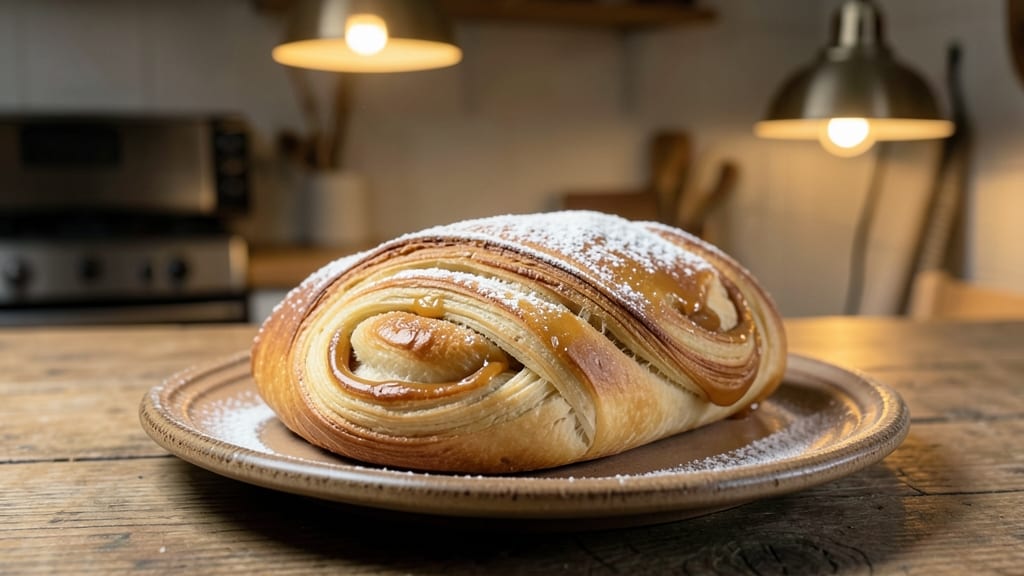
This Argentinian sweet bread recipe brings the comforting flavors of Buenos Aires to your kitchen with its signature crispy crown and delicate swirls. 💛 The secret lies in the perfect balance of buttery dough and rich dulce de leche filling, creating a treat that's both nostalgic and irresistible.
I've perfected this recipe after years of baking traditional facturas, ensuring every bite delivers that satisfying crunch and tender interior.
The dough starts with a simple yet essential combination of flour, sugar, butter, and eggs, kneaded just enough to develop flavor without overworking. What sets this apart is the technique of shaping the dough into a swirl pattern before baking, creating those iconic golden-brown ridges.
The dulce de leche filling adds a creamy, caramelized sweetness that pairs perfectly with the buttery crust.
By the time it emerges from the oven, you'll have a loaf with a crispy exterior that gives way to soft, pillowy layers inside. The aroma alone will transport you to a bustling Buenos Aires café, where these sweet breads are enjoyed with morning coffee or as an afternoon treat.
This recipe is designed to be both impressive and approachable, perfect for breakfast or dessert.
Serve warm with a dusting of powdered sugar or pair with a cup of strong espresso for the full Argentinian experience. Whether you're baking for family or impressing guests, this recipe delivers restaurant-quality results with minimal fuss. Let's get started!
Ingredients for argentinian sweet bread
Six ingredients craft the dough, five more bring the sweetness to life—simple staples for a showstopping Argentinian treat.
| Ingredient | Amount | Notes |
|---|---|---|
| All-Purpose Flour 🌾 | 4 cups | Spooned and leveled for accuracy |
| Granulated Sugar 🍚 | ½ cup | White or light brown preferred |
| Unsalted Butter 🧈 | 1 cup | Cold, cubed for easier mixing |
| Large Eggs 🥚 | 2 whole | Room temperature for best results |
| Active Dry Yeast 🍞 | 2 ¼ tsp | Fresh or packet, not expired |
| Warm Milk 🥛 | ½ cup | Whole milk, 110°F for activation |
| Salt 🧂 | ½ tsp | Fine sea salt preferred |
| Dulce De Leche 🍯 | 1 ½ cups | Store-bought or homemade, cooled |
| Powdered Sugar 🍚 | 2 tbsp | For dusting finished loaf |
| Vanilla Extract 🍯 | 1 tsp | Pure, high-quality preferred |
| Granulated Sugar 🍚 | ¼ cup | For dough shaping |
| Heavy Cream 🥛 | ¼ cup | Optional for extra richness |
The flour here needs to be all-purpose, not bread flour—this isn’t a sourdough, and you don’t want a dense crumb. King Arthur or Gold Medal brands work best for consistent results. For the butter, Land O'Lakes unsalted is my go-to since it’s consistently cold and creamy. If you’re using store-bought dulce de leche, check the label—some brands are thicker than others, and you may need to adjust the amount slightly. The yeast should be fresh (not expired) and activated in the warm milk for 5 minutes before mixing with the dough. Pro tip: Use a kitchen scale for the flour to avoid packing issues—4 cups equals 16 oz by weight.
No dulce de leche? Caramel sauce or Nutella can substitute in a pinch, though the flavor won’t be identical. Running low on vanilla? Almond extract at half the amount adds depth without overpowering. The heavy cream is optional but worth it for that extra-luxurious texture—skip it if you’re watching fat content. For the sugar, Domino or C&H brands are reliable, but avoid powdered sugar that clumps. If your dough feels too sticky, add 1 tbsp more flour gradually. And if the dough doesn’t rise enough? Let it proof in a warm oven with a bowl of hot water for 10 minutes to kickstart fermentation.
The dough keeps best in the fridge for up to 2 days, wrapped tightly in plastic. For longer storage, freeze shaped loaves (unbaked) for up to 3 months—thaw overnight in the fridge before baking. Once baked, these breads are at their best warm, so reheat slices in a 350°F oven for 5-7 minutes to restore that crispy crown. Dust with powdered sugar right after baking while still warm—it’ll melt slightly and create a beautiful finish. These freeze beautifully too: wrap cooled loaves in foil and store for 1 week at room temperature or 1 month in the freezer.
Why You'll Love This Recipe
- No Yeast Hassle: I’ve made this bread a dozen times—just mix, rest, bake. No kneading marathon or yeast math. The butter and sugar do the work while you sip coffee.
- Buttery-Sweet Magic: That rich, caramelized crust? Pure reward. The eggs and butter create a tender crumb, while the sugar keeps it moist for days. (I’ll fight anyone who says it’s not worth the wait.)
- Breakfast or Snack Hero: Toast it for a lazy morning or pack slices for kids’ lunches. It’s my go-to for picnics too—no wrapping required, just tear and enjoy.
- Budget-Friendly Staple: Flour, sugar, butter, eggs—you’re already stocked. One batch feeds a family, and leftovers? They vanish faster than I can say “second slice.”
Step-by-step instructions for Argentinian sweet bread
Master the perfect balance of flaky layers and dulce de leche richness with these precise techniques.
👨🍳 Step 1: Activate Yeast and Mix Dough Foundation
In a small bowl, combine the 0.5 cup warm milk (110°F) with 2.25 tsp active dry yeast and let sit for 5-10 minutes until frothy. This activation step is crucial—your dough should bubble vigorously before proceeding.
In a large mixing bowl, whisk together the 4 cups all-purpose flour, 0.5 cup granulated sugar, and 0.5 tsp salt. Make a well in the center and add the yeast mixture, 2 whole large eggs, and 1 cup cold cubed unsalted butter. Mix with a wooden spoon until combined, then turn to a stand mixer fitted with a dough hook.
🍳 Step 2: Develop the Dough to Windowpane Perfection
Knead on medium speed for 5-7 minutes until the dough becomes smooth and elastic. You'll know it's ready when it forms a "windowpane" when stretched—press your thumb into the dough and pull gently; it should thin to nearly translucent without tearing.
This step can't be rushed. The dough needs proper gluten development for that signature crispy crown. If it's too sticky, add 1 tablespoon flour at a time until it comes together cleanly. Shape into a ball, brush lightly with melted butter, cover with a damp towel, and let rise in a warm place for 1-2 hours or until doubled in size.
🥘 Step 3: Shape and Stuff with Dulce De Leche
Punch down the risen dough and divide into 3 equal portions (about 1⅓ cups each). Roll each portion into a 12-inch rectangle about ¼-inch thick. Spread 0.5 cups dulce de leche evenly over each rectangle, leaving a ½-inch border around the edges.
Roll each rectangle tightly into a log, pinching the seam to seal. Place the logs side by side on a parchment-lined baking sheet. Gently press the ends together to form a single loaf, then shape into a 2-inch thick rectangle. Cover with a damp towel and let rise for 30-45 minutes until puffy.
🔥 Step 4: Create the Signature Swirl Pattern
Preheat oven to 375°F. Using a sharp knife, cut the dough into 6 equal strips (about 2 inches wide). Twist each strip gently and arrange them in a circular pattern on a parchment-lined baking sheet, leaving space between each. Brush the tops with a mixture of 0.25 cup heavy cream and 1 tsp vanilla extract.
For the crispy crown, sprinkle evenly with 2 tbsp powdered sugar mixed with 0.25 cup granulated sugar. Bake for 25-30 minutes until golden brown and the internal temperature reaches 190°F. The sugar topping should be caramelized and crispy—this is what makes these breads irresistible.
⏰ Step 5: Rest and Serve for Maximum Flavor
Transfer the bread to a wire rack and let cool for 10 minutes before slicing. This resting period allows the layers to set properly. For the best texture, serve slightly warm with a dusting of powdered sugar and a side of dulce de leche for dipping.
The bread should have a crispy exterior with tender, flaky layers inside, and that signature dulce de leche filling that oozes with every bite. Store any leftovers in an airtight container at room temperature for up to 3 days, though they rarely last that long!
Pro Tips For Making Argentinian Sweet Bread
- Bloom the Yeast First: Skip the guesswork—mix the yeast with warm water (about 110°F) and a pinch of sugar first, then wait 5-10 minutes until it’s frothy before adding to the dough. I learned this the hard way after kneading flat, lifeless dough that refused to rise. Trust the foam—it’s your guarantee the yeast is alive and ready to work.
- Soften Butter Properly: Don’t melt it, don’t leave it out too long—just cut the unsalted butter into small cubes and let it sit at room temp for 30-45 minutes until soft but still cool to the touch. This keeps the dough from turning greasy or too sticky, and the butter stays in those perfect little pockets for flaky layers. (Yes, even if you’re impatient like me.)
- Avoid Over-Kneading: The dough is ready when it springs back slowly when poked and feels smooth but still slightly tacky—about 8-10 minutes by hand or 5-6 on a stand mixer with the dough hook. I used to overwork it, and the bread turned out dense and chewy. Less is more here; the gluten needs to relax, not overdevelop.
- Proof in a Warm Spot: Place the shaped dough in a lightly oiled bowl, cover it with a damp towel, and let it rise in a warm spot (like a turned-off oven with the light on) until it’s nearly doubled—about 1.5 to 2 hours. Cold kitchen? Use a microwave with a cup of hot water inside for 30 seconds to create a mini warm environment. Rushing this step means uneven rise and flat bread.
Pro cooking tips for perfect results
Perfect Dough Temperature
The secret to a crispy crown and tender interior lies in starting with cold butter and room-temperature eggs. I always chill my butter cubes for 30 minutes before mixing—this prevents the dough from becoming too soft during kneading.
Room-temperature eggs incorporate more smoothly, but if they're cold, warm them slightly in warm water for 1 minute to improve emulsification. 🌡️
Yeast Activation Tricks
Your dough's rise depends on properly activated yeast. I like to test mine by sprinkling a pinch of sugar into the warm milk before adding yeast—if it bubbles within 2 minutes, your yeast is active.
For stubborn dough that won't rise, try these fixes: place the bowl in a warm oven with a cup of boiling water for 10 minutes, or cover with a damp towel to create a humid environment. Never skip the proofing time—rushing leads to dense bread.
Swirl Shaping Secrets
Creating those iconic swirls requires precision. After dividing your dough, roll each rectangle to exactly ¼-inch thickness using a rolling pin with measurements. For even filling distribution, spread dulce de leche with a small offset spatula, leaving that ½-inch border to prevent leaks.
When twisting the strips, keep them 2 inches wide—any wider and they won't form tight swirls. A bench scraper helps cleanly separate the strips without tearing.
Caramelized Sugar Crown
The crispy sugar topping transforms this bread from good to extraordinary. Mix your powdered and granulated sugar thoroughly to prevent clumping—sift them together for best results. For extra caramelization, broil the bread for 1-2 minutes at the very end, watching closely to avoid burning.
I like to sprinkle the sugar just before baking so it melts into the dough's moisture for that perfect crunch. A light mist of water on the sugar before sprinkling helps it adhere better.
Oven Preheating Ritual
Never skip preheating your oven to 375°F—this is non-negotiable for even baking. I place a baking stone on the middle rack 20 minutes before baking to mimic professional ovens. For convection ovens, reduce temperature to 350°F and increase baking time by 5 minutes.
Always use parchment paper under your bread to prevent sticking—this makes cleanup easier and preserves that golden crust. Rotate the baking sheet halfway through for even browning.
Resting for Perfection
That 10-minute rest after baking is crucial—it lets the layers set properly before slicing. For extra flakiness, I sometimes tent the bread with foil for 5 minutes after baking to trap steam. If your bread cools too quickly, the sugar topping may lose its crispness.
Serve immediately for the best texture, or reheat slices in a 350°F oven for 5 minutes to restore that warm, pillowy quality. 💫
Nutrition facts
Frequently asked questions
What makes Argentinian sweet bread different from regular brioche?
While both use rich dough, Argentinian sweet breads like facturas incorporate unique techniques: a higher sugar content for caramelization, precise swirl shaping, and the signature crispy sugar crown. Brioche focuses on egg richness, while these breads emphasize texture contrast—tender layers with a crunchy exterior. The dulce de leche filling also sets them apart from traditional brioche recipes.
Can I substitute dulce de leche with something else?
Yes! For a quick swap, use caramel sauce or Nutella, though the flavor won't be identical. For a closer match, try homemade caramel (simmer 1 cup sugar + ¼ cup heavy cream) or condensed milk (thickened with cornstarch). The texture will differ slightly, but it works in a pinch. For a nutty alternative, almond paste or peanut butter spread can add depth.
Why did my bread turn out dense instead of fluffy?
Dense bread usually means one of three things: over-kneading (break down gluten), underproofed yeast (check activation time), or cold dough (yeast slows in chilly environments). Use a kitchen thermometer—dough should be 75-78°F before final rise. If your kitchen is cold, proof near a warm oven with a bowl of hot water. Also ensure your yeast is fresh (test in warm milk first).
How do I store these breads to keep them fresh?
For short-term storage, keep in an airtight container at room temperature for up to 3 days. To extend freshness, freeze unbaked shaped loaves for 3 months (thaw overnight in the fridge). Reheat slices in a 350°F oven for 5 minutes to restore crispness. For extra shelf life, freeze baked bread wrapped in foil for 1 month—microwave for 10-15 seconds to revive.
What's the best way to serve these Argentinian sweet breads?
Serve warm with a dusting of powdered sugar and a side of espresso for the full Argentinian café experience. Pair with dulce de leche for dipping or spread with whipped cream. These breads also shine as dessert with vanilla ice cream or a sprinkle of chopped nuts for texture. For breakfast, toast lightly and top with butter and jam—the crispy crown adds a delightful crunch.