
Desserts
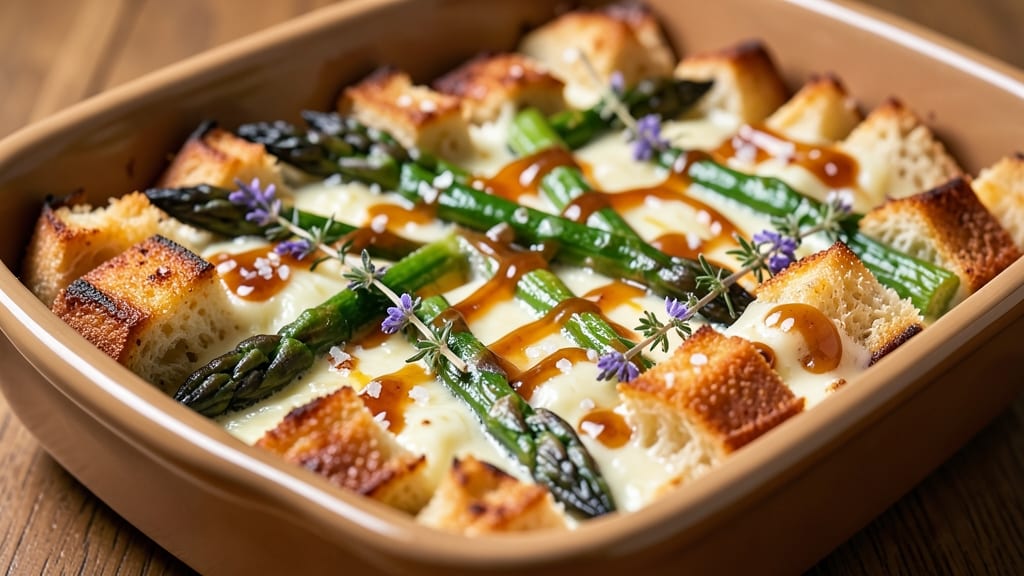
This asparagus bread pudding recipe transforms a classic dessert into a savory masterpiece with tender herb swirls and a perfectly golden crust. The secret lies in blending sweet and savory flavors—caramelized asparagus and fresh herbs create depth that elevates every bite.
I developed this recipe after experimenting with ways to incorporate more vegetables into comforting dishes without sacrificing richness.
The key to success is using stale bread (or day-old sourdough) for maximum texture, layered with roasted asparagus and a blend of thyme, rosemary, and garlic. A light custard base keeps it moist while the egg wash ensures that golden, crackly crust everyone craves.
Unlike traditional bread pudding, this version delivers a sophisticated balance of earthy vegetables and aromatic herbs.
What you'll end up with is a restaurant-worthy dish that's surprisingly simple to prepare. The asparagus adds a subtle sweetness when roasted, while the herbs infuse the custard with bright, fresh notes.
Perfect for brunch, a hearty appetizer, or even a vegetarian main course, this recipe proves comfort food can be elevated without losing its soul.
Optional garnishes like caramelized onions or a sprinkle of parmesan add extra layers of flavor, but the core recipe stands strong on its own. Ready in just 45 minutes, it's ideal for impressing guests or treating yourself to something special. Let's get started!
Ingredients for asparagus bread pudding
Stale bread, roasted asparagus, and aromatic herbs create this restaurant-worthy savory bread pudding with a golden crust.
| Ingredient | Amount | Notes |
|---|---|---|
| Stale Sourdough Bread 🍞 | 12 oz | Day-old, crust removed, cubed |
| Fresh Asparagus 🌿 | 1 lb | Trimmed, tough ends removed |
| Large Eggs 🥚 | 6 whole | Room temperature preferred |
| Heavy Cream 🥛 | 1 ½ cups | Full-fat for richness |
| Whole Milk 🥛 | ½ cup | Warmed for better blending |
| Granulated Sugar 🍚 | ¼ cup | Light brown preferred |
| Fresh Thyme 🌿 | 1 tbsp | Leaves only, finely chopped |
| Fresh Rosemary 🌿 | 1 tbsp | Needles only, finely chopped |
| Garlic Cloves 🧄 | 4 cloves | Minced, for roasting asparagus |
| Extra-Virgin Olive Oil 🫒 | ¼ cup | For roasting asparagus |
| Diamond Crystal Kosher Salt 🧂 | 1 ½ tsp | Adjust to taste |
| Ground Black Pepper 🌶️ | ½ tsp | Freshly cracked |
| Unsalted Butter 🧈 | 4 tbsp | Melted, for crust |
| Parmesan Cheese 🧀 | ¼ cup | Freshly grated, optional garnish |
The sourdough bread is non-negotiable for texture—day-old works best, but stale is ideal. Look for artisan sourdough at specialty bakeries like Breads Bakery or Whole Foods for maximum flavor. Trim the crusts and cube consistently (about 1.5-inch pieces) for even baking. For the asparagus, thick stalks hold up better to roasting—Trader Joe's or local farmers' markets often carry the best quality. Trim the woody ends and roast until tender with crisp tips, then finely chop for even distribution throughout the pudding.
No fresh herbs? Dried thyme and rosemary work at one-third the amount, but the flavor won't be as vibrant. Short on asparagus? Zucchini or fennel can substitute, though the flavor profile shifts slightly. The custard base relies on room-temperature eggs for smooth blending—cold eggs can create lumps. For extra richness, half-and-half can replace some of the heavy cream, though full-fat delivers the best texture. If you're avoiding dairy entirely, coconut cream works but may alter the mouthfeel slightly.
Prep the asparagus and herb mixture ahead—it keeps well in the fridge for up to 2 days. Assemble the pudding in a 9x13-inch baking dish lined with parchment for easy removal. For a make-ahead option, bake the pudding, cool completely, then refrigerate for up to 3 days. Reheat at 350°F for 15-20 minutes until bubbly. The crust stays crisp for 2-3 days if stored in an airtight container, though it's best enjoyed fresh. Garnish with freshly grated Parmesan just before serving for added sophistication.
Why You'll Love This Recipe
- Stale Bread Rescue: I swear by this trick—no more tossing out that week-old sourdough. Just tear it into chunks, soak it in the custard, and suddenly you’ve got a showstopper instead of scraps.
- Asparagus Magic: That bright, grassy snap of fresh asparagus cuts through the richness like a breath of spring. Roast it first for caramelized edges, and you’ll want to eat it straight from the pan.
- Weeknight Workhorse: Between us, this is my go-to for dinner when I’m exhausted but still want something impressive. Serve it warm with a sprinkle of Parmesan, and suddenly you’re hosting a dinner party.
- Leftovers? Even Better: The next day, it’s even more delicious—crispy on top, custardy inside. I’ve reheated slices in the toaster for breakfast, and nobody bats an eye. (Yes, even my picky husband.)
Step-by-step instructions for savory asparagus bread pudding
Transform day-old sourdough into a rich, herb-infused bread pudding with tender asparagus swirls and a golden crust.
Roast the Asparagus Until Tender-Crisps
Preheat your oven to 425°F. Trim the tough ends from the 1 lb fresh asparagus and cut each spear into 2-inch pieces. Toss the asparagus with 0.25 cup extra-virgin olive oil, 1.5 tsp diamond crystal kosher salt, 0.5 tsp ground black pepper, and the 4 minced garlic cloves. Spread on a baking sheet in a single layer, ensuring they don't overlap.
Roast for 12-15 minutes until the edges are deep golden brown and the asparagus yields slightly when pressed. This caramelization enhances the natural sweetness and adds texture contrast to the bread pudding. Remove from the oven and let cool for 5 minutes before handling—this prevents the asparagus from releasing excess moisture into your mixture.
Cube the Sourdough and Prepare the Herb Swirls
Cut the 12 oz stale sourdough bread into 1-inch cubes, removing any remaining crust. In a small bowl, finely chop the 1 tbsp fresh thyme and 1 tbsp fresh rosemary, then mix with 0.25 cup granulated sugar and 0.5 tsp ground black pepper. This herb-sugar blend will infuse the bread with aromatic depth.
Arrange half of the sourdough cubes in a 9x13-inch baking dish, creating a base layer. Scatter half of the roasted asparagus pieces evenly over the bread. Sprinkle half of the herb-sugar mixture on top, gently pressing it into the bread to create pockets for the custard. Repeat with another layer of sourdough, asparagus, and remaining herb mixture, finishing with a final layer of bread cubes.
Prepare the Custard Mixture
In a large bowl, whisk together the 6 whole large eggs, 1.5 cups heavy cream, 0.5 cup whole milk, and 1.5 tsp diamond crystal kosher salt until just combined—no need to overbeat. Warm the milk slightly (to 110°F) before adding to help emulsify the custard smoothly. The mixture should be homogenous but slightly thick, like a light pudding batter.
Gently pour the custard mixture over the layered bread and asparagus in the baking dish, allowing it to seep between the layers. The bread should be fully saturated but not soggy. Let the mixture rest at room temperature for 15 minutes—this gives the bread time to absorb the custard evenly, preventing a watery texture when baked.
Bake Until Golden and Set
Preheat your oven to 350°F. Melt the 4 tbsp unsalted butter and brush it evenly over the top of the bread pudding, creating a glossy surface that promotes browning. Sprinkle the 0.25 cup freshly grated parmesan cheese evenly over the top for added richness and a savory crust.
Bake for 40-45 minutes until the edges are deep golden brown and the center is just set—it should jiggle slightly when shaken, but not be liquid. If the top browns too quickly, tent loosely with foil after 25 minutes. The internal temperature should reach 165°F at the center. Remove from the oven and let rest for 10 minutes before serving—this allows the custard to firm up and the flavors to meld.
Serve Warm with Herb Garnish
Run a knife around the edges of the baking dish to loosen the bread pudding, then invert onto a serving platter if desired. Garnish with additional fresh thyme sprigs and rosemary needles for visual appeal and a burst of fresh herb flavor. Serve warm, cutting into squares to reveal the tender asparagus swirls throughout the rich custard.
Each bite should deliver a harmonious balance of savory roasted asparagus, herb-infused bread, and creamy custard with a crispy, golden crust. For best results, serve immediately while the interior remains warm and custardy.
Pro Tips For Making Asparagus Bread Pudding
- Trim Asparagus Like a Pro: Use a sharp knife to slice the tough bottoms off the stalks—about 1-2 inches—before blanching. This keeps the texture tender and prevents the dish from tasting bitter, especially if your asparagus is thick or older.
- Soak Bread in Warm Mix: Heat your milk-cream mixture to just under a simmer (not boiling) before pouring it over the bread cubes. The warmth opens up the sourdough faster, soaking it evenly in 5-7 minutes instead of leaving dry chunks that sink to the bottom.
- Don’t Overmix the Eggs: Whisk the eggs and cream together just until combined—lumpy is fine. Overbeating adds air that collapses in the oven, leading to a dense pudding instead of a light, custardy center.
- Bake Until Internal Temp Hits 160°F: Use an instant-read thermometer to check the center—160°F guarantees a set custard without drying out the bread. If you eyeball it, the edges might brown too fast while the middle stays runny.
Creative variations of asparagus bread pudding
Herb-Infused Variations
Swap the thyme and rosemary for fresh sage and parsley to create a Mediterranean twist—simmer the herbs with garlic in olive oil before mixing with sugar. For a smoky profile, add 1 tsp smoked paprika to the herb-sugar blend.
I love using fresh dill (about 1 tbsp chopped) for a bright, tangy contrast that pairs beautifully with asparagus. 🌿
Cheese Enhancements
For extra depth, fold ½ cup grated Gruyère into the custard mixture—its nutty flavor complements the asparagus perfectly. A sprinkle of Pecorino Romano (instead of Parmesan) on top adds a sharper, saltier bite.
For a creamy finish, top with 2 oz goat cheese crumbles during the last 5 minutes of baking. Trust me, the contrast is worth it! 🧀
Vegetable Swaps
Need a change? Replace asparagus with roasted leeks (tossed with olive oil and salt) for a milder, sweeter flavor. Shiitake mushrooms (sautéed with garlic) add an umami punch, while sun-dried tomatoes (chopped and mixed into the herb blend) bring a tangy brightness.
Each swap transforms the dish while keeping the savory essence intact. 🍄
Spicy Kick Options
Add ½ tsp red pepper flakes to the herb-sugar mixture for subtle heat, or fold 1 tbsp chopped jalapeño into the custard for a smoky, spicy surprise. For a sweet-spicy balance, drizzle 1 tbsp honey over the roasted asparagus before layering.
I find chipotle in adobo (about 1 tsp minced) mixed into the custard delivers a deep, smoky warmth. 🌶️
Gluten-Free Adaptation
Use gluten-free sourdough (like Canyon Bakehouse or Schär) and increase the egg count to 8 for structure. For extra binding, whisk 2 tbsp cornstarch into the custard mixture. The texture stays rich and custardy—just ensure the bread cubes are fully saturated before baking. 💪
Make-Ahead Garnishes
Prep caramelized onions (sauté 1 cup thinly sliced onions in butter for 20 minutes) and store in the fridge for up to 3 days. Reheat gently before serving over the bread pudding.
For a crunchy topping, toast ½ cup panko breadcrumbs with 1 tbsp melted butter and sprinkle on top during the final 5 minutes of baking. These add-ons elevate the dish effortlessly! ✨
Nutrition facts
Frequently asked questions
Can I use regular white bread instead of sourdough?
While you can use white bread, sourdough's tangy depth and chewy texture make it ideal for this recipe. For a close substitute, try a crusty baguette or Italian bread—just increase the custard slightly (add 2 tbsp milk) to compensate for their drier nature. Avoid soft sandwich bread, as it absorbs too much liquid and creates a gummy texture.
How do I prevent the asparagus from making the pudding too watery?
Roast the asparagus until fully tender (12-15 minutes) and let it cool completely before mixing. Pat it dry with a paper towel to remove excess moisture, then chop finely for even distribution. The key is balancing the asparagus-to-bread ratio—never exceed 1 lb asparagus per 12 oz bread or the texture will suffer.
Can I make this ahead of time?
Assemble the pudding in the baking dish, cover tightly, and refrigerate for up to 24 hours. When ready to bake, add 5-10 extra minutes to the baking time (check at 50 minutes) since it starts cooler. For best results, serve within 3 hours of baking while the crust remains crisp.
What if I don't have fresh herbs?
Use 1 tsp dried thyme and 1 tsp dried rosemary (not the needle versions), but toast them lightly in a dry pan for 30 seconds to revive their flavor. For even more depth, add ½ tsp onion powder to the herb-sugar blend. The sugar helps mask any bitterness from dried herbs, so don't skip that step!
Is this dish suitable for vegetarians?
Yes! This recipe is completely vegetarian (no meat or animal byproducts beyond dairy/eggs). For a vegan version, substitute eggs with 6 tbsp aquafaba (chickpea brine) whipped to stiff peaks, and use coconut cream instead of dairy. The texture will be slightly lighter but still delicious.