
Side Dishes
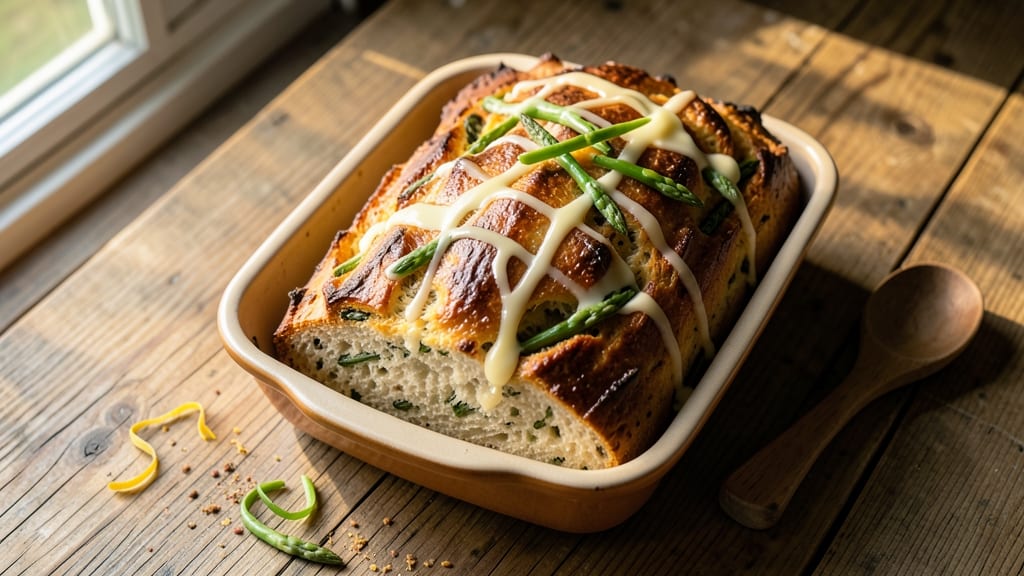
This asparagus bread recipe transforms spring's most beloved vegetable into a fragrant, herb-infused loaf that hides its greens beautifully. The secret lies in finely chopped asparagus that blends seamlessly into the dough, adding subtle earthiness while keeping the texture light and airy.
I developed this recipe after realizing how much we wasted asparagus stems—now they become the star of a perfectly crusty loaf.
The process begins with sautéing asparagus until tender, then blending it into a simple bread dough with garlic, rosemary, and a touch of Parmesan for depth. Unlike traditional breads, this version gets its subtle green hue and fresh flavor from the asparagus without overpowering the bread's natural taste.
The result is a loaf with a golden crust and tender crumb that's perfect for sandwiches or serving alongside soups.
Baking takes just under an hour, and the aroma filling your kitchen will have everyone asking what's in this special loaf. The asparagus adds a subtle sweetness that pairs beautifully with the herbs, while the crust remains crisp enough to hold up to any filling.
This is the kind of bread that makes spring vegetables feel like a celebration—no one will guess it's packed with hidden greens.
Use this recipe to elevate your spring menu or repurpose leftover asparagus stems. The dough is simple enough for beginners but impressive enough for gatherings, and the flavor only improves as it sits. Let's make this herb-infused loaf that turns a simple side into something extraordinary.
Ingredients for asparagus bread
Spring's best kept secret—this herb-infused loaf hides asparagus beautifully while delivering golden crust and tender crumb.
| Ingredient | Amount | Notes |
|---|---|---|
| Fresh Asparagus 🌱 | 1 lb | Stems only, finely chopped |
| All-Purpose Flour 🌾 | 4 cups | Unbleached preferred for lightness |
| Active Dry Yeast 🍞 | 2 ¼ tsp | Or 1 packet instant yeast |
| Granulated Sugar 🍚 | ¼ cup | For yeast activation |
| Warm Water 💧 | 1 ¼ cups | 110°F for ideal yeast activation |
| Unsalted Butter 🧈 | ½ cup | Cold, cubed for dough |
| Large Egg 🥚 | 1 whole | Room temperature |
| Garlic Cloves 🧄 | 2 cloves | Minced for depth |
| Fresh Rosemary 🌿 | ¼ cup | Finely chopped, stems removed |
| Parmesan Cheese 🧀 | ½ cup | Freshly grated from block |
| Kosher Salt 🧂 | 1 ½ tsp | Diamond Crystal preferred |
| Ground Black Pepper 🌶️ | ½ tsp | Freshly cracked |
| Olive Oil 🫒 | 2 tbsp | For greasing loaf pan |
The asparagus stems are the star here. Look for thick, firm stems at the grocery store—they'll chop finer and blend better into the dough. Trader Joe's often carries pre-trimmed asparagus, which saves time. If you're using whole spears, trim the tough bottoms first. The rosemary should be fresh—dried works in a pinch, but fresh gives that bright, piney aroma that makes this bread special. For the Parmesan, skip the pre-grated stuff—it gets clumpy. Grate it yourself from a wedge for that perfect, salty bite.
No fresh rosemary? Dried works at one-third the amount, but the flavor won't be as vibrant. Short on asparagus stems? Swap in finely chopped zucchini or spinach—just squeeze out excess moisture first. The butter must be cold when mixed into the dough—soft butter makes the bread dense. For a lighter loaf, let the dough rise in a warm spot (like a turned-off oven with a bowl of hot water inside). And if you're feeling fancy, add a pinch of lemon zest to brighten the herbs even more.
This bread keeps beautifully—3-4 days at room temperature wrapped in a towel, or 1 week in the fridge. For longer storage, freeze the loaf 3 months wrapped tightly in plastic. I always make a double batch—the extra loaf disappears fast for toast or sandwiches. The crust stays crisp for about 2 days if you store it in a bread box. And if you've got leftover asparagus spears? Toss them into the dough too—they'll soften perfectly.
Why You'll Love This Recipe
- No Chopping Hassle: I swear by this recipe because it only needs one prep step: trim the asparagus spears and toss them in. No dicing, no mincing—just snap off the woody ends and you’re done. The yeast does all the work while you sip your coffee.
- Earthy Sweetness Surprise: Between us, the sugar in the dough caramelizes just enough to balance the asparagus’s natural bitterness. That first bite? Warm, slightly crisp crust with a hint of spring vegetable sweetness—like a cross between garlic bread and an artisanal loaf.
- Leftovers That Last: This bread keeps for days in the fridge, and I’ve even frozen slices for quick toast. Honestly, the flavor actually deepens overnight, so you’re getting more bang for your buck—and less waste.
- Budget-Friendly Spring Staple: Fresh asparagus is seasonal but affordable, and this recipe stretches it across an entire loaf. I’ll be real: it’s cheaper than buying pre-made bread, and way more interesting. Plus, the yeast and flour are pantry basics.
Step-by-step instructions for herb-infused asparagus bread
Transform humble asparagus stems into a fragrant, golden loaf with this surprisingly simple technique.
Prepare the Asparagus and Yeast Mixture
Start by trimming the tough ends from the 1 lb fresh asparagus and finely chopping just the stems—discard the fibrous bottoms. You'll end up with about 1 cup chopped stems. In a small bowl, whisk together the 2.25 tsp active dry yeast, 0.25 cup granulated sugar, and 1.25 cups warm water (about 110°F). Let it sit for 5-10 minutes until foamy—this confirms your yeast is active. Meanwhile, pulse the chopped asparagus in a food processor until it resembles coarse sand, about 30 seconds. This hidden green base will infuse flavor without overpowering the bread.
Here's the thing—you want the asparagus to blend seamlessly, so don't skip the food processor. If you're worried about bitterness, don't be: the yeast and sugar will mellow the flavor during fermentation. I like to taste the mixture at this stage—it should be subtly vegetal, not grassy.
Mix the Dough and Incorporate Herbs
In a large mixing bowl, combine the yeast mixture, 4 cups all-purpose flour, 1.5 tsp kosher salt, and 0.5 tsp ground black pepper. Stir with a wooden spoon until a shaggy dough forms. Add the 1 whole large egg and 0.5 cup unsalted butter (cold, cubed), then mix until fully incorporated. The butter should coat the dough but still leave some visible pieces—this creates tender layers later.
Now fold in the 0.25 cup finely chopped fresh rosemary and 2 cloves minced garlic. I always use a silicone spatula for this—it helps distribute the herbs evenly without tearing the dough. The rosemary should be finely chopped so it disperses completely; if you see large pieces, pulse them again in the food processor. The garlic adds depth that balances the earthiness of the asparagus.
Knead and Let the Dough Rise
Turn the dough onto a lightly floured surface and knead for 8-10 minutes until smooth and elastic. You'll know it's ready when it springs back slowly when poked. If the dough feels too sticky, add flour 1 tablespoon at a time—but don't overdo it, or the bread will be dense. Shape the dough into a ball, place it in a lightly oiled bowl, cover with a damp towel, and let it rise in a warm place for 1-1.5 hours or until doubled in size.
This is where patience pays off. The dough should puff noticeably and feel light when pressed gently. If your kitchen isn't warm, place the bowl near a turned-off oven with the light on—this creates a cozy environment. I always set a timer so I don't forget; overproofing leads to a collapsed loaf.
Shape, Add Cheese, and Second Rise
Punch down the risen dough and transfer it to a lightly floured surface. Gently shape it into a 9x5-inch loaf pan, leaving room for expansion. Brush the sides of the pan with olive oil to prevent sticking. Sprinkle 0.5 cup freshly grated Parmesan cheese evenly over the top—this adds umami and creates a beautiful golden crust. Cover the pan with a towel and let the dough rise for another 30-45 minutes until it domes slightly above the pan.
Don't skip the second rise, even if it seems short. This step ensures the bread has proper oven spring. The Parmesan should melt just enough to create a thin, flavorful crust. If you're short on time, you can skip this rise and proceed directly to baking, but the texture won't be as light.
Bake to Golden Perfection
Preheat your oven to 375°F with a rack in the middle position. Bake the loaf for 30-35 minutes until the top is deep golden brown and the internal temperature reaches 190°F (use an instant-read thermometer). Tap the bottom of the loaf—it should sound hollow. If the top browns too quickly, tent it loosely with foil to prevent over-browning.
Let the bread cool in the pan for 10 minutes, then transfer it to a wire rack. The asparagus flavor will be subtle but unmistakable—like a whisper of spring in every slice. Serve warm with butter or olive oil for dipping, or toast slices for breakfast the next day. The crust should be crisp, the crumb tender, and the Parmesan adding a salty finish to every bite.
Pro Tips For Making Asparagus Bread
- Trim the Asparagus Right: Cut the woody ends at an angle—about 1.5 inches from the base—then snap the rest where it naturally breaks. This keeps the spears clean and avoids the messy, uneven cuts that make your dough look sloppy. (Yes, even if you’re impatient like me, take the extra 30 seconds.)
- Blanch Asparagus First: Drop the trimmed spears into boiling salted water for 2 minutes before chopping them for the dough. This softens the fibers so they blend smoothly instead of turning your bread into a gritty, fibrous mess. Drain and shock in ice water before adding to the dough—trust me, your bread will thank you.
- Don’t Overmix the Dough: Once you add the chopped asparagus to the flour mixture, stir just until combined. Overworking it develops the gluten too much, and your bread will turn out dense instead of light and airy. Two minutes max—set a timer if you’re distracted.
- Use Room-Temp Water for Yeast: The yeast packet says "warm water," but room temperature (around 75°F) is gentler and activates faster. If your water’s too hot, you’ll kill the yeast before it even starts working. Stick your finger in the water—if it feels like a warm bath, you’re good. (Cold water? Microwave it in 10-second bursts.)
Troubleshooting this recipe
Dense or Gummy Dough
If your dough feels too sticky or dense after kneading, you've likely added too much flour. I find this happens when the kitchen is humid or when using whole wheat flour.
Try reducing flour by 1-2 tablespoons next time, or add 1 extra tablespoon olive oil to improve elasticity. Also, ensure your yeast is fresh—old yeast can make dough sluggish. 💫
Uneven Browning
For a loaf with dark spots and pale areas, rotate your pan halfway through baking. I also recommend brushing the top with 1 tablespoon water or milk before baking to encourage even browning.
If your oven runs hot, tent the loaf with foil after 20 minutes to prevent over-browning while the center cooks.
Collapsed Loaf
A collapsed loaf usually means the dough didn't rise properly. First, check your yeast—it should foam within 5-10 minutes when mixed with warm water. If your kitchen is cold, place the rising dough near a warm spot (like an oven with the light on).
Never overproof—dough should double in size within 1-1.5 hours. For extra insurance, chill the shaped loaf in the fridge for 30 minutes before baking.
Asparagus Taste Too Strong
If the asparagus flavor dominates, reduce the amount to ½ cup chopped stems next time. Also, sauté the asparagus first for 3-4 minutes before blending into the dough—this mellows the flavor.
The yeast fermentation process naturally softens the asparagus taste, but roasting it first helps even more. For a milder version, try swapping asparagus for zucchini or spinach.
Dry or Crumbly Texture
Over-kneading or using too much flour creates dry bread. Knead just until the dough is smooth and springs back when poked. If your dough feels dry, add 1 tablespoon water at a time until it becomes pliable.
For extra moisture, replace ¼ cup water with ¼ cup whole milk in the yeast mixture. The butter must stay cold—soft butter makes bread dense.
Stale Bread Too Quickly
To extend freshness, store bread in a paper bag at room temperature rather than plastic—it traps moisture better. For longer storage, freeze the loaf 3 months wrapped tightly in plastic. When reheating, wrap slices in foil and warm in a 350°F oven for 5-7 minutes.
The asparagus-infused version stays fresher than plain bread because the herbs naturally preserve moisture. 🌱
Nutrition facts
Frequently asked questions
Can I use whole asparagus spears instead of just stems?
While you can use whole spears, the stems blend better into the dough for a seamless texture. If you prefer, trim the tough ends and finely chop the entire spear (including tips), but you'll need to reduce the amount to ½ cup chopped asparagus to avoid excess moisture. The tips will add a slightly sweeter flavor but may create a more noticeable green speckling in the bread.
How do I store leftovers to keep them fresh?
Wrap the cooled loaf in a clean kitchen towel and store it at room temperature for 2-3 days in a bread box or paper bag. For longer storage, freeze slices wrapped in plastic for up to 3 months. To revive stale slices, wrap them in foil and warm at 350°F for 5-7 minutes. The asparagus helps preserve moisture better than plain bread!
What can I substitute if I don't have fresh rosemary?
Use 1 teaspoon dried rosemary (one-third the fresh amount) or swap for 1 teaspoon dried thyme or ½ teaspoon dried oregano. For a citrusy twist, add 1 tablespoon lemon zest instead. The key is balancing the asparagus's earthiness—herbs with bright, piney notes work best. If you're short on herbs, increase the garlic to 3 cloves for extra depth.
Can I make this bread without a loaf pan?
Shape the dough into a free-form loaf on a parchment-lined baking sheet. For a rustic look, dimple the top with your fingers before baking. The cooking time may increase by 5-10 minutes—check for doneness at 35-40 minutes. Brush the top with olive oil before baking for extra crispiness. Just be prepared for a denser crust compared to pan-baked bread.
Why does my bread taste bitter?
Bitter flavor usually comes from overcooked asparagus or old yeast. To fix it, sauté the asparagus first for 3-4 minutes until just tender before blending, or reduce the amount to ½ cup. Always use fresh yeast—it should foam within 5-10 minutes when mixed with warm water. For future batches, try roasting the asparagus at 400°F for 10 minutes before adding to the dough to mellow its flavor.