
Soups & Stews
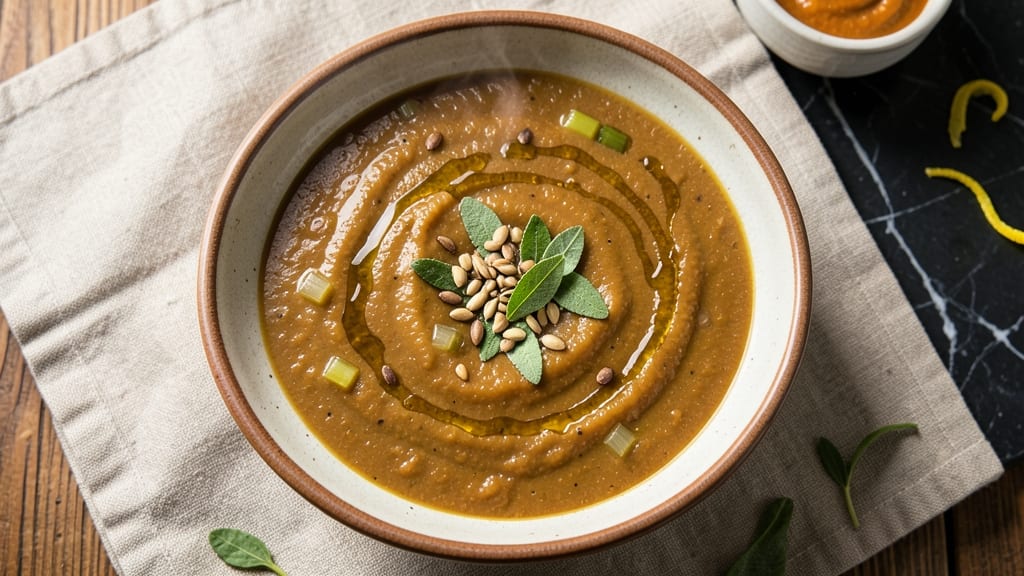
This Atlanta Bread Company butternut squash soup recipe delivers restaurant-quality velvety texture and warm spices in every spoonful. 💛 The secret lies in slow-roasting the squash for deep caramelization before blending it into a creamy base with aromatic vegetables and a touch of nutmeg.
My version captures that signature comfort while using simple pantry staples.
The recipe begins with roasting butternut squash until tender and caramelized—this step transforms its natural sweetness into rich, complex flavor. Sautéing onions, garlic, and celery forms the aromatic foundation, while vegetable broth and spices create that signature depth.
The result is a soup that's creamy without heavy cream, perfectly balanced between sweet and savory.
What makes this version special is the optional toasted pumpkin seed garnish, which adds crunch and nutty flavor that complements the soup beautifully. The texture is velvety smooth with just enough body, and the spices linger on your palate for that restaurant-quality finish.
This is the kind of soup that warms you from the inside out.
Perfect for chilly evenings or as a comforting starter, this recipe scales easily for gatherings while remaining simple enough for weeknight meals. The slow-roasting technique ensures maximum flavor extraction, making every spoonful taste like it came from Atlanta Bread Company's own kitchen.
Ingredients for atlanta bread company butternut squash soup
Six simple ingredients transform into velvety, restaurant-quality butternut squash soup with rich depth.
| Ingredient | Amount | Notes |
|---|---|---|
| Butternut Squash 🎃 | 3 lb | Cubed, skin removed |
| Yellow Onion 🧅 | 1 whole | Diced, medium size |
| Celery Stalks 🥬 | 3 whole | Diced, fresh preferred |
| Garlic Cloves 🧄 | 4 cloves | Minced, fresh preferred |
| Vegetable Broth 💧 | 4 cups | Low-sodium preferred |
| Extra-Virgin Olive Oil 🫒 | ½ cup | For roasting and sautéing |
| Ground Nutmeg 🌶️ | ¼ tsp | Freshly grated preferred |
| Ground Cinnamon 🌿 | ½ tsp | Sweet variety preferred |
| Salt 🧂 | 1 ½ tsp | Kosher or sea salt |
| Black Pepper 🌶️ | ½ tsp | Freshly ground preferred |
| Pumpkin Seeds 🥜 | ½ cup | Toasted for garnish |
| Fresh Thyme Leaves 🌿 | ¼ cup | Chopped, or 1 tsp dried |
| Fresh Sage Leaves 🌿 | ¼ cup | Chopped, or 1 tsp dried |
| Coconut Milk 🥥 | ½ cup | Full-fat for creaminess |
The butternut squash is the star—look for firm, heavy squash with smooth skin at stores like Whole Foods or your local farmers market. The smaller sugar pumpkins work too, but butternut delivers that signature sweetness. Roasting caramelizes the natural sugars, so don't skip this step. For best flavor, roast the squash until fork-tender. If you're short on time, pre-cut squash from the produce section saves chopping work. The vegetable broth should be low-sodium—you'll be adding plenty of salt later.
No fresh thyme or sage? Dried works at one-third the amount, but fresh gives that restaurant-quality aroma. Swapping coconut milk for heavy cream? Use the same amount—it adds richness without dairy. For extra depth, toast the pumpkin seeds in a dry pan until golden before adding them to the soup. The spices are key: nutmeg and cinnamon should be freshly ground if possible. Pre-ground loses potency fast. If you can't find extra-virgin olive oil, any good-quality oil works, but EVOO has that fruity note that shines in the finished soup.
Roasted squash keeps 5 days in the fridge—use it within that time for best flavor. The finished soup reheats beautifully, but add a splash of broth if it thickens when warming. Store in airtight containers, and freeze portions for up to 3 months. For the pumpkin seed garnish, toast a fresh batch whenever you reheat—5 minutes in a dry pan makes all the difference. This soup tastes even better the next day as flavors meld, so make extra for leftovers.
Why You'll Love This Recipe
- No-Chop Nightmare: That roasted butternut squash? You can use pre-cut cubes from the store—no peeling, no seeds, just dump and roast. I’ve made this twice with the same lazy prep, and both times it tasted like I’d spent hours.
- Savory-Sweet Magic: The caramelized onions and garlic turn this into something deeper than basic squash soup. That slow-cooked sweetness with the sharp kick of celery? It’s the kind of balance that makes you reach for seconds without trying.
- Leftover Hero: This soup actually improves the next day. The flavors meld even more, and it reheats like a dream. I’ve packed it for lunches all week—just add a sprinkle of salt and a swirl of cream (if you’re fancy).
- Budget Bright Spot: Butternut squash and veggie broth stretch to feed four for under $10. Honestly, it’s the kind of recipe that makes me feel smart about grocery shopping while still feeling indulged. (Yes, even on a Tuesday night.)
Step-by-step instructions for Atlanta Bread Company butternut squash soup
Here's the method for a velvety, spiced soup that captures the essence of Atlanta Bread Company's signature blend.
🔥 Step 1: Roast the Squash and Aromatics for Depth
Preheat your oven to 400°F and line a large baking sheet with parchment paper. Toss the 3 lb cubed butternut squash, 1 diced yellow onion, and 3 diced celery stalks with 2 tablespoons of the extra-virgin olive oil, 1 tsp salt, and ¼ tsp black pepper. Spread them in a single layer on the baking sheet.
Roast for 25-30 minutes until the squash is tender and the edges are deep golden brown. Here's the thing—roasting caramelizes the natural sugars in the vegetables, creating a rich foundation for the soup. You'll know it's done when a fork slides in easily and the onion and celery are soft. Transfer the roasted vegetables to a large pot.
🍳 Step 2: Sauté Garlic and Spices for Warmth
In a large skillet, heat 2 tablespoons extra-virgin olive oil over medium heat. Add the 4 minced garlic cloves and sauté for 30 seconds until fragrant but not browned. Watch closely—garlic burns quickly, and you want that sweet, nutty aroma without bitterness.
Add the ground cinnamon and ground nutmeg, stirring for 10 seconds until the spices are toasted and aromatic. Pour this fragrant mixture into the pot with the roasted vegetables. Add the 4 cups vegetable broth and bring to a gentle boil. Reduce heat to medium-low and simmer for 10 minutes to let the flavors meld.
🥘 Step 3: Blend Until Silky Smooth
Using an immersion blender, carefully blend the soup directly in the pot until completely smooth. I like to blend in batches if needed—this ensures no lumps and a velvety texture. For a perfectly creamy consistency, stir in the ½ cup coconut milk as you blend. The coconut milk adds richness without overpowering the natural sweetness of the squash.
Taste and adjust seasoning with the remaining ½ tsp salt and ¼ tsp black pepper if needed. The soup should be well-seasoned but balanced—you want the spices to enhance, not dominate. Return the soup to the pot and keep it warm over low heat.
🔪 Step 4: Toast the Pumpkin Seeds and Fresh Herbs
While the soup simmers, toast the ½ cup pumpkin seeds in a dry skillet over medium heat for 3-5 minutes, stirring constantly, until they're golden brown and fragrant. Remove from heat immediately—they'll continue to toast and can burn quickly. Let them cool for 2 minutes before transferring to a plate.
Chop the ¼ cup fresh thyme leaves and ¼ cup fresh sage leaves finely. These herbs will add a bright, aromatic finish to the soup. Keep them separate from the seeds for garnish.
🍽️ Step 5: Serve with Garnish and Enjoy
Ladle the soup into bowls and garnish each serving with a sprinkle of toasted pumpkin seeds, chopped thyme, and sage. The seeds add a delightful crunch and nutty flavor, while the herbs bring freshness to balance the rich, spiced soup. Serve immediately while warm—this soup tastes best fresh from the pot.
Each spoonful should deliver a harmonious blend of sweet roasted squash, warm spices, and creamy coconut milk. The contrast of the crunchy seeds and fresh herbs against the velvety soup makes every bite satisfying. Store leftovers in the refrigerator for up to 3 days, but I promise you won't have any leftovers!
Pro Tips For Making Atlanta Bread Company Butternut Squash Soup
- CHAR THE ONIONS: Start with a cold pan—no oil yet. Once the onions hit medium heat, add a splash of water, cover, and let them steam for 5 minutes before adding fat. This keeps them from burning while you prep the rest, and you’ll end up with deeper sweetness instead of bitterized bits.
- PEEL THE SQUASH SMART: Use a sharp knife to cut the squash in half lengthwise, then scoop out the seeds with a spoon. Roast the halves cut-side down at 400°F (200°C) for 35–40 minutes—no need to peel first. The skin crisps up nicely and adds texture; just scoop out the flesh after roasting.
- SWEAT THE AROMATICS LOW: After the onions soften, add celery and garlic but keep the heat low. I used to rush this, and the garlic would burn before the celery even broke down. A gentle simmer for 8–10 minutes ensures the celery melts into the base and the garlic infuses without bitterness.
- SAVE TIME WITH FROZEN SQUASH: Skip the roasting step entirely: Use 2 cups of pre-cubed, frozen butternut squash (no need to thaw). Add it directly to the pot with broth and simmer until tender—about 15 minutes. The texture’s slightly different but still creamy, and you’ll avoid the mess of peeling and roasting.
Serving suggestions for this atlanta bread company butternut squash soup
Bread Pairings
Serve this velvety soup with warm, crusty bread to soak up every last drop. I love pairing it with Atlanta Bread Company's sourdough—its tangy crumb contrasts beautifully with the sweet squash and creamy coconut milk.
For extra flair, toast slices with garlic butter or drizzle with olive oil and flaky sea salt before serving. 🥖
Cheese Board Accompaniment
Create a fall-inspired cheese board with aged cheddar, brie, and goat cheese alongside the soup. The sharpness of cheddar cuts through the soup's richness, while brie adds a creamy complement. Include fig jam and walnuts for texture and sweetness that echoes the soup's flavors.
Protein Additions
For a heartier meal, stir in crumbled bacon or crispy prosciutto during the last 5 minutes of simmering. The smoky, salty notes elevate the soup's depth. Alternatively, serve alongside grilled chicken breast or pan-seared salmon for a complete autumnal dinner.
Seasonal Garnishes
Transform the soup's presentation with fresh garnishes. A drizzle of local honey adds subtle sweetness, while crispy fried shallots provide a delicate crunch. For a pop of color, add microgreens or edible flowers—they brighten the bowl and add a sophisticated touch. 🌿
Drink Pairings
Pair this soup with a dry Riesling to complement its sweet and savory notes. The wine's acidity balances the soup's creaminess, while its floral notes harmonize with the thyme and sage. For a non-alcoholic option, serve with sparkling apple cider—its effervescence cleanses the palate between spoonfuls.
Make-Ahead Serving
Prepare the soup ahead and reheat gently on the stovetop with a splash of broth. Toast fresh pumpkin seeds and herbs just before serving to maintain their vibrant flavors.
Store leftovers in airtight containers for up to 3 days, and freeze portions for up to 3 months—perfect for busy weeknights! 💫
Nutrition facts
Frequently asked questions
Can I substitute coconut milk for cream in this recipe?
Yes! The recipe uses coconut milk for a lighter, dairy-free creaminess that still delivers rich flavor. For a traditional version, use ½ cup heavy cream instead—it'll make the soup even more velvety. Just note that coconut milk adds subtle tropical notes that complement the squash beautifully.
How do I make this soup vegan?
Swap the coconut milk for ½ cup full-fat coconut cream (not coconut milk) and use vegetable broth throughout. For extra richness, stir in 2 tablespoons nutritional yeast after blending. The toasted pumpkin seeds still work perfectly as a garnish.
Why does my soup taste bland after blending?
Most likely, the roasted vegetables weren't caramelized enough during the first step. Roast them until deeply golden (25-30 minutes) and taste the mixture before blending—it should be rich and slightly sweet. If needed, add ½ tsp more salt or a pinch of smoked paprika after blending.
Can I use canned butternut squash instead of fresh?
While fresh squash gives the best texture, you can use canned in a pinch. Drain and rinse 4 cups cubed canned squash, then roast with the other vegetables for 15 minutes (no need for full cooking time). The flavor will be slightly less complex but still delicious. For maximum depth, add ½ tsp maple syrup to the broth.
How do I make this recipe gluten-free?
This recipe is naturally gluten-free! Just ensure your vegetable broth is certified gluten-free and check the labels on your spices. The pumpkin seeds and coconut milk are also typically gluten-free. Serve with gluten-free bread or crackers if needed.