
Side Dishes
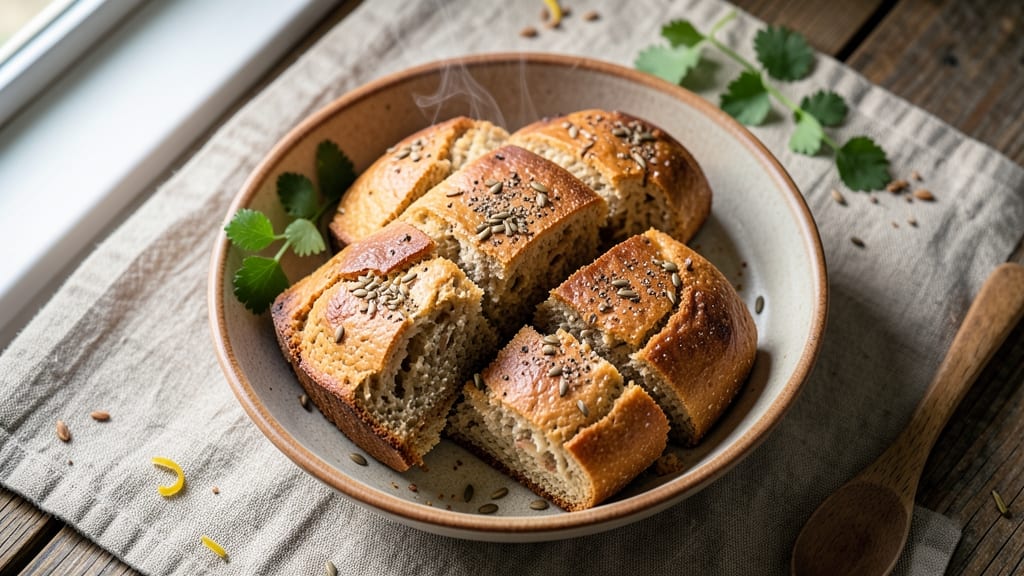
This Ayurvedic bread recipe transforms whole grains into a digestive-friendly loaf packed with warming spices like cumin, fennel, and ajwain—each chosen for their traditional benefits in balancing agni (digestive fire). The secret lies in fermenting the dough overnight, which enhances nutrient absorption while creating a light, airy crumb.
Unlike conventional bread, this version relies on millet or gluten-free flours, making it gentle on sensitive systems while delivering sustained energy.
What sets this bread apart is its Ayurvedic spice blend, carefully balanced to support digestion without heaviness. Cumin promotes gut motility, fennel soothes bloating, and ajwain (carom seeds) aids in reducing gas—all while contributing to a subtly aromatic crust.
The dough’s natural fermentation also boosts probiotics, making every slice a nourishing choice for breakfast or paired with herbal teas like ginger or coriander.
By the time it emerges from the oven, you’ll have a golden, fragrant loaf with a crisp exterior and tender interior—perfect for toast, sandwiches, or served warm with a side of homemade chutney.
The recipe accommodates gluten-free needs while staying true to Ayurvedic principles, ensuring both flavor and function align. Ready in about 24 hours (including fermentation), it’s a weekend project worth the wait.
This bread isn’t just food—it’s a mindful meal, designed to harmonize with your body’s rhythms. Whether you’re seeking digestive relief or simply a wholesome alternative to refined grains, the warm spices and fermented goodness make every bite intentional. Let’s bake it step by step.
Ingredients for ayurvedic bread
Whole grains, warm spices, and a touch of honey—this Ayurvedic blend creates a loaf designed for digestion and flavor.
| Ingredient | Amount | Notes |
|---|---|---|
| Millet Flour 🌾 | 2 cups | Stone-ground for texture |
| Whole Wheat Flour 🌾 | 1 cup | Unbleached for authenticity |
| Active Dry Yeast 🍞 | ½ tsp | Or 1 packet (2.25g) |
| Warm Water 💧 | 1 ¼ cups | 105-110°F for activation |
| Ground Cumin Seeds 🌿 | 1 ½ tsp | Freshly ground preferred |
| Fennel Seeds 🌿 | 1 tsp | Lightly toasted for aroma |
| Ajwain Seeds (Carom) 🌿 | ½ tsp | Traditional digestive aid |
| Honey 🍯 | 2 tbsp | Or maple syrup for vegan |
| Salt 🧂 | 1 tsp | Fine sea salt preferred |
| Olive Oil 🫒 | ¼ cup | Extra-virgin for richness |
| Ginger Root 🧄 | 1 tbsp | Freshly grated for zing |
| Coriander Seeds 🌿 | ½ tsp | Toasted for depth |
The millet flour is the heart of this bread—Bob's Red Mill or Navitas Organics are solid choices if you can't find it locally. Whole wheat flour adds structure, but spelt or buckwheat flour work too for gluten-free adaptations. The spices? Whole Spice Company sells pre-ground blends, but toasting whole seeds in a dry pan for 30 seconds before grinding releases their oils—game changer. Fresh ginger is non-negotiable here; jarred loses that bright kick. If you're new to ajwain, it's the tiny, nutty seeds that taste like a cross between thyme and fenugreek—Indian grocery stores usually carry it in bulk.
No honey? Maple syrup or agave keeps things vegan without sacrificing sweetness. Short on fennel seeds? Dried fennel powder at one-third the amount works in a pinch. The yeast is the only ingredient that needs warmth—microwave your water for 30 seconds to hit that 105°F range. Olive oil can be swapped for avocado or melted coconut oil, though olive's peppery notes play nice with the spices. For a deeper flavor, add 1 tsp black pepper—it enhances the warming spices beautifully. And if you're gluten-free, swap the whole wheat for certified GF oat flour.
This dough needs time—12-14 hours at room temp or overnight in the fridge. The longer it ferments, the more probiotic-rich it becomes. Store leftovers in an airtight container for 3-4 days, or freeze slices wrapped in parchment for up to 3 months. To reheat, wrap in foil and warm at 350°F for 5 minutes. The crust gets crispier the next day—toast it fresh for maximum crunch. And if you make a double batch? Freeze half immediately—future you will thank present you.
Why You'll Love This Recipe
- No-Knead Magic: I swear by this dough—just mix, let it rise, and forget it. The millet flour handles all the heavy lifting while I sip my tea, no stand mixer required.
- Earthy Warmth: That toasted cumin and whole wheat combo? It’s like a hug in bread form. Honestly, the aroma alone makes my kitchen feel like a spice shop.
- Meal Prep Hero: Slice it fresh, toast it later. Freezes like a dream, so I batch-make it on Sundays and pull out perfect slices all week—no sad, day-old bread here.
- Pocket-Friendly Power: Millet flour’s cheap, whole wheat’s filling, and a pinch of cumin stretches every bite. Between us, this bread costs less than half what I’d spend on store-bought—and it lasts.
Step-by-step instructions for Ayurvedic bread with warm digestive spices
This bread blends ancient Ayurvedic principles with simple techniques for a nourishing, spice-infused loaf.
Activate the Yeast with Warm Spiced Water
In a small bowl, combine the 1.25 cups warm water (between 105-110°F) with the 0.5 tsp active dry yeast. Let it sit for 5-7 minutes until frothy—this confirms the yeast is alive and ready to work. While waiting, lightly toast the 1 tsp fennel seeds and 0.5 tsp coriander seeds in a dry skillet over low heat for 1-2 minutes until fragrant. This releases their essential oils, deepening the bread's aromatic profile.
Once the yeast is bubbly, stir in the toasted seeds along with the 1.5 tsp ground cumin seeds, 0.5 tsp ajwain seeds (carom), and 1 tbsp freshly grated ginger root. The mixture should smell warmly spiced and slightly earthy—this is the foundation of the bread's digestive benefits. Set aside while you prepare the dry ingredients.
Mix the Flours and Hydrate the Dough
In a large mixing bowl, whisk together the 2 cups millet flour and 1 cup whole wheat flour until combined. Create a well in the center and pour in the yeast mixture, 0.25 cup olive oil, 2 tbsp honey, and 1 tsp salt. Using a wooden spoon or dough whisk, gradually incorporate the liquids into the flours, starting from the edges and working toward the center.
After combining, let the dough rest for 5 minutes. This allows the flours to fully hydrate and the gluten to begin developing. You'll notice the dough become slightly sticky but manageable—this texture is ideal for the bread's tender yet substantial crumb. If it feels too dry, add 1 teaspoon warm water at a time until just cohesive.
Knead and Develop Gluten for Structure
Turn the dough onto a lightly floured surface and knead vigorously for 8-10 minutes by hand, or use a stand mixer with a dough hook on medium speed for 5-6 minutes. You're looking for a smooth, elastic dough that springs back when poked—this indicates proper gluten development, which gives the bread its structure. The dough should feel slightly tacky but not sticky; if it sticks to your hands, add 1 tablespoon flour at a time.
During kneading, the warm spices will begin to infuse the dough, creating a subtle but noticeable aromatic depth. The millet flour adds a slightly nutty flavor, while the whole wheat flour contributes a hearty texture. Once the dough passes the windowpane test (stretch a small piece—it should be translucent when held up to light), shape it into a round loaf and place it in a lightly oiled bowl.
Proof the Dough for Rise and Flavor Development
Cover the bowl with a damp kitchen towel and let the dough rise in a warm place for 1.5-2 hours, or until it has doubled in size. The warmth encourages the yeast to activate, while the humidity prevents the surface from drying out. You'll see small bubbles form on the surface and the dough feel light when pressed gently with a fingertip—this is the proofing stage where the bread's structure and flavor truly develop.
For even better results, place the bowl in a 250°F oven with the light on for 10 minutes to create a warm, humid environment. This method speeds up proofing while maintaining even temperature. Once fully risen, punch down the dough gently to release air bubbles, then shape it into a round loaf on a parchment-lined baking sheet.
Bake Until Golden with Crisp Edges
Preheat your oven to 375°F and bake the bread for 30-35 minutes, until the top is golden brown and the internal temperature reaches 190°F. The crust should sound hollow when tapped with a wooden spoon—a sure sign of doneness. The warm spices will create a subtle, inviting aroma that fills your kitchen, signaling the bread is ready.
For extra crispiness, brush the top with a little olive oil after baking. Let the bread cool on a wire rack for 15 minutes before slicing—this allows the interior to set and prevents a gummy texture. Each slice should reveal a tender crumb with visible specks of toasted spices, offering both visual appeal and digestive benefits.
Pro Tips For Making Ayurvedic Bread
- Bloom Yeast Slowly: Skip the rush—millet flour soaks up water like a sponge, so dissolve the yeast in warm water first (about 110°F) and let it foam for 10 full minutes before mixing. I learned this the hard way when my dough never rose properly because the yeast got drowned in the flour’s thirst.
- Toast Millet First: Lightly toast the millet flour in a dry pan for 3–4 minutes until it smells nutty. This cuts the earthy bitterness and prevents a dense, gummy texture—trust me, your bread will thank you. (Yes, even if you’re impatient like me.)
- Knead Less, Rest More: This dough doesn’t need aggressive kneading—just mix the flours, yeast, water, and cumin until sticky, then let it sit covered for 20 minutes. The gluten relaxes on its own, and you’ll avoid overworking the millet, which turns tough when pushed.
- Steam the Loaf: Place a metal tray under the baking sheet before preheating. When you add the dough, pour ¼ cup hot water into the tray—this creates steam for the first 10 minutes, giving you a crisp crust without drying out the millet’s nuttiness. (Your future self will notice the difference.)
Flavor customization for this recipe
Mild and Soothing
Reduce the spice intensity by cutting ajwain seeds to ¼ tsp and omitting fennel seeds entirely. Replace them with ½ tsp ground cardamom for a sweeter, floral note that still supports digestion without heat.
Add 1 tsp grated lemon zest to the dough for brightness, and use maple syrup instead of honey to balance flavors. This version pairs beautifully with cucumber-mint chutney or plain yogurt for a cooling contrast. 🌿
Warming and Energizing
Boost the digestive fire by doubling the cumin seeds to 3 tsp and adding ½ tsp ground black pepper—this combo is traditionally used in Ayurveda to stimulate agni. Include 1 tsp freshly grated turmeric for its anti-inflammatory properties.
Toast the spices longer (up to 3 minutes) to deepen their aroma. Serve warm with ginger tea or spiced lentil soup for a hearty, warming meal. 🔥
Sweet and Comforting
Transform this bread into a sweet treat by replacing honey with ¼ cup maple syrup and adding ½ cup raisins or chopped dates to the dough. Reduce the salt to ½ tsp and include 1 tsp vanilla extract for depth.
Top with sesame seeds before baking for crunch. This version is perfect for breakfast with almond butter or as a dessert with dark chocolate spread. 🍯
Herbal and Earthy
Infuse the dough with earthy herbs by adding 2 tbsp finely chopped fresh rosemary or thyme along with the spices. Replace cumin with 1 tsp ground coriander for a milder, citrusy note.
Use avocado oil instead of olive oil for a neutral base that lets the herbs shine. This variation works beautifully with roasted vegetable plates or herbal goat cheese spreads. ✨
Probiotic-Packed
Enhance the gut-friendly benefits by adding 2 tbsp unsweetened coconut yogurt or kefir to the dough. Include 1 tbsp ground flaxseeds for fiber and omega-3s, and reduce the yeast to ¼ tsp for a slower, more probiotic-rich fermentation.
Let the dough rise for 16-20 hours in the fridge for deeper flavor development. This version is ideal for sourdough enthusiasts or those seeking extra digestive support. 💪
Gluten-Free Adaptation
Replace the whole wheat flour with 1 cup certified gluten-free oat flour and add ½ cup almond flour for structure. Use 1 tsp xanthan gum to bind the dough, and increase the olive oil to ⅓ cup for moisture.
The spice blend remains the same, but reduce the ajwain seeds to ¼ tsp to avoid overpowering the milder flours. This version maintains the Ayurvedic benefits while accommodating gluten sensitivities. 🌾
Nutrition facts
Frequently asked questions about Ayurvedic bread
Can I make this bread without yeast?
Yes! For a yeast-free version, replace the yeast with 1 tsp baking soda and 1 tsp apple cider vinegar (or lemon juice). Mix these with the warm water first, then proceed with the recipe. The texture will be denser but still flavorful. Fermentation time drops to 30 minutes before baking at 375°F for 40-45 minutes. This works well for quick breads or those avoiding gluten.
How do I store or reheat this bread?
Store in an airtight container at room temperature for 3-4 days or freeze slices wrapped in parchment for up to 3 months. To reheat, wrap in foil and warm at 350°F for 5 minutes or toast fresh for maximum crunch. The crust gets crispier the next day—perfect for toast!
Why does my dough smell so strong?
The warm spices (especially ajwain and cumin) release potent aromas during fermentation—this is normal! Toasting seeds first intensifies their oils. If the smell bothers you, reduce ajwain to ¼ tsp or use milder alternatives like cardamom. The flavor mellows during baking, leaving a subtle, earthy warmth.
Can I use this bread for sandwiches?
The tender crumb holds up well to fillings. For extra moisture, lightly toast slices before assembling. Pair with herbal chutneys, spiced lentils, or avocado to complement the bread’s digestive spices. Avoid heavy meats—this bread shines with plant-based or light protein options.
What if my bread doesn’t rise?
Check these first: Yeast was active (test in warm water first), water was 105-110°F (not boiling), and dough had time to proof (1.5-2 hours in a warm spot). If using a cold kitchen, place the bowl in a 250°F oven with the light on for 10 minutes to create warmth. For future batches, ensure your yeast is fresh (test with a small batch).