Side Dishes
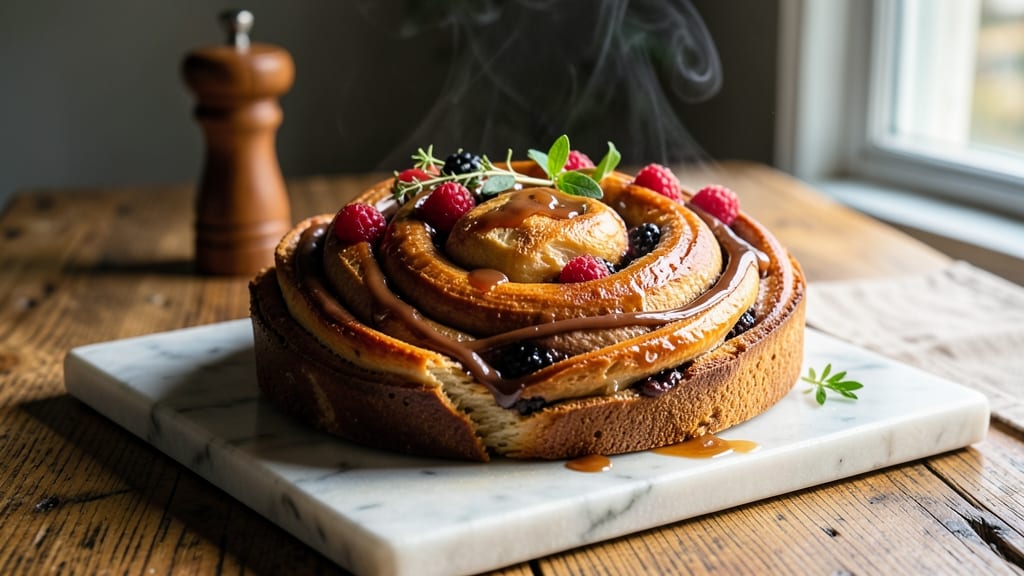
This yeast-based babka bread delivers the iconic swirled vanilla-walnut richness that makes it a showstopper. 💛 I've perfected the technique for achieving that signature light, fluffy crumb and caramelized swirls that disappear into every bite.
The secret lies in the yeast activation and proper dough handling—two steps that transform ordinary brioche into something extraordinary.
What sets this recipe apart is the balance between traditional methods and modern adaptability. We'll use a standard yeast activation process to ensure proper fermentation, followed by a careful layering of cinnamon-sugar filling and walnut swirls that create those signature ribbons when sliced.
The dough develops a tender yet sturdy texture, capable of holding its shape while baking into a golden, fragrant loaf.
By the time you pull this babka from the oven, you'll have a loaf with a crispy, caramelized exterior and a soft, pillowy interior filled with fragrant vanilla and crunchy walnuts.
The aroma alone will have everyone gathering around your kitchen, and each slice reveals those beautiful swirls that make babka instantly recognizable.
Whether you're making this for a special occasion or simply treating yourself, this recipe delivers restaurant-quality results with a home-baker's simplicity. The key is patience—allowing the dough to rise properly and the filling to meld with the yeasty richness creates a flavor profile that's impossible to resist.
Ingredients for babka bread recipe with yeast
Four cups flour, one cup butter, and two eggs kick off this yeasty masterpiece—where swirls meet crunchy walnuts.
| Ingredient | Amount | Notes |
|---|---|---|
| Active Dry Yeast 🍞 | 2 ¼ tsp | One packet for convenience |
| Warm Whole Milk 🥛 | 1 ¼ cups | 110°F for yeast activation |
| Granulated Sugar 🍚 | ¾ cup | Divided for dough and filling |
| Unsalted Butter 🧈 | 1 cup | Room temperature, full-fat preferred |
| Large Eggs 🥚 | 2 whole | Room temperature for even mixing |
| All-Purpose Flour 🌾 | 4 cups | Plus 1 cup for dusting |
| Diamond Crystal Kosher Salt 🧂 | 1 ½ tsp | Adjust to taste |
| Pure Vanilla Extract 🍯 | 2 tbsp | High-quality, Madagascar preferred |
| Ground Cinnamon 🌿 | 1 ½ tsp | For filling, not dough |
| Chopped Walnuts 🥜 | 1 ½ cups | Toasted for enhanced flavor |
| Powdered Sugar 🍚 | ½ cup | For dusting final loaf |
| Large Egg Yolk 🥚 | 1 whole | For egg wash |
The yeast is non-negotiable here—Saf-Instant or Red Star are my go-tos. Grab it from the baking aisle at Whole Foods or Trader Joe's if you want the freshest. Room-temperature butter is crucial; microwave 40 seconds to soften if needed. For walnuts, Costco's bulk bin gives the best price—just toast them in a dry pan until fragrant. The vanilla? Madagascar Bourbon from Penzeys elevates everything, but any pure extract works in a pinch.
No vanilla extract? Vanilla bean paste at half the amount works beautifully. Short on walnuts? Pecans or hazelnuts swap one-for-one, though texture changes slightly. The cinnamon in the filling can be swapped for cardamom or pumpkin pie spice if you're feeling adventurous. For the dough, if you accidentally add salt instead of sugar, stop immediately—this isn't a savory loaf. And that powdered sugar? Sift it before dusting to avoid clumps.
Store the baked babka in an airtight container at room temperature for 2-3 days—it gets more flavorful as it sits. For longer storage, wrap tightly in plastic and freeze for up to 3 months. Reheat slices in a 350°F oven for 5-10 minutes to restore that bakery-fresh crunch. Pro tip: Slice before freezing for easy grab-and-go portions. The aroma alone will have your kitchen smelling like a Parisian patisserie.
Why You'll Love This Recipe
- No-Knead Magic: The yeast and warm milk do all the work—just mix, let it rise, and fold. I swear, my dough gets softer with every batch, and that’s with zero effort from me.
- Butter-Sugar Bliss: That rich, swirled butter and sugar combo? It’s like a hug for your taste buds. The crumb is tender, the edges caramelize just enough, and honestly, it’s the kind of bread that makes you forget about "healthy" options.
- Breakfast to Dessert: Same dough, endless uses. Toast it for breakfast, drizzle with jam for a snack, or bake it into a cake—it’s my go-to for brunch or a sweet treat when guests drop by.
- Leftovers That Last: A single batch feeds my family for days. The slices keep well wrapped, and the flavor only gets better after a day or two—proof that good things come to those who bake ahead.
Step-by-step instructions for vanilla-walnut babka bread
Here's how to create a showstopping babka with perfect swirls and tender crumb.
👨🍳 Step 1: Activate the Yeast and Make the Dough
In a small bowl, whisk together the 2.25 tsp active dry yeast and 1.25 cups warm whole milk (110°F). Let sit for 5-10 minutes until frothy—this confirms your yeast is alive and ready to work. If it doesn't bubble, start over with fresh yeast.
In the bowl of a stand mixer fitted with the dough hook, combine 4 cups all-purpose flour, 0.75 cup granulated sugar, 1.5 tsp diamond crystal kosher salt, and the yeast-milk mixture. Mix on low speed for 2 minutes until combined. Add 1 cup room-temperature unsalted butter (cut into chunks) and 2 whole large eggs, mixing until the dough comes together and pulls away from the bowl sides.
🥘 Step 2: Knead and First Rise
Switch to medium speed and knead the dough for 5-7 minutes until smooth and elastic. The dough should be slightly tacky but not sticky—if needed, add 1 tablespoon flour at a time until it reaches the right consistency. Shape into a ball, place in a lightly greased bowl, cover with a damp towel, and let rise in a warm place for 1-1.5 hours or until doubled in size.
Here's the thing—don't rush this rise. The dough needs time to develop gluten properly for that tender, flaky texture. I like to place my mixer bowl in a slightly warm oven with a cup of boiling water underneath to create a cozy environment.
🍳 Step 3: Prepare the Filling and Shape the Loaf
While the dough rises, toast the 1.5 cups chopped walnuts in a dry skillet over medium heat for 3-4 minutes until fragrant and lightly golden. Let cool, then mix with 1.5 tsp ground cinnamon and set aside.
On a lightly floured surface, roll out the risen dough into a 12x18-inch rectangle about ¼-inch thick. Spread the walnut-cinnamon mixture evenly over the dough, leaving a ½-inch border around the edges. Starting from the long side, roll the dough tightly into a log, pinching the seam to seal. Twist the log gently once to create the classic babka swirl.
🔥 Step 4: Second Rise and Bake
Place the shaped babka on a parchment-lined baking sheet, seam-side down. Cover loosely with plastic wrap and let rise for 30-45 minutes until puffy. Preheat your oven to 350°F while the babka rises—this ensures even baking from the start.
Brush the babka generously with the 1 whole large egg yolk mixed with 1 tablespoon water for a golden finish. Bake for 40-45 minutes until the top is deep golden brown and internal temperature reaches 190°F. The babka should smell intensely sweet and nutty when done.
⏰ Step 5: Cool and Serve
Remove from the oven and immediately dust with 0.5 cup powdered sugar while still warm. Let cool on a wire rack for 15-20 minutes before slicing—this prevents the filling from oozing out and gives the bread time to set properly.
Slice into ½-inch thick pieces and serve warm. The interior should be moist with pockets of gooey cinnamon-walnut filling, while the exterior remains tender and slightly crisp. For best results, serve within 2 days or freeze for up to 3 months—it reheats beautifully!
Pro Tips For Making Babka Bread Recipe With Yeast
- TEST YEAST FIRST: Skip the guesswork—mix 1 packet yeast with ¼ cup warm milk and 1 tsp sugar, then wait 5-10 minutes for frothy bubbles. If it doesn’t bubble, your yeast is dead or the milk’s too hot, and you’ll save yourself a sad, flat babka.
- SALT THE DOUGH: Add the full ½ tsp salt with the yeast—not after—so it dissolves evenly. I used to sprinkle it later, and the flavor stayed uneven, like some parts got the full briny punch while others tasted bland.
- COOL THE BUTTER: Chill the butter for the filling to room temp (60-65°F), not warm. Cold butter will crack the dough when you fold it, and you’ll end up with a greasy mess instead of those perfect swirls. Test it by pressing a finger into the butter—it should dent slightly but not smear.
- REST THE DOUGH: Let the shaped babka rise in the pan without moving it for at least 45 minutes—yes, even if it looks underproofed. Rushing this step makes it dense, and you’ll regret it when you take a bite. Cover it loosely with a towel to keep humidity in.
Troubleshooting this dish
Dense Crumb Fix
If your babka turns out dense instead of light and airy, the issue is likely underproofed dough. Let the dough rise until it's at least doubled in size—this can take up to 2 hours in cooler kitchens.
I often place my mixer bowl in a slightly warm oven with a cup of boiling water underneath to create consistent warmth. Also, make sure your yeast is fresh and your milk is exactly 110°F—too hot kills yeast, too cold slows activation. 💡
Filling Leaking
When the cinnamon-walnut filling oozes out during baking, it means your dough wasn't rolled thin enough or the seam wasn't sealed properly. Roll your dough to exactly ¼-inch thickness and pinch the seam tightly when rolling.
For extra insurance, chill the shaped babka in the fridge for 15 minutes before the second rise—this helps the dough hold its shape better. 🥜
Uneven Swirls
If your babka's swirls look messy or uneven, the dough wasn't rolled uniformly or the filling wasn't spread evenly. Roll the dough into a perfect rectangle using a rolling pin, and spread the filling in an even layer with a spatula.
When twisting, do it gently but firmly—over-twisting can cause cracks. I like to make a single twist rather than multiple twists for cleaner slices. ✨
Pale Color
A pale babka usually means the egg wash wasn't applied generously enough or the oven wasn't hot enough. Whisk your egg yolk with 1 tablespoon water for a glossy finish, and brush it liberally over the entire surface.
Preheat your oven to 350°F for at least 15 minutes before baking—this ensures even heat distribution. For extra browning, broil for 1-2 minutes at the end of baking. 🔥
Flat Top
If your babka bakes up flat rather than domed, it likely didn't rise enough during the second proof or the oven wasn't hot enough. Make sure your babka rises until it's puffy and almost doubled before baking.
Also, place your baking sheet on the middle rack rather than the bottom—this helps create a more even rise. For extra lift, bake in a preheated Dutch oven if you have one. 💪
Dry Texture
Dry babka usually results from overbaking or using too much flour. Check your internal temperature with a thermometer—190°F is perfect. If you need to test doneness without a thermometer, tap the bottom: it should sound hollow.
For moisture, brush the top with 1 tablespoon melted butter during the last 5 minutes of baking. Also, avoid over-handling the dough—too much flour dries it out. 🌟
Nutrition facts
Frequently asked questions
Why does babka need two rises?
The first rise develops gluten for structure, while the second rise creates that signature light, airy texture. Skipping either can result in a dense loaf. Think of it like giving your dough two chances to become its best self—first for strength, then for lift!
Can I make babka without a stand mixer?
Mix the dough by hand until combined, then knead vigorously for 8-10 minutes on a floured surface until smooth and elastic. The key is patience—your arms will do the work the mixer would normally handle. Just be prepared for a workout!
What if my babka doesn't swirl when sliced?
Uneven swirls usually mean the dough wasn't rolled uniformly or the filling wasn't spread evenly. Roll to exactly ¼-inch thickness and spread filling in a thin, even layer. For cleaner swirls, make just one gentle twist when shaping—over-twisting causes cracks. Practice makes perfect!
How do I store babka for maximum freshness?
Keep it in an airtight container at room temperature for 2-3 days—it actually improves as it sits! For longer storage, wrap tightly in plastic and freeze for up to 3 months. Reheat slices in a 350°F oven for 5 minutes to restore that bakery-fresh crunch. Pro tip: Slice before freezing for easy grab-and-go portions!
Can I substitute walnuts in this recipe?
Yes! Try pecans, hazelnuts, or even chocolate chips for a different flavor profile. Toast nuts first to enhance their flavor, and adjust quantities to maintain the same volume. For chocolate babka, use 1 cup chocolate chips instead of walnuts—just skip the cinnamon.