
Soups & Stews
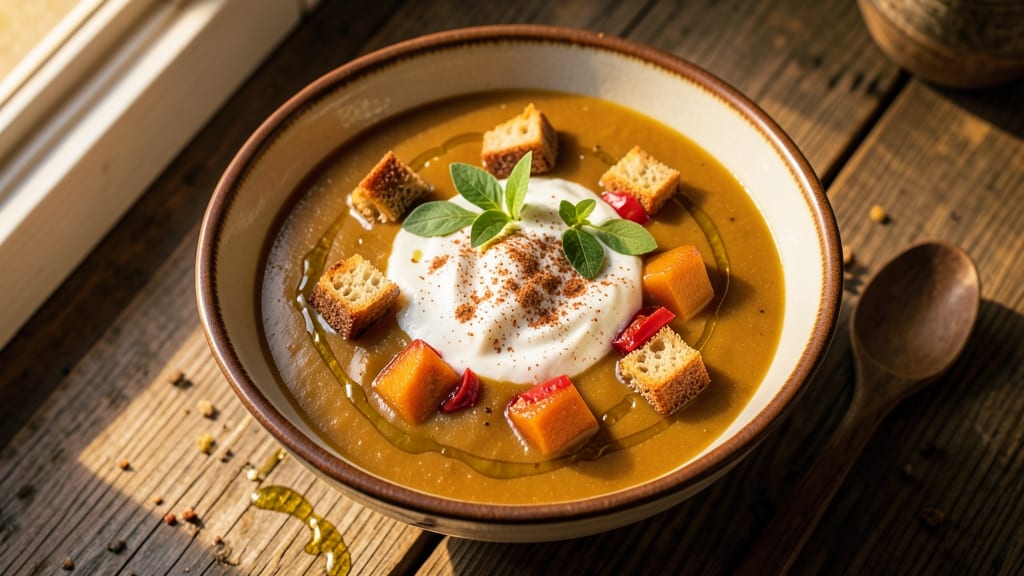
This Atlanta bread butternut squash soup recipe transforms a classic Southern comfort dish into something elevated yet approachable. The secret lies in roasting the squash until caramelized—deepening its natural sweetness—while toasting cornbread cubes to a perfect crunch.
I developed this after years of perfecting the balance between rich, velvety soup and crispy bread, ensuring every spoonful delivers both texture and flavor.
The soup builds on traditional techniques with a modern twist: roasted garlic and a touch of coconut milk create a silky base that's creamy without being heavy. Meanwhile, the cornbread gets a subtle spice boost with smoked paprika, adding depth that complements the squash's earthy notes.
What makes this dish special is how the two components work together—each bite contrasts smooth soup with toasted bread, making it a satisfying vegetarian meal that feels indulgent.
What you'll achieve is a restaurant-quality dish that's surprisingly simple to prepare. The roasted squash develops complex caramelized flavors, while the cornbread toasts to a golden crunch without drying out.
This recipe serves four and comes together in under an hour, perfect for cozy weeknights or entertaining guests who appreciate Southern-inspired flavors with a modern touch.
For plating, ladle the soup into bowls and top with toasted cornbread cubes, a drizzle of extra coconut milk, and a sprinkle of fresh sage. The presentation is as inviting as the flavors—warm, comforting, and just a little bit special. Ready to make this your new go-to soup recipe?
Ingredients for atlanta bread butternut squash soup
The perfect balance of roasted squash sweetness and toasted cornbread crunch awaits with these quality ingredients.
| Ingredient | Amount | Notes |
|---|---|---|
| Butternut Squash 🎃 | 2 lb | Peeled, cubed, seeds removed |
| Extra-Virgin Olive Oil 🫒 | ½ cup | For roasting squash and garlic |
| Yellow Onion 🧅 | 1 whole | Diced, medium size preferred |
| Garlic Cloves 🧄 | 6 cloves | Roasted whole with squash |
| Vegetable Broth 💧 | 4 cups | Low-sodium preferred |
| Full-Fat Coconut Milk 🥥 | 13 ½ oz | Unopened can for creaminess |
| Cornbread Mix 🍞 | 1 box | Jiffy or similar, dry mix |
| Fresh Sage Leaves 🌿 | ¼ cup | Chopped, for garnish |
| Smoked Paprika 🌶️ | 1 tsp | For cornbread spice depth |
| Salt 🧂 | 1 ½ tsp | Diamond Crystal preferred |
| Black Pepper 🌶️ | ½ tsp | Freshly cracked |
| Ground Cinnamon 🌿 | ¼ tsp | For subtle warmth |
| Fresh Thyme Leaves 🌿 | 1 tbsp | Chopped, for soup seasoning |
| Maple Syrup 🍁 | 1 tbsp | Grade B for depth |
The butternut squash is the foundation—look for dense, heavy squash with no soft spots. Local farmers markets often have the sweetest varieties, or opt for organic at Whole Foods for consistent quality. Roasting the squash and garlic together intensifies their natural sweetness, creating that restaurant-quality depth. For the cornbread, Jiffy mix is my go-to for reliability, but any dry cornbread mix works. The smoked paprika is key—Penzeys brand delivers the most authentic Southern flavor profile.
No fresh sage? Dried works at one-third the amount, but the aroma is different. Short on coconut milk? Heavy cream or cashew cream adds richness, though coconut's subtle sweetness is ideal. The vegetable broth should be low-sodium to avoid over-salting the soup. For the cornbread cubes, cut into 1-inch pieces for even toasting. Want extra crunch? Toast them in the oven at 375°F for 5-7 minutes—don't skip this step. The maple syrup adds just the right touch of sweetness to complement the squash's natural sugars.
Store leftover soup in airtight containers for 4-5 days—flavors actually improve overnight as the spices meld. The cornbread cubes crisp up beautifully when reheated in a dry skillet for 2-3 minutes. For meal prep, portion the soup into containers and store the cornbread separately. It reheats best when toasted fresh, but keeping it in a sealed container preserves its crunch for 2 days. Freeze soup portions for up to 3 months—just thaw and reheat gently.
Why You'll Love This Recipe
- I’ll be real: this recipe won’t break the bank, but it tastes like you spent hours slaving over it. Butternut squash is affordable, especially when you buy it whole, and the broth stretches far. The olive oil and garlic might be pantry staples, but they make this soup feel special—like a fancy dinner for half the cost.
- One-Pot Wonder: Honestly, I love recipes that don’t require a million dishes—just one pot, a knife, and 20 minutes of my time. Roast the squash and caramelize the onions in the same pot, then pour in the broth and garlic. Boom. Done. The Atlanta bread toasts itself in the oven while the soup simmers, so you’re basically hands-off.
- Rich Without Effort: Here’s what sold me—the depth of flavor you get from just a few ingredients. The roasted squash gives this soup that natural sweetness, while the garlic and olive oil add this warm, savory punch. It’s creamy without heavy cream, thanks to the squash’s natural texture, and the broth ties it all together like a cozy hug in a bowl.
- Meal Prep MVP: Between us, this soup is my secret weapon for busy weeks. Make a big batch on Sunday, and you’ve got lunch or dinner covered for days. It reheats beautifully—no weird textures, no sad leftovers. Plus, the Atlanta bread? Freeze half the loaf, and you’ve got toast for days without extra shopping.
Step-by-step instructions for Atlanta bread butternut squash soup
Master the roasted squash technique and toasted bread crunch for a soup that balances Southern comfort with refined textures.
Roast the Butternut Squash and Garlic for Deep Flavor
Preheat your oven to 400°F and line a large baking sheet with parchment paper. Toss the peeled and cubed 2 lb butternut squash with 0.25 cup of the extra-virgin olive oil, 1 tsp salt, and 0.25 tsp ground cinnamon. Spread in a single layer, leaving space between pieces for even browning.
Add the 6 whole garlic cloves, gently pressing them into the squash cubes. Roast for 30-35 minutes until the squash edges are golden brown and tender when pierced with a fork. The garlic should be soft and caramelized. This roasting step develops the natural sweetness of the squash and adds a nutty depth that simmering alone can't achieve.
Sauté Onion and Build the Soup Base
While the squash roasts, heat 0.25 cup extra-virgin olive oil in a large Dutch oven over medium heat. Add the diced 1 whole yellow onion and cook for 8-10 minutes until softened and light golden brown. This slow cooking caramelizes the onion sugars, creating a rich foundation for the soup.
Add the roasted squash and garlic directly from the baking sheet, along with the 1 tbsp chopped fresh thyme leaves and 1 tbsp maple syrup. Stir to combine, then pour in the 4 cups vegetable broth. Bring to a gentle simmer and cook for 10 minutes to meld the flavors. The maple syrup enhances the squash's natural sweetness while the thyme adds an earthy complexity that complements the Southern profile.
Blend and Finish the Soup with Coconut Milk
Use an immersion blender to purée the soup directly in the pot until completely smooth. If you prefer a rustic texture, skip blending and simply mash the squash with a potato masher. Pour in the 13.5 oz full-fat coconut milk and stir gently to combine. The coconut milk adds a luxurious creaminess while keeping the soup lighter than traditional dairy-based versions.
Season to taste with additional salt and 0.5 tsp black pepper, then simmer gently for 5 minutes to allow the flavors to settle. The soup should be velvety with a subtle sweetness from the roasted squash and maple syrup. Taste and adjust seasoning—this is where you ensure the balance between sweet, savory, and umami notes is perfect for each serving.
Prepare the Toasted Cornbread Croutons
Preheat your oven to 375°F and line another baking sheet with parchment paper. Prepare the 1 box cornbread mix according to package instructions, but reduce the liquid by ¼ cup to create a thicker batter. Stir in the 1 tsp smoked paprika for depth of flavor.
Spread the cornbread batter evenly on the prepared baking sheet and bake for 12-15 minutes until the edges are deep golden brown and the center feels set when gently pressed. Immediately cut into ½-inch thick squares while still warm. These toasted croutons provide the perfect textural contrast to the creamy soup, adding a satisfying crunch that holds up even when dipped.
Assemble and Serve with Fresh Garnishes
Ladle the finished soup into bowls, dividing evenly among the 4 servings. Top each serving with 1-2 toasted cornbread croutons and a sprinkle of 0.25 cup chopped fresh sage leaves. The sage adds a bright, herbal note that cuts through the richness of the coconut milk and enhances the squash's natural sweetness.
Serve immediately while the croutons are at their crispest. The contrast between the velvety soup and the toasted cornbread creates a textural experience that makes this dish truly special. Each spoonful delivers the roasted depth of the squash, the smoky warmth of the cornbread, and the fresh herbal finish—perfect for a comforting yet sophisticated meal.
Pro Tips For Making Atlanta Bread Butternut Squash Soup
- ROAST THE SQUASH FIRST: I learned this the hard way—raw butternut squash just doesn’t caramelize the same way when blended. Roast the cubes at 400°F (200°C) for 25-30 minutes until fork-tender and golden. The sweetness deepens, and the soup won’t taste like boiled veggies.
- SWEEAT THE ONION LOW: Skip the high-heat rush—sauté the onion in olive oil over medium-low for 8-10 minutes until it’s translucent and just starting to brown. Too much heat burns the onions before the garlic gets a chance to sing, and that’s when the soup starts to taste flat.
- SALT THE BROTH LIBERALLY: Unsalted vegetable broth? Add 1 teaspoon of salt per quart before blending. I used to hold back, but this soup needs the salt upfront—especially if you’re adding Atlanta bread (which soaks up flavor like a sponge). Taste and adjust after blending, but start strong.
- PULSE THE BREAD IN SMALL BATCHES: Tossing in chunks of Atlanta bread and blending everything at once just makes a gluey mess. Instead, tear the bread into rough pieces, pulse them separately in the blender with a splash of broth, then mix into the soup. This keeps the texture light and the bread actually edible—not a gummy paste.
Flavor customization for atlanta bread butternut squash soup
Sweet Heat Variations
For a spicier kick, stir in ½ tsp cayenne pepper or 1 tsp hot honey when blending the soup. This balances the squash's sweetness with a subtle heat that lingers. I've found that Penzeys brand hot honey adds just the right amount of sweetness to complement the cayenne's bite. 🌶️
Creamy Upgrades
Swap the coconut milk for ½ cup Greek yogurt or sour cream for a tangier finish. This works especially well if you're avoiding dairy but want that creamy texture. For extra richness, add ¼ cup crumbled feta cheese at the end—it melts beautifully into the warm soup.
The yogurt adds a bright acidity that cuts through the squash's natural sweetness.
Herbal Infusions
Boost the freshness by adding 1 tbsp chopped rosemary with the thyme when sautéing the onions. Rosemary's piney notes pair beautifully with the squash's earthiness.
For a citrus twist, finish with zest from 1 lime and a splash of lime juice—this brightens the entire dish and balances the coconut's richness. 🍋
Crunchy Toppings
Swap the cornbread croutons for toasted pepitas (pumpkin seeds) or crumbled bacon for a different texture. The pepitas add a nutty crunch, while bacon brings a smoky depth that enhances the squash's caramelized flavors.
For a vegan option, toast ½ cup walnuts until golden and sprinkle them on top for a rich, buttery crunch.
Regional Twists
For a Louisiana-inspired version, add 1 tsp filé powder (made from ground sassafras leaves) at the end of cooking. This gives the soup a unique, earthy depth that's characteristic of Creole cuisine.
In the Pacific Northwest, I've seen butternut squash soups enhanced with 1 tsp maple syrup and a swirl of crème fraîche—this adds a luxurious finish that feels distinctly regional. 🗺️
Dairy-Free Options
Use cashew cream (blend ½ cup soaked cashews with ½ cup water) instead of coconut milk for a neutral, creamy base. For extra protein, stir in 1 scoop vanilla plant-based protein powder—it blends seamlessly and adds a subtle sweetness.
This version is perfect for those avoiding dairy while still wanting that rich, velvety texture.
Nutrition facts
Frequently asked questions
Can I substitute sweet potato for butternut squash?
Yes, but expect a slightly different texture and flavor profile. Sweet potatoes have a denser, earthier taste that works well, though they lack butternut squash's natural sweetness. For best results, roast the sweet potatoes 5-10 minutes longer at 400°F to achieve similar caramelization. You may also need to reduce the maple syrup to ½ tbsp since sweet potatoes are naturally sweeter.
How do I prevent the cornbread from getting soggy?
Toast the cornbread cubes thoroughly in the oven at 375°F for 5-7 minutes until they're deeply golden and crisp. For extra insurance, store any leftovers in an airtight container with a paper towel underneath to absorb moisture. When reheating, toast them fresh in a dry skillet for 2-3 minutes to restore that perfect crunch.
Can I make this soup ahead of time?
The soup actually tastes better the next day as flavors meld. Store in airtight containers for 4-5 days in the fridge. Reheat gently on the stove, stirring occasionally. Keep the cornbread cubes separate and toast fresh before serving. For freezing, portion the soup and freeze for up to 3 months—just thaw overnight in the fridge before reheating.
What if I don't have an immersion blender?
No problem! Transfer the soup to a blender in batches, blending until completely smooth. For a rustic texture, simply mash the roasted squash with a potato masher after simmering. The key is to blend while the soup is still hot for the smoothest consistency. Just be careful with hot liquids when blending.
Is this recipe naturally gluten-free?
The soup base is naturally gluten-free, but the cornbread mix typically contains wheat. For a gluten-free version, use a certified gluten-free cornbread mix and ensure your broth is gluten-free. The coconut milk and other ingredients are already safe. The texture may be slightly different, but the flavors will remain delicious.